

5 Key Reasons a Professional Food Dehydrator Outperforms Other Drying Methods
...
View Details
2026-07-11
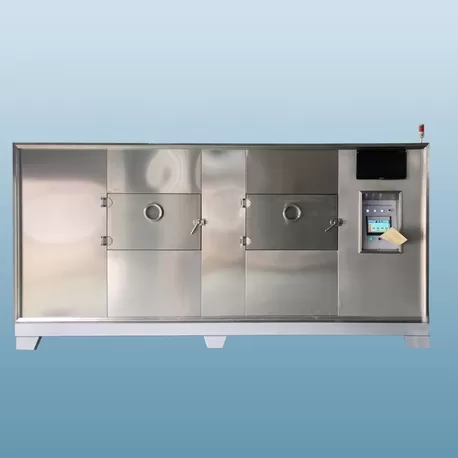
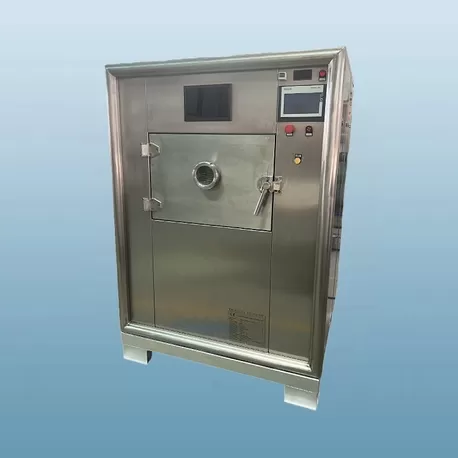
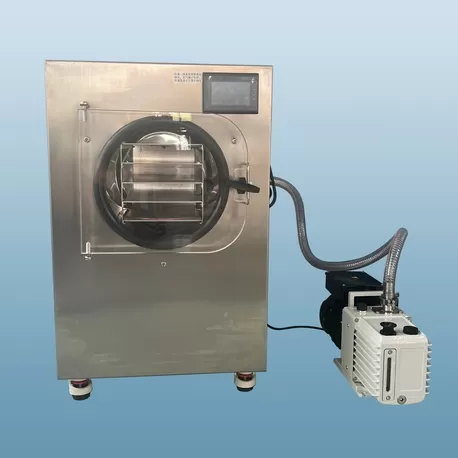
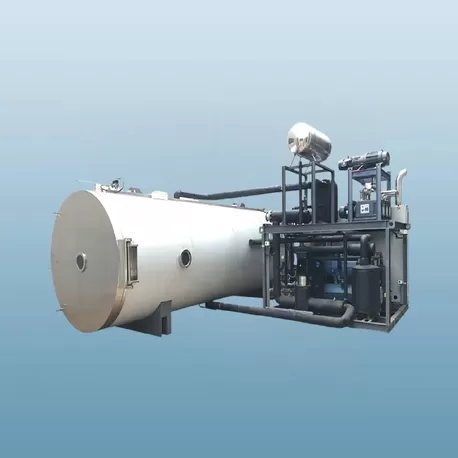
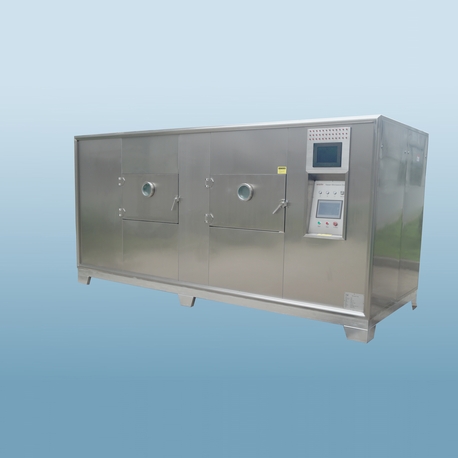
A professional commercial food dehydrator is not a consumer convection oven—it is an engineered, closed-loop thermodynamic drying system designed to optimize psychrometric moisture removal, preserve sensitive bio-active compounds, and suppress microbial hazards without inducing surface case hardening. Backed by over 20 years of industrial drying equipment manufacturing experience, Nasan operates a world-class manufacturing center supported by an elite quality management team, advanced thermal R&D engineers, and skilled industrial fabricators. Having exported high-performance dehydrators, industrial dryers, and vacuum freeze dryers to over 40 countries and regions across North America, Europe, Asia-Pacific, and Latin America, Nasan delivers turnkey, tailored thermal processing machinery built for uncompromised safety, thermal efficiency, and long-term mechanical reliability.
Selecting an industrial food dehydrator requires evaluating three core thermodynamic pillars: heat-exchange methodology (closed-loop heat pump vs. indirect hot-air circulation), airflow geometry (horizontal cross-flow laminar vs. non-uniform vertical rise), and sanitary food-contact integrity (food-grade SUS304/SUS316 with continuous coved welds). Drawing from two decades of multi-industry drying expertise, Nasan custom-engineers commercial dehydrators featuring programmable PLC psychrometric staging, reversible multi-fan arrays, and high energy-efficiency ratios (SMER > 2.5 kg/kWh), ensuring total water activity suppression ($a_w < 0.60$) with zero localized scorching.
Field-proven across the USA, Canada, Germany, France, Italy, Australia, NZ, and beyond, compliant with rigorous international electrical and hygiene codes.
Engineering hot-air convection dehydrators, closed-circuit heat pump dryers, vacuum freeze dryers, and continuous belt drying systems under one roof.
Transferring high-precision thermal standards from chemical and pharmaceutical equipment into hygienic, heavy-duty food dehydration systems.
Tailoring airflow dynamics, tray metallurgy, automated PLC recipes, and heating sources to your exact raw product characteristics.
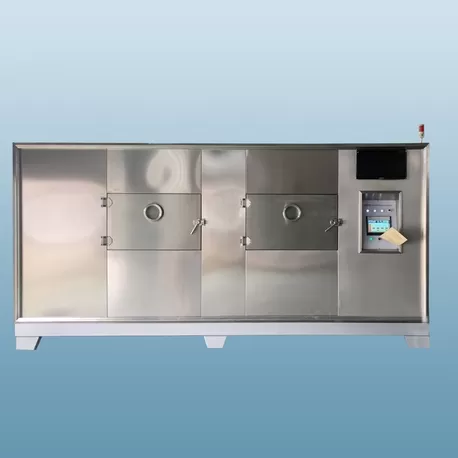
Case hardening occurs when wet material is subjected to high-temperature, low-humidity air too early in the drying cycle. The rapid evaporation of surface moisture outpaces internal capillary diffusion, causing outer cellular collapse into an impermeable, leathery crust that seals moisture inside and triggers rapid mold spoilage.
To dry fruits, jerky, roots, or pet treats to shelf-stable perfection, the drying atmosphere must be tightly managed according to wet-bulb depression and equilibrium moisture content (EMC). In the initial drying stage, the relative humidity (RH) inside the cabinet must be deliberately elevated to maintain surface pore permeability while conductive and convective heat saturates the internal core.
Adhering to food safety guidelines published by the U.S. Food and Drug Administration (FDA) and thermal lethality protocols from the USDA Food Safety and Inspection Service (FSIS), suppressing water activity ($a_w$) below 0.60 is mandatory for commercial shelf-life verification. Nasan’s 20-year thermal engineering background ensures that our PLC systems automatically orchestrate multi-stage psychrometric ramps tailored to your raw product's cellular structure.
Nasan's premier industrial energy saver. Recycles latent heat of vaporization via internal evaporator-condenser loops. Delivers unmatched efficiency (SMER 2.5–4.0 kg/kWh) while sealing in volatile flavor esters.
Equipped with high-volume axial fan arrays, steam coils, or electric elements. Ideal for high-temperature roasting, biltong, starch, and robust agricultural crops where high air throughput is critical.
Sublimates ice directly into vapor under high vacuum (<10 pa="">
Unlike generic food machinery builders, Nasan manufactures specialized drying equipment across the pharmaceutical, chemical, advanced polymer, and paper industries. This cross-disciplinary technical depth allows us to implement sanitary engineering, pressure-tight sealing, and explosion-proof safeguards into standard food dehydration lines.
In high-capacity industrial plants, drying equipment must endure aggressive environments: organic citric acids from fruits, brine marinades from jerky, and corrosive sanitizing foam during clean-in-place (CIP) washdowns. Inferior lightweight dryers built from riveted sheet metal develop crevice corrosion, microbial harborage points, and frame distortion.
In accordance with global industrial ventilation standards published by ASHRAE thermal engineering guidelines and ISO 22000 food safety management systems, Nasan incorporates high-tier manufacturing benchmarks across every unit:
Heavy-Gauge SUS304/SUS316 Metallurgy: 100% certified stainless steel contact zones, argon-shielded sanitary TIG welds, and electropolished wire-mesh trays resistant to chemical pit corrosion.
Hygienic Internal Drainage: Sloped internal floor pans directing wash water to a sanitary tri-clamp drain connection, eliminating stagnant bacterial pools.
Industrial Airflow Plenums: Reversible aerodynamic flow-straightening walls that ensure true horizontal cross-flow velocity (2.0 to 2.8 m/s) across every single tray tier without manual tray flipping.
Nasan drying equipment is actively operating across more than 40 countries and regions—including the United States, Canada, Germany, France, Italy, Spain, Sweden, Australia, New Zealand, and throughout Southeast Asia and Latin America. Our global footprint reflects deep compliance with varied international electrical, pressure, and food hygiene standards.
Exporting industrial thermal machinery requires navigating diverse national grid standards (e.g., 208V/480V 60Hz across North America vs. 380V/415V 50Hz across Europe and Oceania), stringent safety interlocks, and harsh ocean freight transport conditions. Nasan’s engineering team pre-configures electrical control panels with globally recognized components (Siemens, Schneider, Omron), ensuring seamless on-site commissioning and localized spare-parts availability.
Proven operational reliability in the USA, Canada, Germany, France, Italy, Sweden, Australia, New Zealand, UAE, Singapore, South Korea, Peru, Chile, and Mexico. Engineered to pass stringent local safety inspections upon delivery.
Extensive application expertise spanning food dehydrators, pharmaceutical tray dryers, plastics conditioning, timber drying kilns, and electronic component bake-out chambers.
Audit factory manufacturing history: Partner with established producers like Nasan (20+ years) rather than trading brokers who cannot modify plenum designs.
Verify Specific Moisture Extraction (SMER): Calculate kWh energy consumed per kilogram of water removed to optimize long-term operational costs.
Mandate electronic relative humidity (RH) control: Ensure your dehydrator continuously monitors psychrometric air state, not just elapsed hours.
Demand food-grade material certification: Require positive material certificates confirming SUS304 or SUS316 food-contact surfaces.
Don't deploy vertical convection for commercial scale: Vertical air distribution causes severe moisture gradients and requires tedious manual tray rotation.
Don't purchase non-insulated single-skin boxes: Single-sheet sheet metal radiates massive heat into your plant, doubling cooling loads and burning power.
Don't compromise on electrical components: Generic unbranded contactors and controllers cause chronic downtime and fail local electrical inspections.
Don't buy without factory test data: Always demand multi-point thermal mapping and moisture extraction verification prior to shipment.
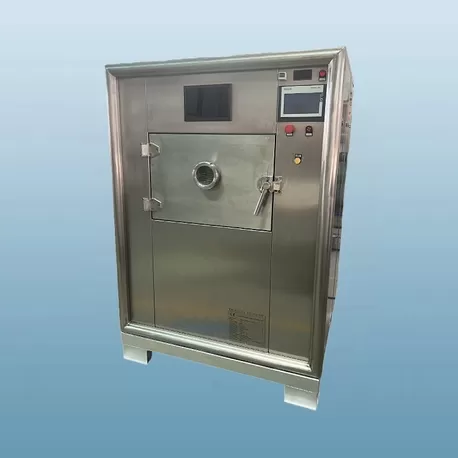
Drawing upon two decades of equipment manufacturing, Nasan subjects every commercial food dehydrator and industrial drying room to a rigorous 6-step Factory Acceptance Test (FAT) prior to crating, ensuring plug-and-play field commissioning.
XRF spectroscopic material inspection verifying certified SUS304/SUS316 content, followed by weld pickle-passivation checks.
Calibrated hot-wire anemometer profiling across 24 rack coordinates, confirming velocity within 2.0–2.8 m/s without dead zones.
Continuous multi-point thermocouple logging across all trolley heights, guaranteeing temperature deviation under <±1.5°c.<>
Full-load thermodynamic testing measuring compressor suction/discharge pressures, COP, and continuous water removal capacity.
Pilot batch drying of target raw material to confirm dry-basis moisture percentage and certify water activity below 0.60.
Dielectric insulation testing, pre-programming client PLC language interfaces, and packaging inside moisture-sealed export timber crates.
A1: While our food dehydrators are widely used for fruits, vegetables, meat jerky, pet treats, and seafood, Nasan's 20-year manufacturing scope encompasses specialized drying machinery for the chemical, pharmaceutical, building materials, plastics, paper products, furniture/timber, and electronic components industries. This diverse industrial experience enables us to engineer superior thermal stability, hygienic washdown capabilities, and robust structural endurance into every food-grade dehydrator.
A2: Yes. Nasan manufactures a complete thermal product catalog including closed-loop heat pump dehydrators, hot-air convection batch ovens, continuous mesh-belt dryers, and industrial vacuum freeze dryers. Our thermal engineers evaluate your raw material's heat sensitivity, initial moisture content, and budget to recommend whether atmospheric heat pump drying or sub-zero freeze drying delivers the highest return on investment.
A3: Nasan provides comprehensive international support across North America, Europe, Oceania, Asia, and Latin America. We customize electrical voltage and frequency to match local grids (e.g., 208V/480V 60Hz or 400V 50Hz), provide multi-language PLC interfaces (English, Spanish, French, German), supply detailed modular spare parts kits, and offer rapid remote diagnostic support alongside on-site commissioning services.
A4: Traditional direct-electric dehydrators exhaust hot, moist air directly outdoors, wasting all input thermal energy. Nasan’s closed-circuit heat pump system dehumidifies the circulating air by passing it over an internal evaporator coil, condensing moisture into liquid drainage while capturing the latent heat of condensation. That heat is pumped back into the drying chamber via the condenser, slashing electrical energy consumption by 60% to 75% (COP > 3.5).
A5: Yes. Over 20 years, custom-tailored thermal engineering has been a core pillar of Nasan's operations. We can adapt trolley dimensions to interface with existing facility conveyors, build narrow-footprint vertical cabinets, design pass-through tunnel systems, and engineer specialized multi-temperature drying programs for proprietary recipes.
A6: Standard commercial batch cabinets (50 kg to 500 kg) typically dispatch within 2 to 3 weeks. Large-scale custom drying rooms (1 to 10+ tons) or industrial freeze dryers generally require 4 to 6 weeks for fabrication, PLC programming, and multi-point FAT testing. All equipment is packed in heavy-duty export timber cases for safe intermodal sea or air transit.
Ready to slash thermal operational costs, prevent case hardening, and achieve certified microbial safety? Leverage Nasan’s two decades of industrial drying experience, multi-industry engineering depth, and global delivery network across 40+ countries today.