
News Categories

Hot Articles

5 Key Reasons to Invest in an Industrial Food Dehydrator for Your Business

Source:NASAN
Published on:2026-02-26 15:57:29
5 Key Reasons to Invest in an Industrial Food Dehydrator for Your Business

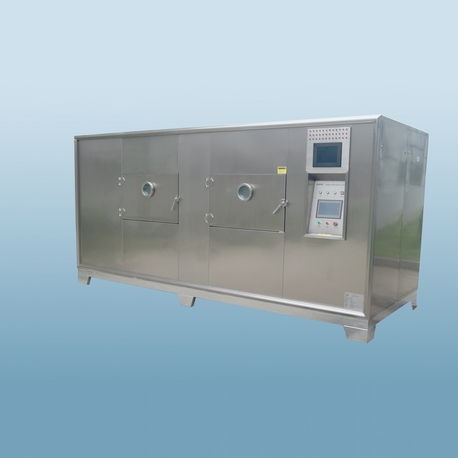
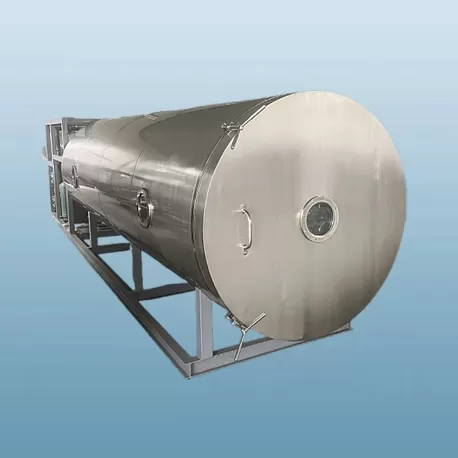
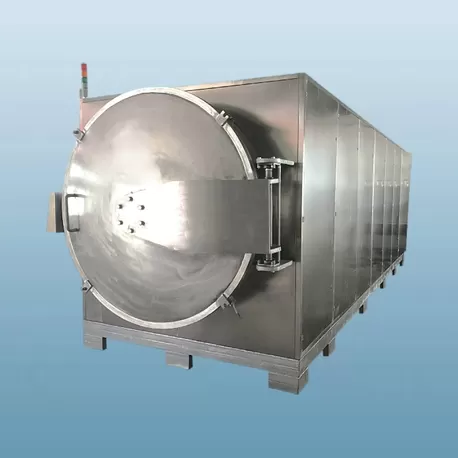
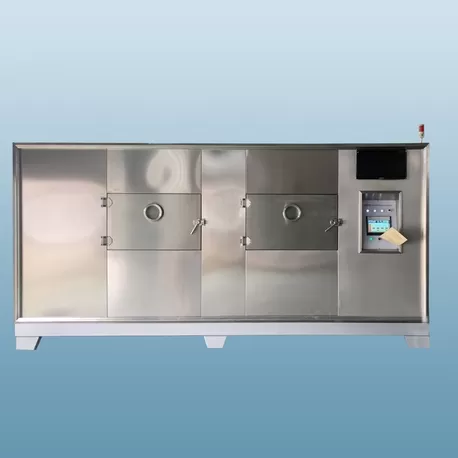
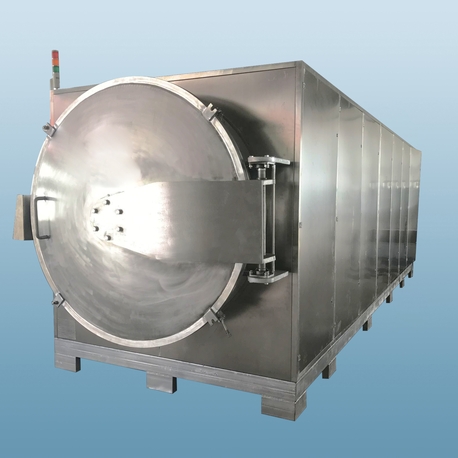
When you process large volumes of fruits, vegetables, or meat, a reliable industrial food dehydrator separates consistent quality from costly waste. Unlike small countertop units, these machines handle tons of product daily while preserving color, nutrients, and texture. Nasan builds its industrial-scale dehydrators to meet the rigorous demands of food processors, from mango slices to beef jerky. Selecting the right system directly impacts your bottom line and product reputation.

How an Industrial Food Dehydrator Works

Understanding the mechanics helps you choose the right configuration. An industrial food dehydrator removes moisture by circulating heated air with precise humidity control. Large fans push air across trays or conveyor belts, while heat pumps or steam coils provide the thermal energy.

Heat Pump Technology vs. Conventional Heating

Modern dehydrators often use heat pump systems that recover and reuse heat. This approach cuts energy costs by up to 50% compared to electric resistance or gas-fired models. The closed-loop design also keeps contaminants out, which is critical for food safety. Nasan’s heat pump dehydrators maintain temperatures as low as 30°C for heat-sensitive herbs or as high as 80°C for meat sticks.

Airflow and Tray Configurations

Uniform drying depends on how air moves through the product. Batch-type dehydrators stack trays with gaps for airflow, while continuous tunnel dryers move products on mesh belts. An industrial food dehydrator must balance air velocity to prevent case hardening—where the outside dries too fast, trapping moisture inside. Variable-speed drives on fans let operators adjust conditions for apples one day and kale the next.

Core Advantages of Going Industrial

Upgrading to a larger scale brings benefits beyond throughput. Here is what you gain with a dedicated system:

  • Massive capacity: Process 500 kg to 10 tons per batch, replacing dozens of small units and reducing labor.

  • Energy efficiency: Recovered heat and better insulation lower utility bills. Nasan reports clients cutting energy use by 40% after switching from older gear.

  • Consistent output: Every piece dries to the same moisture level, which is vital for private label packaging and shelf stability.

  • Hygienic construction: Stainless steel interiors, rounded corners, and CIP (clean-in-place) options meet BRC and FDA standards.

  • Automation: PLC controls store recipes for different products, so you push a button and the industrial food dehydrator handles the rest.

These advantages translate into higher margins and fewer customer complaints about texture or spoilage.

Primary Applications for Commercial Dehydrators

Businesses across the food industry rely on these machines. Here are the main sectors using an industrial food dehydrator today.

Fruit and Vegetable Processing

From apple rings to tomato powder, dehydrators preserve seasonal harvests for year-round sales. Snack manufacturers use them to create healthy chips without frying. The gentle drying retains natural sugars and colors, eliminating the need for additives.

Meat and Seafood Drying

Jerky, biltong, and dried fish require careful control to prevent bacterial growth while achieving the right chewiness. Industrial units with precise temperature and humidity settings ensure safety and texture. Nasan offers models with smoke infusion options for added flavor.

Dairy and Egg Products

Milk powder, whey protein, and dried egg whites are produced using specialized dehydrators that handle sticky or fine particles. These machines often incorporate drum drying or spray drying pre-stages before final dehydration.

Industrial Food Dehydrator vs. Freeze Drying and Sun Drying

Comparing methods clarifies why mechanical dehydration dominates commercial production.

Freeze Drying Comparison

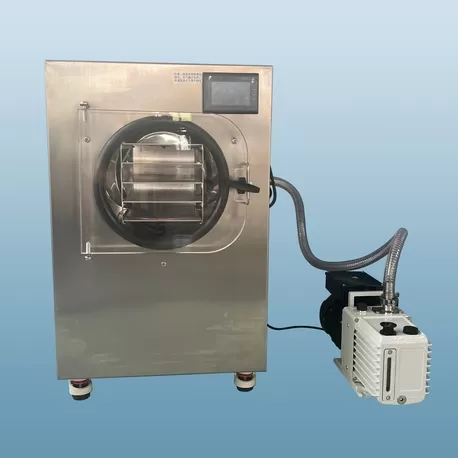
Freeze drying yields superior texture but costs four times more in equipment and energy. It works for premium instant coffee or astronaut food, but for bulk dried apples or jerky, an industrial food dehydrator offers the best return on investment. Throughput is also higher because cycle times are shorter—hours instead of days.

Sun Drying Limitations

Open-air sun drying is cheap but risky. You cannot control insects, bird droppings, or sudden rain. Drying times vary, leading to inconsistent quality. Modern food safety standards often prohibit sun drying for export products. An enclosed industrial dehydrator eliminates these variables completely.

Convection Oven Drawbacks

Some businesses start with bakery ovens, but they lack humidity control. You end up with burnt edges and raw centers. Purpose-built dehydrators from Nasan include dehumidifiers that pull moisture out of the chamber, speeding up the process and improving uniformity.

When you factor in labor, rework, and energy, the industrial dehydrator pays for itself within two years for most mid-sized processors.

Why Nasan Leads in Industrial Dehydration

Nasan has engineered its industrial food dehydrator line to address real-world production issues. Their units feature double-walled insulation that keeps the exterior cool while maintaining stable internal temperatures. The company provides free moisture testing: you send samples, they run trials, and you receive a drying curve and final product for evaluation. This removes guesswork before you purchase. Additionally, Nasan offers remote monitoring via mobile app, so you receive alerts if temperatures drift. Visit Nasan to see case studies from bakeries, spice grinders, and pet treat manufacturers.

Frequently Asked Questions

Q1: What capacity industrial food dehydrator do I need for a startup snack company?
       A1: For a growing business, a 100–300 kg per batch unit is a good entry point. Nasan offers a compact model with a 2.5 m² footprint that processes 200 kg of fresh produce in 8–10 hours. You can later add modules to increase capacity without replacing the whole system.

Q2: Can one dehydrator handle fruits and meat without cross-contamination?
       A2: Yes, if you follow proper cleaning between runs. Stainless steel trays and interiors wash down easily. For halal or kosher compliance, many operators dedicate separate trays or schedule meat after produce with a thorough cleaning in between. Nasan’s designs have no hidden crevices where residue can hide.

Q3: How much floor space does an industrial food dehydrator require?
       A3: It varies widely. A batch dehydrator for 500 kg might occupy 4 m × 3 m, while a continuous tunnel for several tons per hour could stretch 15 meters. Nasan provides layout assistance to fit your existing facility, including mezzanine options for compact spaces.

Q4: What maintenance is needed on a regular basis?
       A4: Daily tasks include checking door seals and cleaning filters. Weekly, you should inspect fan blades and belt tension. Heat pump models need annual refrigerant checks by a certified technician. Nasan includes a detailed logbook and offers extended warranties with scheduled service visits.

Q5: How long does it take to dry different foods?
       A5: Typical ranges: sliced apples 6–8 hours at 60°C, beef jerky 4–6 hours at 70°C, herbs 8–12 hours at 40°C. The exact time depends on thickness, initial moisture, and desired final water activity. Nasan’s controllers let you program multi-stage drying for products like plums that need a sweating phase.

Q6: Is an industrial food dehydrator energy-efficient enough for off-grid locations?
       A6: Many Nasan models operate on 380–480 V three-phase power, but they also offer solar-compatible versions with DC fans and thermal storage. Heat pump designs are inherently efficient, drawing about 1.2 kWh per kg of water removed. For remote areas, we recommend discussing your power availability with our engineers.

Choosing the right industrial food dehydrator transforms your production line. You gain consistency, food safety, and the ability to scale up without proportional labor increases. Nasan supports you from initial testing through installation and beyond, ensuring the machine fits your products and facility. Contact them to discuss your throughput goals and arrange a sample drying test. With the right equipment, you can confidently supply retailers, co-packers, or export markets with premium dried foods every time.