


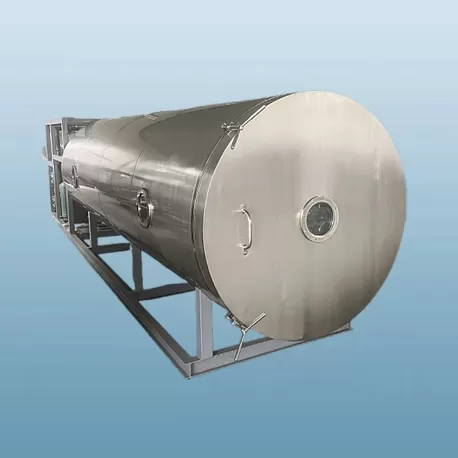
The market for high-protein snacks is growing rapidly. From gas station counters to high-end grocery aisles, dried meat products are everywhere. For manufacturers, meeting this demand requires more than just a good recipe; it requires consistent, safe, and efficient processing equipment. The bottleneck in production is almost always the drying phase. This is where a high-quality beef jerky dryer becomes the most critical asset in a facility.
Traditional smoking barns or standard ovens often struggle with consistency. One rack might be perfectly dried while another remains too moist, creating food safety risks. Modern industrial drying technology solves this. Companies like Nasan have recognized that precision in airflow and temperature control is the only way to scale production without sacrificing the chew and flavor that customers expect.
This article examines the mechanics, operational benefits, and selection criteria for commercial drying systems designed specifically for meat products.

The Evolution of Meat Dehydration
Historically, making jerky was a preservation method relying on sun and smoke. In a modern commercial setting, reliance on weather or uncontrolled wood fires is impossible. You need predictability.
A commercial drying system moves beyond simple heat application. It manages humidity. If the air inside the chamber is too humid, the meat steams rather than dries. This cooks the protein, changing the texture from chewy to crumbly.
Advanced equipment uses precise humidity extraction. By controlling the moisture removal rate, the equipment ensures the meat retains its tensile strength. This results in the characteristic texture that defines high-quality jerky.
Operational Workflow of an Industrial Beef Jerky Dryer
Understanding how to operate these machines efficiently can save hours per batch. While specific controls vary, the general workflow in a commercial setting follows a strict pattern to ensure HACCP compliance.
Pre-Treatment and Loading
Before the meat enters the machine, it is sliced and marinated. Uniform slicing is vital. If slices vary in thickness, they will dry at different rates. Once prepped, the meat is laid out on stainless steel trays or hung on racks. Overloading trays is a common mistake. Air must flow over every surface of the meat.
The Lethality Phase
The first stage of the cycle is often a high-heat "lethality" step. The USDA and other food safety bodies require meat to reach a specific internal temperature quickly to kill potential pathogens like Salmonella. The beef jerky dryer must be capable of ramping up heat rapidly at the start of the cycle.
The Drying Phase
Once safety standards are met, the temperature is usually lowered to a drying range (often between 60°C and 75°C). Here, airflow becomes king. Fans circulate warm, dry air across the product. The machine continuously vents moisture-laden air and intakes fresh air—or, in the case of heat pump dryers, condenses the water out and recycles the heat.
Cooling and Packaging
The product must cool down before packaging. If warm jerky is bagged, condensation will form inside the plastic, leading to mold growth. The drying unit’s cycle ends, and the product is moved to a clean room for packaging.
Why Airflow Matters in a Beef Jerky Dryer
Heat evaporates moisture, but air moves it away. Without strong airflow, a boundary layer of saturated air forms around the meat slice, insulating it and stopping the drying process.
Industrial units utilize directed airflow. This is often horizontal rather than vertical. Vertical airflow can be blocked by the trays above, meaning the top rack dries fast while the bottom rack stays wet. Horizontal airflow ensures that every tray in the stack receives the same velocity of wind.
This uniformity is what separates hobbyist equipment from industrial machinery. A professional machine ensures that the piece of meat in the back corner dries at the exact same rate as the piece in the front center. This uniformity reduces waste and prevents the need to manually rotate trays during the cycle.
Energy Efficiency in Commercial Processing
Running thermal equipment all day is expensive. Energy bills can eat into the profit margins of a jerky business significantly.
Old-fashioned resistive electric heaters are energy-intensive. Many modern facilities are switching to heat pump technology. A heat pump beef jerky dryer works like a refrigerator in reverse. It extracts heat from the ambient air (or recovers latent heat from the moisture being removed) and pumps it back into the chamber.
This closed-loop system is highly efficient. It retains the heat within the machine rather than venting it outside. For a factory running 24/7, the ROI on an energy-efficient unit is realized quickly.
Selecting the Right Beef Jerky Dryer for Your Facility
Choosing the right equipment depends on your production scale and the specific type of product you manufacture.
Batch vs. Continuous Systems
For small to medium businesses, batch dryers are standard. You load a rack, run a cycle, and unload. These are flexible and allow you to change recipes easily between batches. For massive industrial operations, continuous tunnel dryers are used. Meat enters one end on a conveyor and exits the other side fully dried.
Material Construction
Food processing environments are harsh. The acids in meat marinades (vinegar, soy sauce) are corrosive. The interior of the dryer must be made of food-grade 304 stainless steel. This allows for aggressive cleaning with foam and water without rusting.
Control Systems
You need a programmable logic controller (PLC). You should be able to save "recipes" in the machine. For example, "Teriyaki Flank Steak" might need a different curve than "Spicy Turkey Jerky." Brands like Nasan often integrate user-friendly interfaces that allow operators to switch profiles with a single touch, reducing human error.
Addressing Texture and Quality Issues
A common complaint in mass-produced jerky is "case hardening." This happens when the outside dries too fast, forming a hard shell that traps moisture inside. The result is a product that looks dry but rots from the inside out.
To prevent this, the dryer must control relative humidity (RH). In the early stages of drying, keeping the humidity slightly higher keeps the surface pores of the meat open. This allows internal moisture to migrate to the surface.
Sophisticated dryers monitor RH levels constantly. They adjust the intake and exhaust dampers automatically to maintain the perfect balance between drying speed and product quality.

Maintenance and Longevity
Industrial machinery requires maintenance. The fans and heating elements are the workhorses. Regular inspection of the fan bearings is necessary to prevent failure.
Cleaning is the other major factor. As mentioned, marinades drip. If grease and sugar build up on the heating elements or the floor of the chamber, it creates a fire hazard and can alter the smell of future batches. A well-designed dryer will have a sloped floor with a drain to facilitate washdowns.
Integrating a Beef Jerky Dryer into a HACCP Plan
Every commercial meat processor needs a Hazard Analysis Critical Control Point (HACCP) plan. The drying step is a "Critical Control Point."
You must be able to prove that the meat reached the safe temperature and stayed there long enough. Modern dryers come with data logging capabilities. They record the temperature and humidity curves for every batch.
This data is downloadable. If a health inspector asks for proof that batch #405 was processed safely, you can print the chart from the machine's memory. This feature is not a luxury; it is a necessity for legal compliance in the food industry.
The transition from a small-scale kitchen operation to a full industrial line hinges on thermal processing. The beef jerky dryer you choose dictates your throughput, your energy costs, and, most importantly, the consistency of your product.
Investing in a system that offers precise airflow, energy-efficient heating, and robust data logging is an investment in the brand's reputation. Whether you are producing classic beef slabs or innovative plant-based alternatives, the physics of drying remain the same.
By utilizing advanced equipment from manufacturers like Nasan, producers can ensure that every bag of jerky leaving the facility meets the highest standards of safety and taste. Quality equipment turns a volatile production process into a predictable, profitable science.
Frequently Asked Questions (FAQ)
Q1: How long does it take to dry beef jerky in a commercial machine?
A1: The time varies based on meat thickness and marinade, but generally, a commercial cycle takes between 4 to 8 hours. This is significantly faster than residential dehydrators because industrial machines utilize higher airflow velocities and more precise heat management.
Q2: What is the ideal temperature setting for a beef jerky dryer?
A2: To ensure food safety, the meat usually needs to reach an internal temperature of 160°F (71°C) during the lethality phase. After this, the drying temperature is typically lowered to around 140°F (60°C) to finish the dehydration process without cooking the meat into a brittle state.
Q3: How much capacity can an industrial dryer handle?
A3: Capacities range widely. Small commercial batch units might handle 50kg to 100kg of wet meat per batch. Large industrial tunnel systems can process several tons of product per day. It is important to calculate your wet-to-dry yield (usually 2:1 or 3:1) when selecting size.
Q4: Does the dryer need to be installed under a ventilation hood?
A4: In many jurisdictions, yes. Even though the machine is enclosed, it exhausts warm, moist, and aromatic air. A dedicated exhaust vent or hood is usually required to remove this heat and odor from the facility and to comply with local building codes.
Q5: Can I dry other products in the same machine?
A5: Yes, these machines are versatile. Besides beef, they can process pet treats, fruits, vegetables, and herbs. However, cross-contamination is a concern. The machine must be thoroughly sanitized between different product types, especially when switching between allergens or raw meats.