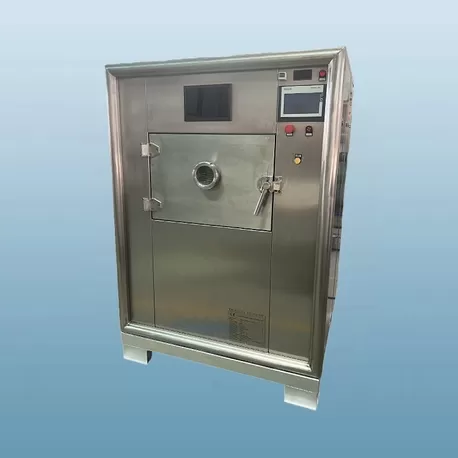
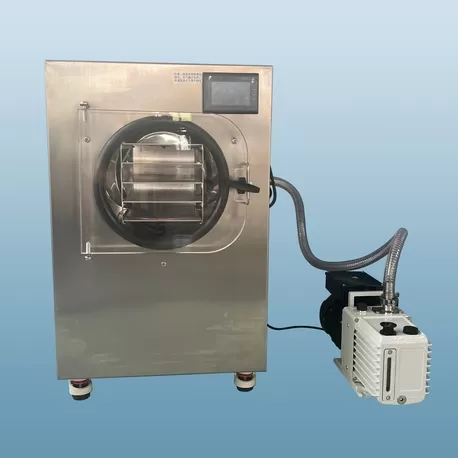
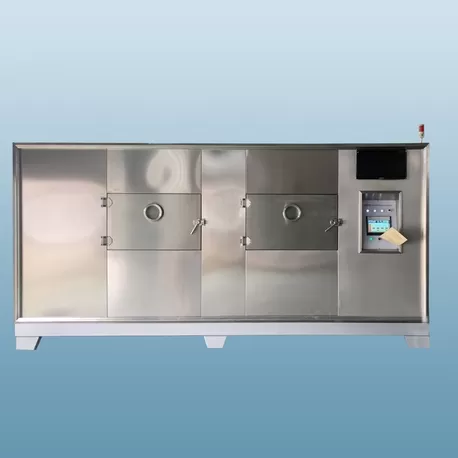
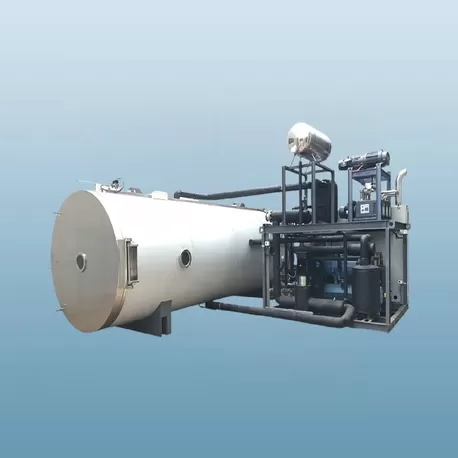
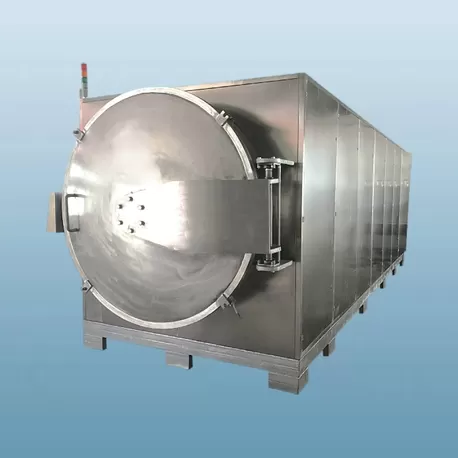
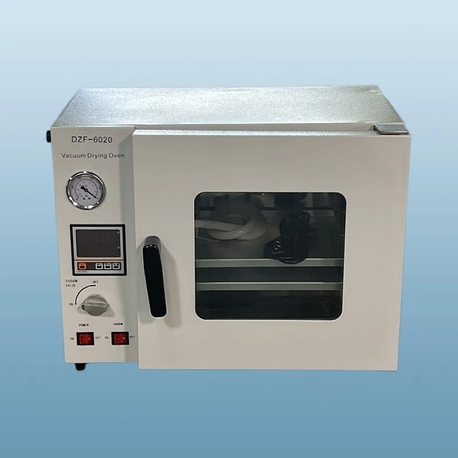
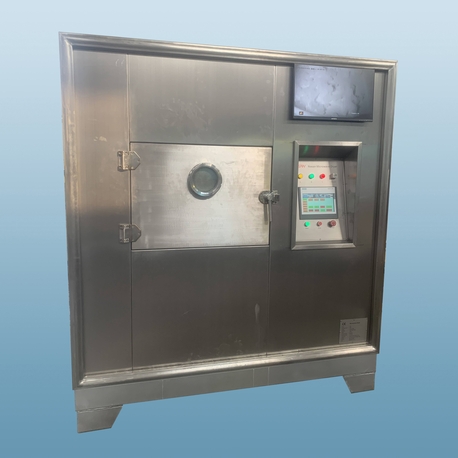
Time is often the most expensive commodity in manufacturing. Whether you are processing advanced ceramics, drying lumber, or sintering chemical powders, the bottleneck usually happens during the thermal processing stage. Traditional gas or electric firing methods are slow and energy-intensive. This is where the microwave kiln changes the game.
Unlike the small, hobbyist devices used for fusing glass jewelry in a home kitchen, an industrial microwave kiln is a sophisticated piece of machinery designed for heavy-duty thermal processing. These systems offer rapid heating, precise control, and energy efficiency that conventional ovens simply cannot match. For companies like Nasan, developing these advanced thermal solutions has become a mission to help industries reduce their carbon footprint while boosting throughput.
This article breaks down how this technology works, its specific operational flows, and why it is becoming the standard solution for distinct commercial drying and heating challenges.

How a Microwave Kiln Differs from Traditional Methods
To understand the value of this technology, we must first look at the mechanism. Traditional kilns work on the principle of thermal conductivity. Heat is applied to the outside of the material and slowly travels to the center. If you heat the outside too fast, the product cracks or forms a "case-hardened" shell that traps moisture inside.
A microwave kiln operates differently. It utilizes dielectric heating. The microwave energy penetrates the material and interacts with the water molecules or the dielectric properties of the material itself. Heat is generated instantly throughout the volume of the product. This means the center heats up at the same rate as the surface.
This volumetric heating eliminates the need for long warm-up cycles. You can turn the machine on and start processing immediately. For industrial facility managers, this translates to a massive reduction in standby energy consumption.
Implementing a microwave system into a production line requires a clear understanding of the workflow. While every machine is customized based on the product, the general operation follows a streamlined path.
1. Material Loading
The raw material—be it wet ceramic greenware, chemical powder, or wood—is loaded onto a conveyor belt or placed into a batch tray. In continuous systems, the feed needs to be consistent to ensure uniform exposure to the waves.
2. The Heating Zone
As the material enters the cavity of the microwave kiln, it passes through a suppression tunnel designed to prevent radiation leakage. Once inside, magnetrons (the vacuum tubes that generate microwaves) blast the chamber with energy. Stirrers or mode mixers rotate to bounce the waves around, ensuring there are no hot or cold spots.
3. Moisture Extraction and Ventilation
As the material heats internally, moisture turns to steam and is driven out to the surface. A robust ventilation system is crucial here. Unlike a standard oven that relies on hot air to dry, the microwave pushes the water out physically. The airflow system in the kiln whisks this vapor away immediately to prevent re-absorption.
4. Cooling and Unloading
After passing through the heating zone, the product enters a cooling phase before it exits the machine. This protects the operator and stabilizes the material.
Key Applications for Microwave Kiln Technology
The versatility of microwave thermal processing allows it to fit into various industrial sectors. It is not limited to just one type of material.
Advanced Ceramics and Sintering
In the ceramic industry, firing times can take days. A microwave kiln can reduce sintering times from roughly 10 hours to as little as 90 minutes. This is vital for technical ceramics used in electronics and aerospace, where grain growth needs to be minimized to maintain material strength.
Chemical Powder Drying
Chemicals often degrade if exposed to high heat for too long. Because microwave heating is fast, the material is exposed to thermal stress for a fraction of the time compared to rotary dryers. This preserves the chemical integrity of the powder.
Wood and Timber Processing
Drying thick lumber is notoriously difficult. If the surface dries faster than the core, the wood cracks. Microwave technology heats the core, pushing moisture out. This results in higher yields of usable timber and significantly faster turnover rates for lumber yards.
Food and Insect Drying
Interestingly, this technology is widely used in the food sector. For instance, drying black soldier fly larvae or sterilizing spices requires precise temperature control to kill pathogens without cooking the product. Brands like Nasan have engineered specific solutions for these biological materials, ensuring the nutrient content remains high while shelf life is extended.
Solving Manufacturing Pain Points with a Microwave Kiln
Production managers often face specific "pain points" that traditional thermal equipment causes. Here is how microwave technology acts as a solution.
The Problem of Uneven Heating:In a gas kiln, the items closest to the burners get hotter than those in the center of the stack. This leads to inconsistent product quality and high rejection rates.The Solution:Because the microwave kiln heats the volume of the product, uniformity is significantly improved. Every item on the belt receives the same energy dosage, leading to consistent batch quality.
The Space Constraint:Tunnel kilns that rely on hot air need to be incredibly long to allow enough residence time for heat to penetrate the product.The Solution:Microwave systems are compact. Since the heating is instantaneous, the conveyor line can be much shorter, saving valuable factory floor space.
Energy Efficiency:Heating a massive brick structure takes hours and consumes vast amounts of fuel.The Solution:Microwaves only heat the product, not the air or the walls of the machine. The energy transfer efficiency is roughly 80-90%, compared to the 30-40% efficiency of gas kilns.

Safety and Maintenance Considerations
Operating high-power industrial equipment requires strict adherence to safety protocols. A commercial microwave kiln is built with multiple safety interlocks. If a door is opened or a fault is detected, the power cuts instantly.
Maintenance is relatively straightforward but critical. The cooling system for the magnetrons (usually water or oil-cooled) must be checked regularly. If a magnetron overheats, its lifespan is drastically reduced. Additionally, the conveyor belt must be kept clean. Debris left on the belt can absorb microwaves, leading to localized burning or arcing.
Operators must also monitor the wave leakage detectors. While industrial machines are shielded heavily, regular checks ensure that the working environment remains safe for all personnel.
Choosing the Right Microwave Kiln for Your Facility
Selecting the right equipment involves more than just buying the machine with the highest power rating. You must consider the dielectric properties of your material. Water absorbs microwaves well, but some ceramics are transparent to microwaves at room temperature and need "susceptors" to start the heating process.
Working with an experienced manufacturer is essential. Nasan often advises clients to run pilot tests. Sending a sample of your material to be tested in a lab-scale microwave unit will provide data on the exact power density and time required for your specific process.
Scalability is another factor. You might start with a batch kiln for R&D and small runs, but as demand grows, you will need a conveyorized tunnel system. Ensure your supplier can support this transition.
The industrial landscape is shifting towards technologies that offer speed, precision, and sustainability. The microwave kiln is no longer a niche tool; it is a central component in modernizing production lines across the globe. From sintering ceramics to drying biomass, the ability to heat from the inside out solves age-old manufacturing problems.
By reducing energy costs and shrinking processing times, businesses can achieve a faster ROI. Whether you are upgrading an existing line or building a new facility, considering microwave thermal processing is a smart strategic move. Companies like Nasan continue to innovate in this space, providing the robust machinery needed to keep industries moving forward.
Frequently Asked Questions (FAQ)
Q1: Can a microwave kiln process metal parts?
A1: Generally, no. Solid metal reflects microwaves, which can damage the magnetrons and cause arcing inside the chamber. However, powdered metals can sometimes be sintered using microwave technology because the powder structure absorbs the energy differently than solid sheets.
Q2: Is the radiation from an industrial microwave kiln dangerous to workers?
A2: No, provided the machine is maintained correctly. Industrial systems are equipped with heavy-duty suppression tunnels and shielding that prevent waves from escaping. They also feature sensors that shut the system down immediately if a leak is detected, ensuring operator safety.
Q3: How much energy does a microwave kiln save compared to a gas kiln?
A3: Savings vary by application, but it is common to see energy reductions of 30% to 50%. Since the microwave energy targets the moisture or material directly without needing to heat the surrounding air or the heavy kiln structure, the process is significantly more efficient.
Q4: What is the lifespan of the magnetrons in these machines?
A4: The magnetron is a consumable part. High-quality industrial magnetrons typically last between 5,000 and 8,000 working hours. Their lifespan depends heavily on how well the cooling system is maintained and whether the machine is operated within its rated limits.
Q5: Can Nasan customize a microwave kiln for my specific product?
A5: Yes, customization is standard in this industry. Factors like conveyor width, tunnel height, microwave power (kW), and belt speed are all adjusted based on the specific density, moisture content, and throughput requirements of your product.