In modern food processing, pharmaceutical manufacturing, and industrial
material production, the selection of drying equipment directly influences
product quality, operational costs, and throughput consistency. A properly
engineered commercial dehydrator is not merely a machine—it is a precision tool that controls moisture activity,
preserves biochemical integrity, and enables scalable production. With rising
energy prices and stricter safety regulations, industrial operators demand
systems that deliver repeatable results, minimal thermal degradation, and
superior energy efficiency. This article provides an in-depth technical analysis
of commercial dehydration technology, covering thermodynamics, component
architecture, industry-specific solutions, and future innovations. Drawing from
decades of engineering expertise, we examine how leaders such as Nasan are redefining reliability in this critical sector.

To evaluate any industrial drying system, one must first understand its core
subsystems. Unlike residential units, a commercial dehydrator integrates heavy-duty components designed for 24/7 operation, uniform airflow
distribution, and precise environmental control. Below are the essential modules
that dictate performance.
1. Airflow Management & Plenum Design
Uniform air velocity across every tray eliminates over-drying at the edges
and under-drying in the center. Advanced systems use computational fluid
dynamics (CFD)-optimized plenums to achieve velocity variance below ±5%.
Cross-flow versus parallel-flow configurations affect moisture pickup
efficiency; the best designs incorporate adjustable baffles to accommodate
varying product loads.
2. Heat Source & Energy Recovery
Electric resistance, gas-fired, or heat-pump based systems each offer
distinct efficiency profiles. Heat pump commercial dehydrator models have gained traction due to coefficient of performance (COP) values
reaching 4.0 or higher, cutting energy consumption by up to 50% compared to
conventional electric units. Integrated heat exchangers recover exhaust
enthalpy, preheating incoming air and further reducing thermal load.
3. Control & Monitoring Electronics
Industrial drying demands programmable logic controllers (PLC) with
multi-stage recipe storage, real-time data logging, and remote connectivity.
Modern units allow operators to set dry-bulb temperature, wet-bulb temperature,
and ramp profiles with precision ±0.5°C. Compatibility with SCADA systems
ensures seamless integration into automated production lines.
Critical Performance Metrics & Efficiency Optimization
Selecting a commercial dehydrator based solely on tray capacity often leads to suboptimal lifecycle costs.
Engineering teams rely on quantifiable parameters to compare equipment
objectively.
Moisture Extraction Rate (MER): Measured in liters per
hour, MER determines throughput. High-density products like jerky require MER
above 12 L/h per square meter of tray area.
Energy Efficiency Ratio (EER): Expressed as kg of water
removed per kWh. Top-tier systems achieve 3.2–4.5 kg/kWh using advanced heat
pump technology.
Drying Uniformity Index: Derived from moisture content
variation across trays. Industry benchmarks require ≤3% standard deviation for
pharmaceutical and premium food applications.
Recovery Time: After door opening or batch change, how
quickly does the chamber return to setpoint? Short recovery (under 4 minutes)
minimizes batch-to-batch delays.
Optimization extends beyond hardware. Implementing drying kinetics
models—such as the Page or Henderson-Pabis equations—allows operators to shorten
drying cycles without compromising final product quality. Predictive maintenance
using vibration analysis and thermal imaging further maximizes uptime, a factor
where manufacturers like Nasan provide comprehensive
service packages.
Industry-Specific Applications and Custom Solutions
The versatility of a commercial dehydrator lies in its ability to adapt to diverse product characteristics. Each sector
presents unique constraints—from hygiene standards to particulate emissions—that
demand tailored engineering.
Food Processing & Preservation
Fruits, vegetables, herbs, and meat products require strict control of water
activity (aw) below 0.85 to inhibit microbial growth. For high-sugar fruits,
temperature ramping prevents case hardening, while meat products need consistent
airspeed to avoid fat oxidation. Stainless steel 304 or 316L construction with
rounded corners meets USDA and FDA sanitation requirements. Batch sizes from 200
kg to 10,000 kg per cycle are common, with modular tray systems enabling quick
changeovers between product families.
Pharmaceutical & Nutraceutical Drying
Active pharmaceutical ingredients (APIs), herbal extracts, and probiotics
demand GMP-compliant environments. Here, a commercial
dehydrator must feature HEPA-filtered inlet air, validated cleaning
protocols, and 21 CFR Part 11 data traceability. Low-temperature drying (below
40°C) preserves thermolabile compounds, while inert gas purging prevents
oxidation. Manufacturers often integrate glove ports and sampling ports for
in-process moisture testing without breaking sterility.
Pet Food & Animal Treats
With the premium pet food market growing at 7% CAGR, producers require
high-capacity dehydration lines capable of handling meat, organ meats, and
vegetable blends. Airflow directionality must manage high fat content to prevent
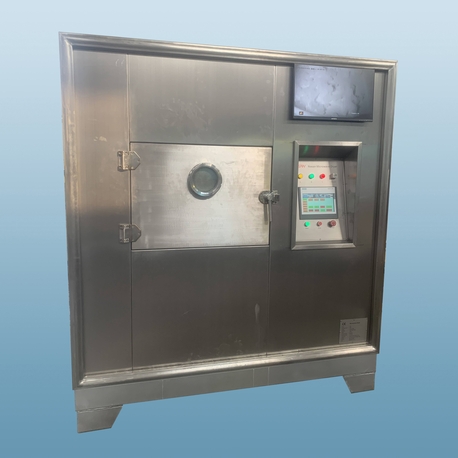
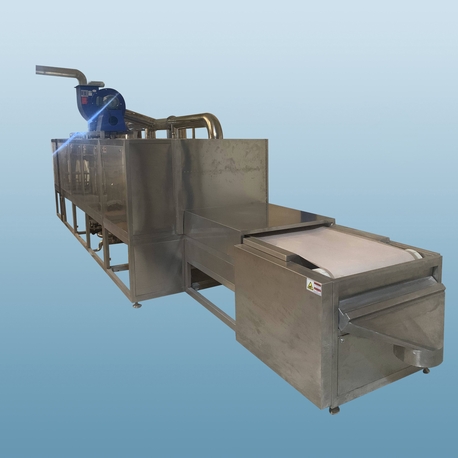
residue buildup. Automated belt-type continuous dehydrators are increasingly
replacing batch cabinets for high-volume producers, offering energy recovery and
reduced labor costs.
Industrial Materials & Specialty Chemicals
Ceramics, catalysts, and polymer pellets require precise moisture removal to
maintain structural integrity. Solvent-wetted materials demand explosion-proof
electrical enclosures and spark-resistant construction. Here, the choice of a
commercial dehydrator must account for ATEX or NEC Class I/II hazardous location certifications.
Key Considerations When Selecting a Commercial Dehydrator
Procurement decisions should extend beyond initial capital expenditure.
Lifecycle analysis, operator safety, and future scalability are equally vital.
Below is a structured evaluation framework used by engineering consultants.
Throughput & Scalability: Determine required daily
output (kg/h). Modular designs allow additional chambers to be added without
replacing core utilities.
Construction Materials & Finish: Full-welded 304
stainless steel interiors resist corrosion and simplify sanitation. External
panels with powder coating offer durability in washdown environments.
Automation Level: Does the system include recipe
management, alarm history, and remote diagnostics? IoT-enabled platforms reduce
downtime by alerting maintenance teams before failures occur.
Energy Source & Utility Integration: Evaluate local
gas, electric, or steam availability. Hybrid systems that switch between power
sources provide operational flexibility.
Regulatory Compliance: NSF/ANSI 3-A, CE, and UL
certifications are non-negotiable for food and pharma exports.
Nasan exemplifies these criteria,
offering modular commercial dehydrators with optional CIP (clean-in-place)
systems, real-time moisture sensors, and energy monitoring dashboards. Their
engineering team collaborates with clients during the design phase to map drying
curves for specific products, ensuring that the final equipment aligns with both
production targets and sustainability goals.
Innovations Shaping the Future of Industrial Drying
As Industry 4.0 principles permeate processing plants, the next generation of
commercial dehydrator technology focuses on autonomous
optimization and carbon footprint reduction. Several emerging trends warrant
attention:
AI-Driven Drying Algorithms: Machine learning models that
analyze real-time moisture data and adjust temperature, airflow, and cycle time
dynamically. Early adopters report 12–18% reductions in energy use and improved
color retention in dried fruits.
Electrohydrodynamic (EHD) Drying: Utilizes corona discharge
to enhance mass transfer without elevated temperatures. While still emerging,
EHD shows promise for ultra-sensitive biomaterials.
Hydrogen-Enabled Heat Systems: For facilities with green
hydrogen infrastructure, hydrogen burners provide high-temperature drying with
zero CO₂ emissions.
Digital Twin Integration: Full virtual replicas of drying
chambers allow operators to test new recipes, predict wear patterns, and train
staff without interrupting production.
Companies that invest in these technologies now will gain competitive
advantages in product consistency, energy compliance, and supply chain
resilience. Partnerships with experienced manufacturers ensure that new
innovations are implemented without compromising reliability.

Common Challenges & Engineering Solutions
Even the most robust commercial dehydrator installations
encounter hurdles. Addressing them requires a combination of sound design and
operational discipline.
Challenge: Non-uniform drying leading to rejected
batches.
Solution: Implement baffle plates or adjustable air
ducts; perform periodic airflow mapping using anemometers.
Challenge: High energy costs eroding
margins.
Solution: Retrofit with heat recovery wheels or
upgrade to a heat-pump-based system. Energy audits can identify specific loss
points.
Challenge: Microbial contamination risks in low-temperature
drying.
Solution: Integrate UV-C light treatment within the
air handling unit and maintain positive pressure to prevent infiltration.
Challenge: Labor-intensive
loading/unloading.
Solution: Motorized rack handling systems
or conveyorized belt dryers dramatically reduce manual handling time.
Frequently Asked Questions (FAQ)
Below are common inquiries from operations managers, quality assurance teams,
and facility engineers regarding commercial dehydration equipment.
Q1: How do I determine the correct capacity for my production needs?
A1: Capacity should be calculated based on wet product input
per batch or per hour, desired final moisture content, and cycle time. For
example, processing 2,000 kg of wet apples (80% moisture) to 15% moisture
requires removing approximately 1,625 kg of water. A commercial
dehydrator with a moisture extraction rate of 40 kg/h would need about
41 hours per batch. Adding extra chambers or choosing a continuous system may be
more efficient for high volumes. Consult with manufacturers like Nasan to perform mass-balance
calculations based on your specific product.
Q2: What is the typical maintenance schedule for industrial
dehydrators?
A2: Daily tasks include inspecting door seals, cleaning air
inlet filters, and checking condensate drains. Monthly procedures involve
verifying sensor calibration, inspecting belts and bearings, and cleaning heat
exchanger fins. Annually, a full service should include refrigerant charge
verification (for heat pump units), control system firmware updates, and
structural integrity checks. Adhering to a documented maintenance plan can
extend equipment life beyond 20 years.
Q3: Can a single commercial dehydrator handle different products like herbs,
meat, and vegetables?
A3: Yes, provided the unit offers programmable drying
profiles and adjustable airflow. However, cross-contamination risks require
thorough cleaning between batches, especially when switching between
allergen-containing products (e.g., nuts) and non-allergen items. Some
manufacturers offer removable tray systems and dedicated plenum inserts to
simplify changeovers. Always validate that the commercial dehydrator can achieve the temperature range required—herbs often need 35–45°C while jerky
requires 60–70°C for food safety.
Q4: How do heat pump dehydrators compare to traditional electric or gas
models in terms of operating cost?
A4: Heat pump systems typically reduce energy consumption by
40–60% compared to conventional electric resistance dryers and by 20–35% versus
gas-fired units in similar temperature ranges. They also provide
dehumidification without venting conditioned air, making them ideal for
climate-controlled facilities. The initial investment is higher, but payback
periods often fall between 1.5 and 3 years for operations running multiple
shifts. Lifecycle cost analyses should account for both energy and potential
carbon tax credits.
Q5: What certifications should I look for when purchasing a commercial
dehydrator for food use?
A5: For food applications, ensure the unit carries NSF/ANSI
Standard 4 (commercial cooking equipment) or NSF/ANSI 3-A for dairy processing
if applicable. Electrical safety certifications such as UL 60335-2-49 or CE
marking are mandatory. If exporting to Canada, CSA certification may be
required. Additionally, for pharmaceutical or nutraceutical drying, look for
compliance with GMP guidelines and ISO 14644 cleanroom standards if installed in
controlled environments. Nasan provides full certification
packages tailored to each market’s regulatory framework.
Q6: Can I retrofit my existing drying system with advanced controls and heat
recovery?
A6: In many cases, yes. Retrofitting a legacy
commercial dehydrator with modern PLC-based controls, variable
frequency drives (VFDs) for fans, and heat recovery wheels can improve
efficiency by 25–35%. However, structural constraints (duct sizes, chamber
insulation) may limit gains. A site audit by an engineering team is recommended
to evaluate ROI. Manufacturers like Nasan offer upgrade kits that
integrate seamlessly with existing enclosures.
Selecting and operating a commercial dehydrator is a strategic decision that impacts product quality, operational efficiency,
and environmental footprint. By focusing on scientifically validated performance
metrics, industry-specific engineering, and future-ready automation, businesses
can achieve consistent results while controlling costs. Whether upgrading an
existing line or designing a new facility, partnering with a manufacturer that
combines deep technical knowledge with responsive support—such as Nasan—ensures that your drying
infrastructure remains a competitive asset for years to come.
For detailed specifications and consultation on tailored drying
solutions, explore the full range of commercial dehydrator
systems designed for demanding industrial environments.