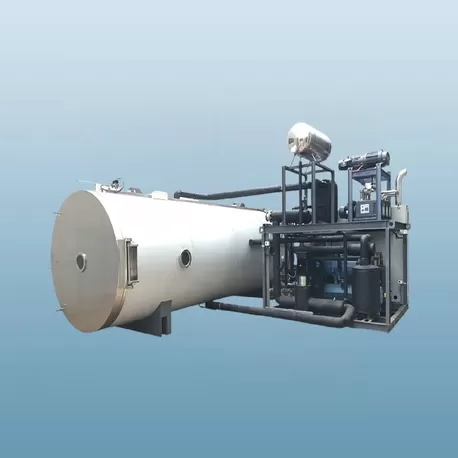


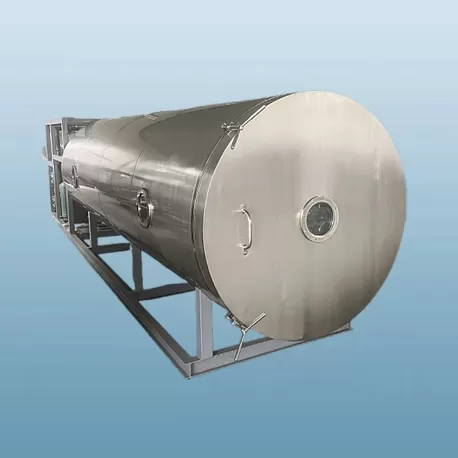
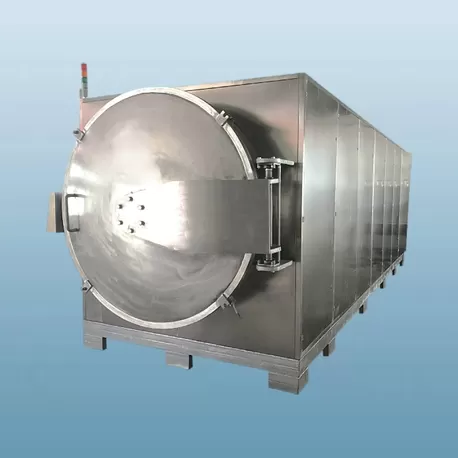
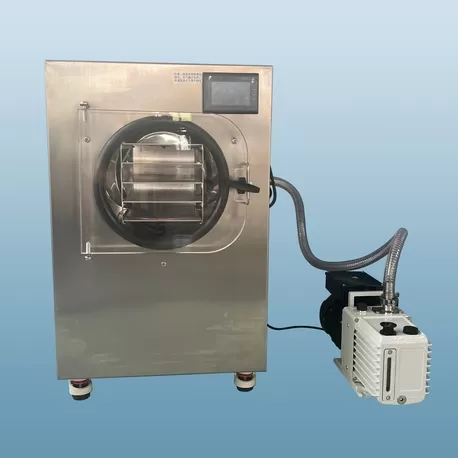
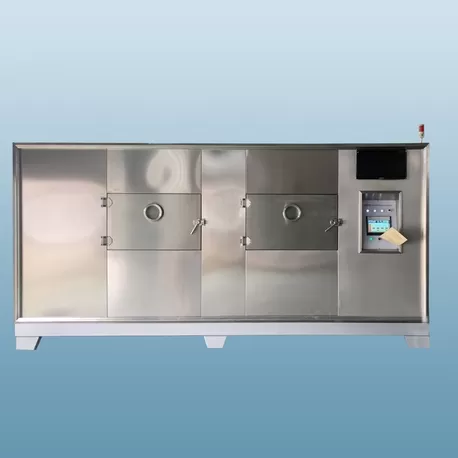
Selecting a lyophilizer manufacturer is a long-term decision that impacts product quality, batch consistency, and regulatory compliance. Many buyers focus only on chamber size and condenser temperature. That approach leads to uneven drying, longer cycle times, and validation failures. This guide presents nine measurable criteria that process engineers and quality assurance teams should verify before purchase. Each point is based on FDA guidance, GMP standards, and field performance data from pharmaceutical and biotech installations.

1. Shelf Temperature Uniformity & Control Accuracy
The shelf is where product freezing and primary drying occur. A competent lyophilizer manufacturer must guarantee shelf temperature uniformity within ±1°C across all shelves and positions. Poor uniformity causes collapse or melt-back in warm spots and incomplete sublimation in cold spots.
Request a temperature mapping report using at least 15 thermocouples per shelf (SEMI standard).
Check that the shelf fluid (silicone oil or glycol) has a flow rate above 1.5 m/s to avoid boundary layer effects.
Verify that the control system uses PID loops with < 0.2°C overshoot during ramp phases.
Nasan provides thermal qualification reports as part of every lyophilizer delivery, including heat distribution maps at -40°C, -20°C, 0°C, and +40°C.
2. Condenser Capacity and Ice Capture Efficiency
The condenser must capture all sublimated water vapor without flooding. A common specification is condenser capacity (kg of ice per batch). However, the true metric is the ratio of condenser surface area to shelf area. Industry best practice: 3:1 ratio for pharmaceutical freeze dryers.
Check condenser coil material – stainless steel 316L is standard for corrosive products.
Verify defrost method (hot gas, electric, or water spray) and defrost time (< 60 minutes for full ice melt).
Ask for pressure rise test data (leak rate < 0.01 mbar·L/sec after condenser isolation).
When evaluating a lyophilization system from any lyophilizer manufacturer, request condenser performance curves at different chamber pressures (50–200 mTorr).
3. Vacuum System Design and Leak Integrity
Vacuum level determines sublimation rate. For most biologics and small molecules, operating pressure is 50–200 mTorr. The vacuum system must achieve ≤ 5 mTorr ultimate pressure. Key components:
Two-stage rotary vane pump or dry screw pump for oil-free operation.
Roots blower (booster) for rapid pump-down (< 15 minutes to 100 mTorr).
Leak detection system – helium leak test at < 1×10⁻⁹ mbar·L/s per SEMI E48.
Nasan integrates leak check ports and automated pressure rise tests into its PLC, recording results for each batch.
4. Clean-in-Place (CIP) and Sterilize-in-Place (SIP) Validation
For pharmaceutical and medical device applications, the freeze dryer must be cleanable and sterilizable without disassembly. A reliable lyophilizer manufacturer will provide CIP/SIP protocols validated per ASME BPE 2022.
CIP spray balls must cover all internal surfaces with Reynolds number > 10,000.
SIP uses saturated steam at 121°C for 30 minutes, with temperature mapping showing no cold spots.
Condensate drain must have a steam trap and air break to prevent back contamination.
Ask for a CIP coverage test using riboflavin (0.2 g/L) and UV inspection. Industrial vacuum dryers and lyophilizers from Nasan include automated SIP cycles with data recording for FDA 21 CFR Part 11 compliance.
5. Automation and Data Integrity (21 CFR Part 11)
Modern lyophilizers use SCADA or dedicated PLCs with audit trails. Verify that the lyophilizer manufacturer provides:
Electronic batch records with time-stamped parameters (shelf temperature, pressure, condenser temperature).
User access control (role-based) and password management.
Backup and restore procedures for recipes (minimum 50 recipes storage).
Check that the system can generate a PDF report containing all cycle data, alarms, and operator actions. Validation documentation should include an IQ/OQ/PQ protocol.
6. Scalability from R&D to Production
Many buyers start with a pilot unit and later need a production-scale freeze dryer. A good lyophilizer manufacturer offers a scalable platform with identical shelf temperature behavior and vapor flow dynamics. Key parameters to match:
Kv (heat transfer coefficient) should scale linearly with shelf area.
Vial heat transfer geometry – keep same shelf spacing and condenser proximity.
Control algorithms – PID tuning should be transferable between sizes.
Nasan provides scale‑up reports based on dimensionless analysis (Biot number, Sherwood number) for each customer.
7. Energy Efficiency and Utility Integration
Lyophilization is energy‑intensive. The condenser refrigeration system alone can consume 50–100 kW for a 10 m² unit. Evaluate:
Compressor type – screw or scroll compressors with variable frequency drives (VFD) reduce energy by 20–30%.
Heat recovery – condenser heat can preheat cleaning water or warm the facility.
Steam consumption for SIP – typical 20–40 kg of steam per cycle for a 5 m² unit.
Request utility consumption data per kg of ice removed. A well‑designed system consumes 0.8–1.2 kWh per kg of ice.
8. Construction Materials and Surface Finish
Contact surfaces must be corrosion‑resistant and easy to clean. Standard is AISI 316L stainless steel with internal electropolish (Ra ≤ 0.4 µm). External surfaces can be 304 or painted carbon steel.
Check welds for smoothness – no crevices or pits (ferroxyl test pass).
Gaskets and seals must be FDA‑compliant silicone or EPDM.
Viewport glass should be tempered borosilicate with an anti‑fog coating.
Pharmaceutical drying equipment from Nasan includes material certificates (3.1 per EN 10204) and weld inspection reports.
9. After‑Sales Support and Spare Parts Availability
Lyophilizers have a lifespan of 15–20 years. Choose a lyophilizer manufacturer that offers:
Global service network with < 48 hour response for critical breakdowns.
Spare parts list with 10‑year availability guarantee (vacuum pump seals, silicone oil, thermocouples).
Remote diagnostic access (VPN or modem) for troubleshooting.
Ask for references from customers who have operated the same model for at least 5 years. Nasan maintains a spare parts warehouse in three continents and offers annual preventive maintenance contracts.

Case Example: Avoiding Batch Failure Due to Poor Shelf Uniformity
A generic injectable manufacturer experienced 15% collapse in vials from the top shelf. Investigation showed the existing lyophilizer manufacturer had delivered a unit with ±3°C shelf variation. After switching to Nasan with ±0.8°C uniformity and updated control algorithms, batch consistency improved to 99.5% yield. The payback period was 11 months.
Frequently Asked Questions (FAQ)
Q1: What is the typical lead time for a production‑scale lyophilizer
from a reputable manufacturer?
A1: For a standard 10–20 m² unit with
CIP/SIP, lead time is 20–28 weeks. This includes engineering, fabrication, FAT
(Factory Acceptance Test), and SAT (Site Acceptance Test). Pilot units (0.5–2
m²) ship in 12–16 weeks. Nasan offers expedited
delivery for common models (add 15% premium).
Q2: How do I validate a lyophilizer for a new
product?
A2: Follow the FDA’s “Process Validation: General
Principles and Practices” (2011). Steps: (1) Determine critical process
parameters (shelf temperature ramp rate, chamber pressure, time). (2) Perform
three consecutive successful engineering batches with in‑process sampling. (3)
Monitor product temperature using wireless thermocouples. (4) Conduct a media
fill or worst‑case load test. Your lyophilizer manufacturer should provide IQ/OQ documentation to support your validation.
Q3: What is the difference between a freeze dryer and a vacuum
dryer?
A3: A freeze dryer (lyophilizer) freezes the product then
sublimates ice under vacuum – used for heat‑sensitive biologics, vaccines, and
diagnostics. A vacuum dryer simply applies heat under vacuum without freezing –
used for heat‑stable powders or solvents. Nasan produces both systems but a lyophilizer requires a larger condenser and refrigeration system.
Q4: How often should I replace the vacuum pump oil in a
lyophilizer?
A4: For rotary vane pumps, change oil every 500–1,000
operating hours or every 3 months, whichever comes first. Use synthetic oil for
better performance under high water vapor load. Install an oil mist filter to
prevent contamination. Dry screw pumps require no oil changes but need periodic
bearing lubrication (every 8,000 hours).
Q5: Can a lyophilizer be modified for organic solvents (e.g., DMSO,
ethanol)?
A5: Yes, but requires explosion‑proof electrical
components (Class I, Div 1), inert gas purge (nitrogen), and a condenser rated
for solvent capture (lower temperature, e.g., -85°C). Standard aqueous
lyophilizers use -55°C condensers which are insufficient for low‑freezing
solvents. Consult your lyophilizer manufacturer for a solvent‑compatible design – modifications add 30–50% to cost.
Request a Technical Consultation or Quotation
Choosing the right lyophilizer manufacturer determines your product's stability, process efficiency, and regulatory success. Nasan offers free feasibility testing for your formulation – send a 100 ml sample. Our engineers will recommend shelf sizing, condenser capacity, and automation level. We provide a complete proposal including IQ/OQ documentation, installation supervision, and operator training.
Submit an inquiry to our lyophilization team → Click here for a response within 24 hours