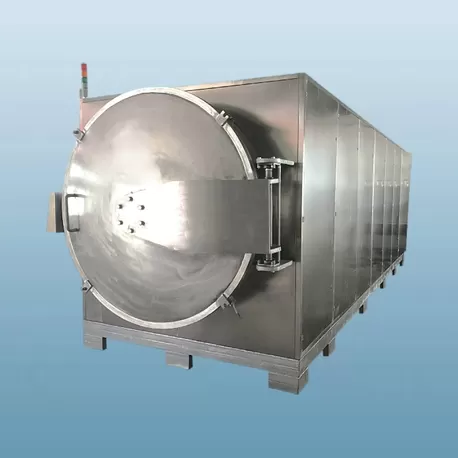
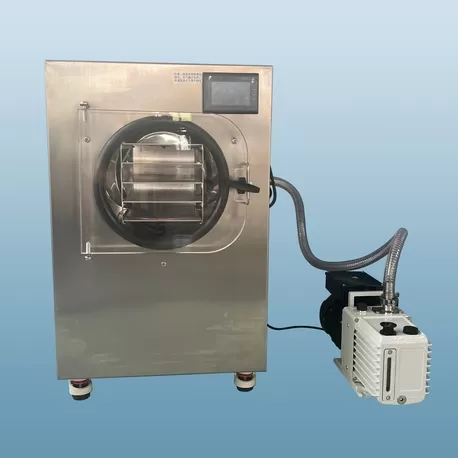
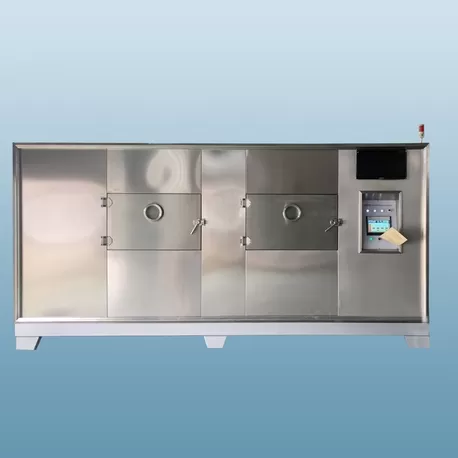
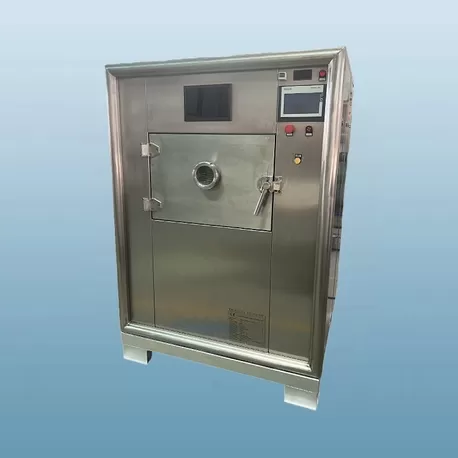
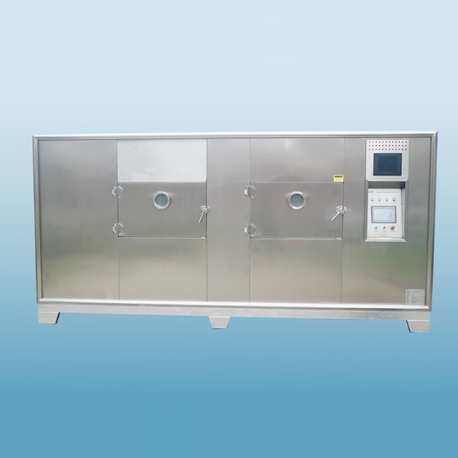
The industrial sector is currently witnessing a transition from traditional
thermal dehydration methods toward more energy-efficient and precise
electromagnetic solutions. As manufacturers face increasing pressure to reduce
carbon footprints while maintaining high-quality output, microwave
drying has emerged as a primary technology for achieving these
dual objectives. Unlike conventional methods that rely on external heat
transfer, this technology operates on the principle of volumetric heating,
transforming how materials are processed at a molecular level.
For over two decades, Nasan has pioneered the
development of advanced thermal systems, focusing on the integration of
microwave energy into continuous production lines. This article provides a
comprehensive technical examination of how microwave
drying functions, its specific advantages over convective
heating, and the engineering requirements for successful industrial
implementation.

1. The Fundamental Physics of Dielectric Heating
To understand the efficacy of this technology, one must analyze the
interaction between electromagnetic fields and polar molecules. Most biological
and chemical materials contain water or other polar solvents. When these
materials are subjected to a high-frequency electric field, the polar molecules
attempt to align themselves with the rapidly oscillating field.
Dipolar Rotation: At a frequency of 2450 MHz, water
molecules rotate billions of times per second. This rapid movement generates
internal friction, which is converted into heat.
Internal Vapor Pressure: Because the heat is generated
within the material, it creates a positive pressure gradient that pushes
moisture toward the surface. This is a fundamental departure from convective
drying, where the surface often dries and hardens before the
core is processed.
Selectivity: Microwave energy is absorbed primarily by
substances with a high dielectric loss
factor (like water), while the surrounding air and many
structural materials remain relatively cool.
2. Overcoming the "Case Hardening" Challenge
A recurring pain point in industrial dehydration is "case hardening." In
traditional hot-air systems, the exterior of a product dries too quickly,
forming an impermeable layer that traps moisture inside the core. This leads to
microbial instability and poor shelf life.
By utilizing microwave
drying, the moisture is driven from the inside out. This
constant outward flux of vapor keeps the surface pores open, ensuring that the
material dries uniformly. For industries dealing with thick-sliced fruits,
ceramic catalysts, or high-density polymers, this mechanism is a pivotal
solution for maintaining structural integrity and preventing internal cracks or
"blowouts."
3. Engineering Precision: 915 MHz vs. 2450 MHz
In large-scale industrial settings, selecting the correct frequency is a
major engineering decision. Nasan engineers emphasize
the distinction between these two common industrial bands:
2450 MHz: Ideal for thinner materials and smaller batch
sizes. It offers a shorter wavelength, which is effective for rapid heating of
surface layers and thin-film applications.
915 MHz: Preferred for deep penetration
depth in large bulk volumes. The longer wavelength allows the
energy to reach the center of large containers or thick materials, ensuring
total thermal uniformity across the entire batch.
4. Thermodynamic Efficiency and Energy Conservation
The energy dynamics of a microwave
drying system are significantly more favorable than steam or
gas-fired ovens. In a conventional oven, a vast amount of energy is wasted
heating the air, the conveyor belts, and the insulated walls.
Data from industrial installations indicate that microwave
generators can reduce energy consumption by 30% to 60%. Since
the energy is focused solely on the product, the "ramp-up" time is virtually
non-existent. When the system is turned on, the drying starts immediately. When
it is turned off, the energy transfer ceases instantly, providing a level of
operational agility that thermal-mass-heavy systems cannot provide.
5. Integration of Microwave-Vacuum Hybrid Systems
For heat-sensitive pharmaceuticals and high-value food extracts, microwave
drying is often combined with vacuum technology. By lowering
the atmospheric pressure inside the chamber, the boiling point of water is
significantly reduced—sometimes as low as 35°C to 45°C.
This hybrid approach allows for the rapid removal of moisture at low
temperatures, preserving delicate proteins, enzymes, and aromatic compounds.
Nasan specializes in these vacuum microwave
systems, which are now the industry standard for producing
high-potency botanical extracts and advanced technical ceramics where thermal
stress must be avoided.
6. PLC Automation and Real-Time Process Monitoring
Modern industrial microwave systems are no longer "black boxes." They are
sophisticated pieces of industrial automation
equipment. A high-performance system includes:
Infrared Thermometry: Non-contact sensors provide a
continuous readout of the product's surface temperature, allowing the PLC to
adjust magnetron power in milliseconds.
Variable Power Control: Unlike home microwaves that pulse
on and off, industrial units use switch-mode power supplies to provide a steady,
variable flow of energy.
Auto-Tuning Waveguides: These components ensure that the
maximum amount of energy is delivered to the product, even as its moisture
content (and thus its dielectric properties) changes during the cycle.
7. Addressing Non-Uniformity and "Hot Spots"
A common technical hurdle in electromagnetic heating is the formation of
standing waves, which can cause localized overheating. To solve this,
professional systems employ multiple strategies:
Mode Stirrers: Rotating fans that reflect and scatter the
microwaves to create a diffuse field.
Conveyor Motion: Moving the product through the field
ensures that every part of the material is exposed to different parts of the
wave pattern.
Phased Arrays: Advanced configurations that coordinate
multiple magnetrons to cancel out "cold spots" and ensure a homogenous thermal
distribution.

8. Safety Protocols and Microwave Leakage Suppression
Safety is a primary concern in B2B environments. Industrial microwave
drying units are engineered with multi-layered safety features.
The doors and access points use 1/4-wavelength "choke" seals that prevent
electromagnetic energy from escaping. Furthermore, interlock switches ensure the
system cannot operate if any panel is compromised. Continuous leakage monitors
are often installed around the perimeter of the machine to ensure compliance
with international safety standards, keeping leakage levels far below the
5mW/cm² limit.
9. Economic Analysis: Throughput and ROI
When evaluating the cost-benefit ratio of industrial microwave
systems, decision-makers must look beyond the initial purchase
price. The ROI is driven by:
Increased Throughput: Reducing a 12-hour drying cycle to 45
minutes allows for significantly higher daily production volumes.
Reduced Footprint: A microwave tunnel occupies a fraction
of the space required by a traditional tray dryer or a long conveyor oven.
Product Quality: Lowering the rejection rate due to uneven
drying or thermal damage directly impacts the bottom line.
Technical Comparison Table
| Parameter | Hot Air Drying | Microwave Drying |
|---|
| Heating Principle | Surface Convection | Volumetric Internal Heating |
| Drying Duration | 8 - 24 Hours | 15 - 90 Minutes |
| Efficiency | 25% - 35% | 65% - 85% |
| Structure Control | Risk of Case Hardening | Uniform Moisture Gradient |
In conclusion, the adoption of microwave
drying technology represents a strategic move toward
operational excellence. By understanding the dielectric properties of the target
material and utilizing precision engineering from experienced partners like
Nasan,
manufacturers can achieve levels of consistency and efficiency that were
previously impossible. This technology is not merely an alternative; it is a
fundamental requirement for the future of high-precision material
processing.
Frequently Asked Questions
Q1: What materials are not suitable for microwave
drying?
A1: Materials with very low dielectric loss factors, such as certain pure
plastics (PTFE) or completely dry minerals, do not absorb microwave energy well.
Additionally, materials that are highly conductive, like metals, will reflect
the energy and can cause arcing. A thorough material analysis is recommended
before system design.
Q2: How do you prevent the "edge effect" where corners dry
faster?
A2: This is managed through sophisticated waveguide design and field-shaping
techniques. By adjusting the geometry of the drying chamber and using field
diffusers, we can minimize the concentration of energy at the edges of the
product.
Q3: Is maintenance for these systems complex?
A3: Maintenance is primarily focused on the magnetrons and the cooling
system. Magnetrons are considered consumables with a predictable lifespan (often
several thousand hours). Modern PLC systems alert operators when a magnetron's
performance drops, allowing for scheduled replacement without unplanned
downtime.
Q4: Can microwave drying be used for sterilization as
well?
A4: Yes. The thermal effect of the microwaves effectively kills bacteria,
mold, and insect larvae. Because the heat is generated internally, it ensures
that the entire volume of the product reaches the necessary lethality
temperature, often making it more reliable than surface-only sterilization.
Q5: What is the typical lifespan of an industrial microwave
system?
A5: The structural components, made of high-grade stainless steel, can last
15-20 years or more. The electronics and magnetrons are replaced periodically,
but the core system is a long-term capital asset designed for heavy-duty
industrial use.
Request a Technical Consultation
As a global leader in industrial dehydration
technology, Nasan provides bespoke
engineering solutions tailored to your specific material requirements. Whether
you are processing food, chemicals, or advanced materials, our team can conduct
lab-scale testing to determine the optimal drying curve for your product.
Contact us today to discuss your project requirements and receive a
detailed inquiry response from our senior engineering team.