The industrial food preservation sector has undergone significant transitions
in recent decades, shifting from traditional fossil fuel-dependent methods
toward more precise, electricity-based solutions. As global demand for
nutrient-dense, additive-free dried snacks increases, processors require
equipment that can maintain the integrity of delicate biological materials.
Nasan has been
at the forefront of this transition, engineering advanced industrial drying
equipment designed to address the inherent limitations of
conventional thermal processing.
A primary challenge in fruit dehydration is the management of heat-sensitive
compounds. Traditional hot-air drying often leads to surface hardening,
enzymatic browning, and significant loss of vitamins. The adoption of a
microwave fruit
dryer offers a sophisticated alternative, utilizing volumetric
heating to accelerate moisture removal while preserving the organoleptic
properties of the produce. This analysis examines the technical architecture,
energy dynamics, and operational benefits of incorporating microwave technology
into modern production lines.
1. The Physics of Volumetric Heating in Fruit Dehydration
Unlike conventional ovens that rely on convection or conduction to transfer
heat from the surface to the core, a microwave fruit
dryer utilizes electromagnetic radiation, typically at
frequencies of 2450 MHz. This radiation penetrates the fruit tissue, interacting
directly with water molecules.
Dipolar Rotation: Water molecules are polar. When exposed
to an alternating electric field, they rotate billions of times per second. This
rapid movement generates internal friction, converting electromagnetic energy
into heat instantly throughout the entire volume of the fruit.
Ionic Conduction: Dissolved salts and ions within the fruit
juice also contribute to heat generation through migration in the oscillating
field.
Moisture Gradient Management: Conventional drying creates a
dry "crust" that acts as an insulator, slowing down the process. Microwave
energy maintains an internal vapor pressure that pushes moisture to the surface,
preventing case
hardening and ensuring uniform dryness.
2. Retention of Thermolabile Nutrients and Phytochemicals
One of the strongest arguments for utilizing Nasan technology is the
superior retention of nutritional value. Heat-sensitive vitamins, such as
Vitamin C (ascorbic acid), degrade rapidly under prolonged exposure to high
temperatures. Research indicates that because a microwave fruit
dryer significantly reduces processing time, the window for
thermal degradation is minimized.
Furthermore, the rapid inactivation of enzymes like polyphenol oxidase (PPO)
and peroxidase (POD) occurs much faster in a microwave field than in a hot air
stream. This rapid inactivation is vital for maintaining the natural color of
fruits like apples, bananas, and mangoes without the heavy use of sulfur dioxide
or other chemical preservatives. The resulting product maintains a higher
rehydration
ratio and a texture that more closely resembles the fresh state
compared to traditional methods.
3. Comparative Energy Efficiency Benchmarks
Energy consumption is a major overhead in the food industry. Traditional tray
dryers lose a substantial amount of heat to the surrounding environment and the
metal structure of the machine. In contrast, the efficiency of a microwave fruit
dryer is rooted in its ability to target only the
moisture-containing product.
Direct Energy Transfer: Energy is absorbed by the fruit,
not the air or the chamber walls. This results in thermal efficiency ratings
often exceeding 70%, compared to 20-30% in many steam-based systems.
Reduced Footprint: Because the drying rate is 4 to 10 times
faster than hot air, the equipment requires less floor space for the same
throughput, lowering the factory overhead
costs.
Instant Start/Stop: Unlike boilers that require a warm-up
period, microwave magnetrons provide instant heat, allowing for precise control
over the production schedule and reducing idle energy waste.
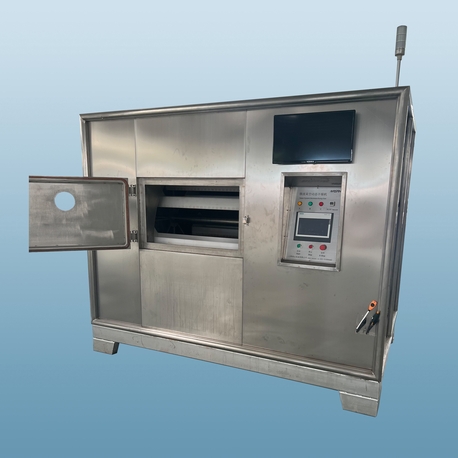
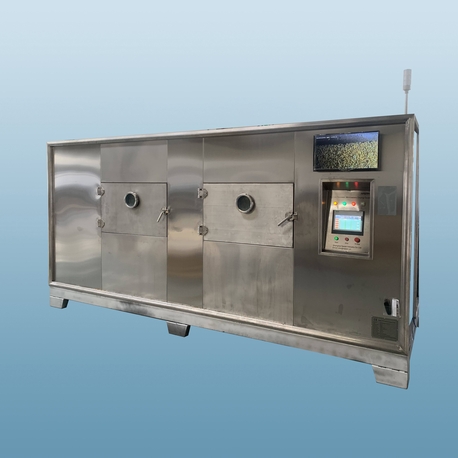
4. Structural Engineering and Material Compatibility
Industrial-grade drying systems must withstand rigorous sanitation protocols
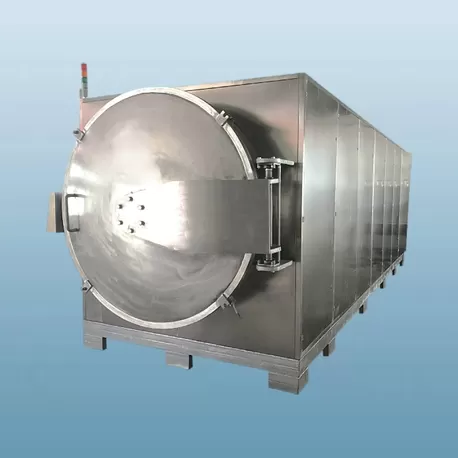
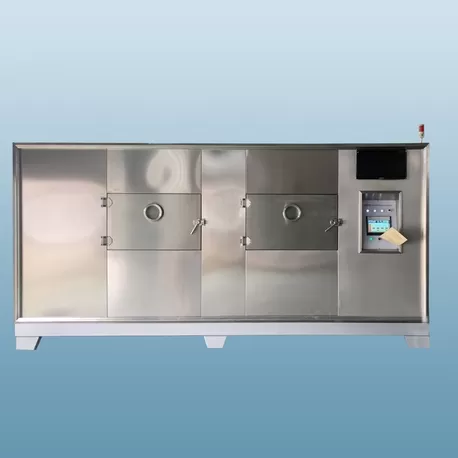
and continuous operation. Nasan ensures that every
microwave fruit
dryer is constructed using high-grade stainless steel (SUS304
or SUS316L) to meet international food safety standards. The internal geometry
of the drying chamber is engineered to prevent "hot spots" through the use of
sophisticated wave stirrers or rotating conveyor systems.
The conveyor belts are typically made of PTFE (Teflon) or other
microwave-transparent materials that do not absorb energy. This ensures that the
power is concentrated entirely on the fruit. Additionally, integrated cooling
systems for the magnetrons and transformers are a key component of the machine's
longevity, ensuring stable power output even during 24/7 industrial cycles.
5. Integration of PLC Control and Automation
Precision is the difference between a high-quality dried snack and a charred
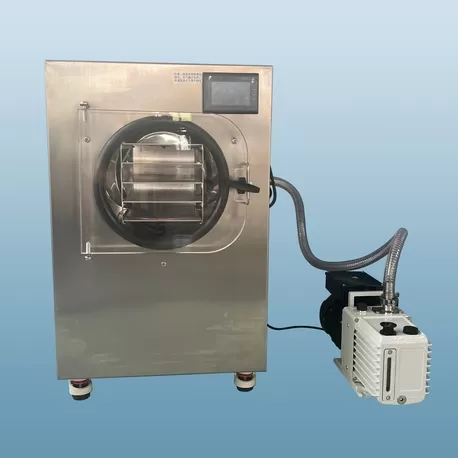
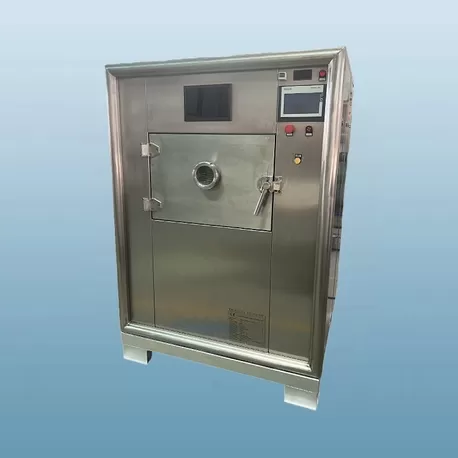
product. Modern vacuum microwave
drying systems incorporate Programmable Logic Controllers (PLC)
and Human-Machine Interfaces (HMI). These systems allow operators to
monitor:
Power Density: Adjusting the kW output based on the
specific moisture content of the incoming fruit batch.
Temperature Feedback: Utilizing infrared sensors to measure
the surface temperature of the fruit in real-time, preventing overheating.
Belt Speed: Controlling the residence time of the product
within the microwave field to ensure consistent final moisture levels (typically
below 15% for shelf stability).
Humidity Exhaust: Managing the airflow to remove the
liberated water vapor efficiently from the chamber.
6. Addressing Industry Challenges: Uneven Heating and Arcing
A common concern with low-end microwave equipment is uneven heating. In a
professional microwave fruit
dryer, this is mitigated through multi-point microwave feeding.
By introducing the energy from multiple angles and positions, the
electromagnetic field is homogenized.
Arcing—a phenomenon where electric discharge occurs between points—is another
risk when processing fruits with high sugar or mineral content. Nasan engineers solve this
by optimizing the microwave leakage
suppression and ensuring the moisture removal system prevents
the buildup of conductive steam clouds. This attention to detail ensures
operational safety and prevents product loss.
7. ROI and Long-Term Economic Viability
While the initial capital expenditure for a microwave fruit
dryer may be higher than a simple hot-air oven, the Return on
Investment (ROI) is realized through three main avenues:
Labor Savings: Automated continuous tunnel systems require
fewer operators than manual tray-loading systems.
Product Premiumization: Better color, flavor, and nutrient
profiles allow producers to position their products in the high-end "health
food" market, commanding higher retail prices.
Yield Optimization: Reduced drying times mean less exposure
to potential microbial growth during the drying process, lowering the risk of
batch rejection.

8. Application Scenarios Across the Fruit Processing Spectrum
The versatility of these systems extends across various produce types. For
berries (blueberries, cranberries), the microwave system prevents the skin from
bursting while maintaining a plump appearance. For tropical fruits like mango
and pineapple, it preserves the vibrant yellow and orange pigments. Even for
citrus peels and pomace used in the extraction of pectin, microwave thermal
processing provides a superior method for stabilizing the raw
material before further refinement.
Summary of Technical Specifications
| Feature | Microwave Drying | Conventional Hot Air |
|---|
| Heating Mechanism | Volumetric / Internal | Surface Convection |
| Drying Speed | Very High (Minutes) | Low (Hours) |
| Nutrient Retention | Excellent | Moderate to Poor |
| Floor Space | Compact | Large / Extensive |
| Energy Efficiency | High (Direct Transfer) | Low (Ambient Loss) |
As the food industry moves toward "Green Manufacturing," the transition to
electric-powered advanced drying
solutions is no longer optional for those seeking to remain
competitive. By leveraging the specific dielectric properties of water, a
microwave fruit
dryer provides a level of control and efficiency that
traditional methods simply cannot match.
Frequently Asked Questions (FAQ)
Q1: Is the radiation from a microwave fruit dryer safe for food
products?
A1: Absolutely. Microwave drying uses non-ionizing radiation. It does not
change the molecular structure of the food in any harmful way; it simply causes
water molecules to vibrate and generate heat. There is no residual radiation in
the fruit after the process is complete.
Q2: Can I dry fruits with high sugar content without burning
them?
A2: Yes, provided the system has precise PLC controls. Sugary fruits like
dates or figs require careful power management. Modern systems use infrared
sensors to monitor the product temperature and adjust the microwave power output
dynamically to prevent caramelization or charring.
Q3: How long do the magnetrons last in an industrial
environment?
A3: High-quality industrial magnetrons typically have an operational lifespan
of 5,000 to 8,000 hours. This can be extended through proper maintenance of the
cooling systems and by ensuring the power supply is stable. Replacement is
straightforward and is a standard part of industrial maintenance schedules.
Q4: Does the equipment comply with international safety standards
regarding leakage?
A4: Yes, industrial systems are designed with microwave suppression tunnels
at the entry and exit points. These "choke" structures ensure that microwave
leakage remains well below the strict limits (typically < 5mW/cm²) set by
OSHA and international regulatory bodies.
Q5: Can this system be used for products other than
fruit?
A5: While optimized for fruit, these machines are highly versatile. They are
frequently used for drying vegetables, herbs, medicinal plants, and even
chemical powders, provided the dielectric properties of the material are
suitable for microwave absorption.
Expert Consultation and Inquiry
Selecting the right dehydration technology is a pivotal decision for your
production efficiency and product quality. If you are looking to upgrade your
current processing line or implement a new high-efficiency microwave fruit
dryer, our technical team is ready to provide detailed
feasibility studies and customized equipment configurations.
Contact us today to receive a technical proposal and a detailed
quotation for your specific project requirements.