

备选标题2 (疑问型): Why Does Microwave Dryer Outperform Hot Air Drying for Heat-Sensitive Materials?
备选标题3 (利益型): Microwave Dryer Solutions: Uniform Moisture Removal Without Surface Degradation
Industrial drying operations face consistent challenges: lengthy processing times, uneven moisture extraction, and thermal damage to material surfaces. Conventional hot air or conduction drying often creates a moisture gradient, leaving the outer layer dried while the core retains moisture. A microwave dryer addresses these limitations by converting electromagnetic energy directly into heat within the product volume. This approach suits chemical compounds, food ingredients, ceramic precursors, and mineral concentrates where product integrity and energy efficiency matter.
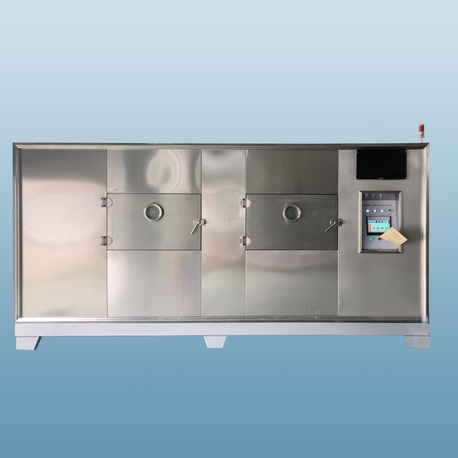
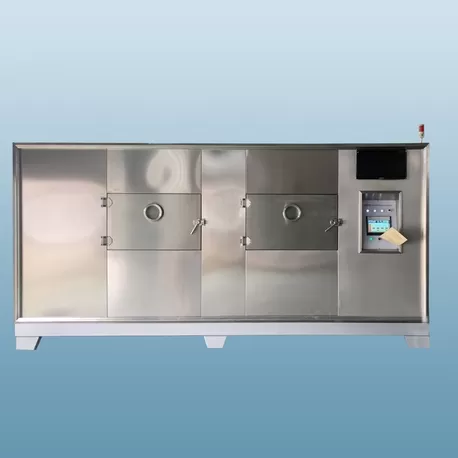
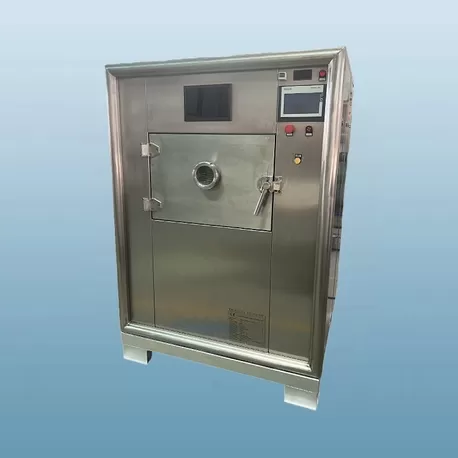
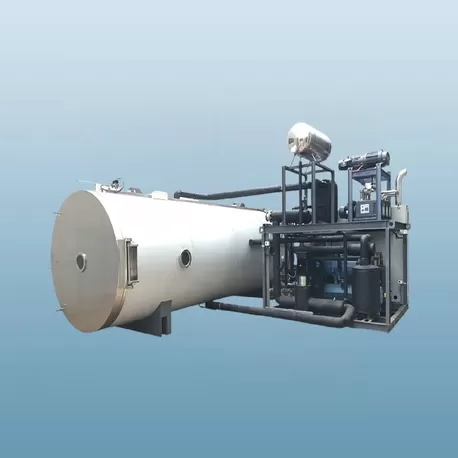
Engineered systems from manufacturers like Nasan demonstrate how industrial microwave drying reduces processing steps while preserving material characteristics. The following analysis explores the physics, application parameters, and integration strategies for microwave drying equipment.

How a Microwave Dryer Alters Moisture Extraction Mechanics
Unlike thermal conduction, which relies on temperature gradients, a microwave dryer employs dielectric heating. Polar molecules—primarily water—attempt to align with an oscillating electromagnetic field at 915 MHz or 2.45 GHz. This molecular friction generates heat instantaneously throughout the material volume. The result: moisture migrates from interior to surface via vapor pressure, not capillary action. Three specific advantages emerge:
Selective energy coupling: Only materials with high dielectric loss factors absorb energy; surrounding air and conveyor belts remain cool.
Reverse temperature gradient: The interior often reaches boiling temperatures before the surface, preventing case hardening.
Short processing windows: For a 5 cm bed of damp ceramic powder, drying time drops from 4 hours (convection) to 12–18 minutes in a continuous microwave tunnel.
Field data from industrial installations show that volumetric heating eliminates the need for elevated ambient temperatures. A microwave dryer operates effectively between 40°C and 90°C, preserving volatile organic compounds or bioactive components in agricultural products.
Core Technical Specifications That Influence Dryer Performance
Frequency Selection and Penetration Depth
Industrial systems use either 915 MHz (higher penetration, suitable for thick beds >8 cm) or 2.45 GHz (faster heating for thin layers). Penetration depth—where power drops to 37% of surface value—depends on moisture content and dielectric constant. For wet solids with 25% moisture, 2.45 GHz achieves 2–4 cm penetration, while 915 MHz reaches 8–12 cm. Selecting the right frequency avoids arcing or thermal runaway.
Power Density and Uniformity Control
Power density (kW per kg of wet material) determines ramp rates. Most industrial processes require 1.5–3 kW/kg for effective moisture removal. A uniform field distribution prevents hot spots; Nasan integrates mode stirrers and variable power magnetrons to adjust energy distribution for different product geometries. This design suits irregular shapes like mineral aggregates or food particulates.
Closed-loop infrared sensors coupled with real-time power modulation.
Multimode applicator cavities for continuous belt or batch configurations.
Optional forced-air circulation to remove evaporated vapor without cooling the product.
Application Domains Where Microwave Dryers Replace Conventional Systems
Traditional drying methods fail when the material is heat-labile, hygroscopic, or requires rapid solvent evaporation. Four industrial segments benefit from a microwave dryer integration:
Chemical processing: Catalysts, pigments, and polymer granules achieve consistent residual moisture below 0.5% without surface fusion. Microwave drying also accelerates solvent removal from filter cakes.
Food and feed: Dried herbs, vegetable powders, and pet food retain natural colors and essential oils. The pasteurization effect from rapid heating reduces microbial load by 3–5 logs.
Advanced ceramics: Green bodies for electronic substrates or structural ceramics dry evenly, preventing cracking during sintering. Drying shrinkage becomes predictable.
Mineral concentrates: Iron ore pellets, mica, and silica sands achieve final moisture ≤2% for downstream screening or pneumatic conveying.
A practical example: drying hygroscopic polymer pellets (nylon 6,6) from 1.2% moisture to 0.15% in a conventional oven takes 8 hours at 80°C, risking oxidation. A microwave dryer accomplishes the same in 20 minutes at 60°C without yellowing. Nasan has supplied such systems for engineering resin producers, focusing on closed-loop power control to avoid melt accumulation.
Process Integration: Continuous Belt Versus Batch Microwave Dryer Configurations
Selecting the right configuration depends on production throughput (kg/h), moisture variability, and upstream process continuity. Continuous belt dryers dominate high-capacity operations (500–5000 kg/h) while batch chambers serve lab-scale or multi-product lines.
Continuous Microwave Belt Dryers
Material spreads on a PTFE or ceramic belt passing through multiple microwave cavities.
Each zone can have independent power and air extraction rates, allowing staged drying.
In-line moisture sensors adjust belt speed dynamically—ideal for agricultural powders or recycled plastic flakes.
Batch-Type Microwave Chambers
Rotating turntables or agitators ensure exposure for materials that tend to form arches (e.g., fibrous herbs).
Suitable for low-volume, high-value products like pharmaceutical intermediates or specialty dyes.
Vacuum-microwave hybrids for heat-sensitive materials requiring low-temperature boiling.
Energy efficiency in both designs exceeds 70% conversion from electrical input to usable heat, whereas steam-heated dryers rarely exceed 45%. This efficiency gap translates into lower operational carbon footprint for facilities adopting microwave drying.
Addressing Industry Pain Points: Uniformity, Scaling, and Throughput
Engineers often hesitate to adopt microwave dryers due to historical issues with uneven heating. Modern control systems solve this using three layers of regulation:
Dynamic load matching: A variable frequency drive adjusts magnetron output as moisture content changes along the dryer length.
Field profiling: Staggered waveguide feeds and rotating diffusers reduce standing wave patterns.
Material movement: Vibratory conveyors or paddle mixers turn the bed, exposing fresh surfaces to the field.
Scaling from pilot to production requires verifying dielectric properties across moisture ranges. Nasan offers material testing services where 5 kg samples are dried in a variable-power 6 kW test chamber to determine optimal residence time and maximum bed depth. This data informs the design of full-scale microwave dryer systems with guaranteed final moisture specifications.
Throughput limitations exist only where vapor removal is insufficient. For wet pastes or slurries, pre-forming into pellets or extrudates before entering the microwave tunnel prevents steam blanketing. Alternatively, a two-stage approach: mechanical dewatering to 40% moisture, followed by microwave finishing to 2% residual water. This hybrid sequence maximizes overall energy utilization.
Regulatory and Safety Standards for Industrial Microwave Equipment
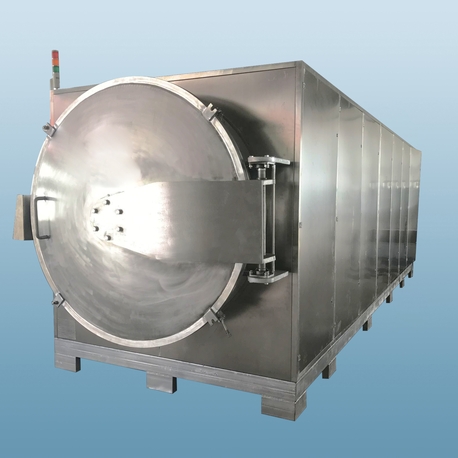
Compliance with IEC 60519-6 (safety in microwave processing equipment) is mandatory. Industrial dryers incorporate multiple interlocks, leakage monitors (<5 mW/cm² at 5 cm distance), and shielded viewing windows. Unlike conventional ovens, the applicator cavity is designed as a Faraday cage, preventing emissions during operation. Nasan builds to CE and UL standards, including automatic power cutoff when the door opens or if reflected power exceeds safe limits. Additional safety features for flammable solvents include nitrogen purging and pressure relief panels—though aqueous-based drying remains the primary application.
Frequently Asked Questions About Microwave Dryers in Production Environments
Q1: Can a microwave dryer handle materials with high sugar or fat content?
Q2: What is the typical maintenance interval for an industrial microwave dryer?
Q3: How does a microwave dryer compare to fluidized bed drying for API powders?
Q4: Can existing conveyor dryers be retrofitted with microwave modules?
Q5: What electrical infrastructure is required for a 100 kW microwave dryer?
Q6: Does material shape (powder, granules, slabs) affect drying performance?
For a detailed process evaluation or to request a microwave dryer configuration tailored to your material's dielectric properties and throughput targets, send an inquiry to Nasan engineering team. Provide your material name, initial and target moisture levels, bulk density, and desired hourly capacity. Technical datasheets, layout drawings, and a pilot test report will be prepared for your specific application.
Inquiry submission: Use the contact form at https://www.nasandry.com/contact.html or email your drying parameters directly. Every inquiry receives a preliminary feasibility analysis within two business days.