Global demand for wholesome, clean-label snacks is putting immense pressure
on food processors. Traditional sun drying and primitive dehydration cabinets
can no longer keep up with modern throughput, sanitary standards, or energy
caps. Processors need modern systems that reliably render fruit dry while
preserving color, texture, and active bio-compounds.
Selecting the right commercial food dehydrator requires a balance between
capital expense, daily operational overhead, and product quality. As an
engineering manufacturer with two decades of experience, Nasan builds advanced
industrial systems engineered for continuous production. This guide breaks down
the technical parameters you must evaluate before purchasing your next
industrial fruit drying equipment in 2026.
1. Core Trends in Industrial Fruit Dehydration for 2026
The industrial food processing sector is moving away from fossil fuel
dependence and imprecise manual operations. Modern buyers evaluate industrial
fruit dry systems through three primary operational metrics.
Low-Temperature Dehydration and Thermal Efficiency
High thermal exposure degrades fruit sugars, resulting in unwanted browning
and nutrient destruction. Modern industrial installations rely heavily on
closed-loop heat pump drying and precisely zoned airflow. These setups extract
water vapor continuously while operating at temperatures between 45°C and
65°C.
Reclaiming latent heat from the exhaust air slashes factory electrical draw.
Facilities that transition from direct electric resistance coils to heat
recovery configurations routinely cut energy costs by more than 50%.
Preserving Natural Pigments, Texture, and Rehydration Ratios
Consumers reject snacks loaded with sulfur dioxide or artificial
preservatives. Commercial fruit dry operations must therefore lock in original
pigments and cellular integrity mechanically rather than chemically.
Controlled relative humidity stages prevent "case hardening"—a defect where
the fruit exterior crusts over while the core remains moist. Eliminating case
hardening yields consistent water activity (aw < 0.60), which prevents
microbial spoilage and gives the dried fruit an extended shelf life.
Automated Controls and Sanitary Standards
Strict food safety frameworks like HACCP, FDA, and European CE require
absolute cleanability. Machinery frames and contact surfaces must feature
food-grade SUS304 or SUS316L stainless steel with continuous, polished TIG
welds.
Programmable Logic Controllers (PLCs) paired with touchscreen HMIs now manage
multi-stage drying recipes. Operators select a programmed curve, and the system
automatically regulates fan speeds, fresh-air dampers, and thermal input without
human intervention.
2. Comparing Commercial Fruit Dry Systems: Types and Applications
No single dehydration technology fits every fruit variety. Processors select
equipment based on incoming moisture content, sugar concentration, and final
product texture.
Convection tray ovens remain the workhorse for small to mid-scale processing
plants. A high-efficiency hot air fruit dryer distributes air horizontally
across stacked stainless steel mesh trays.
Best Suited For: Apples, bananas, mango slices, pineapples,
and firm root vegetables.
Operating Principle: Centrifugal blowers pass air over
steam or electric heat exchangers, directing uniform laminar air currents across
each tray layer before venting saturated air.
Core Strengths: Accessible capital investment, simple
mechanical maintenance, and wide product flexibility.
Heat pump systems operate on a closed thermodynamic refrigeration cycle. They
act as both an air heater and a dehumidifier within an insulated chamber.
Best Suited For: Citrus slices, figs, berries, and
high-sugar tropical fruits prone to scorching.
Operating Principle: Moist air leaves the fruit bed, passes
through an evaporator where moisture condenses into water, and flows through a
condenser to reheat before re-entering the chamber.
Core Strengths: Extreme energy efficiency, completely
sealed drying environments, and precise control over both temperature and
humidity.
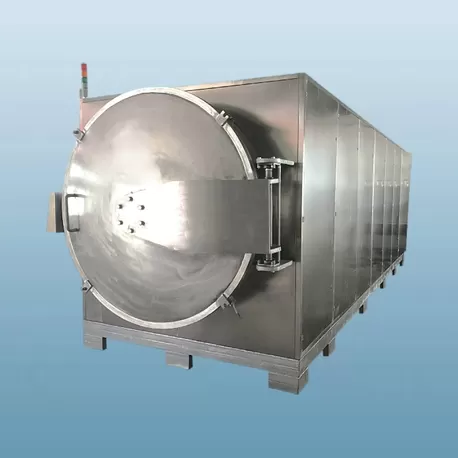
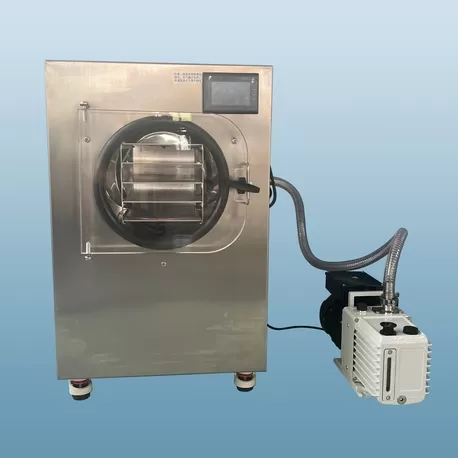
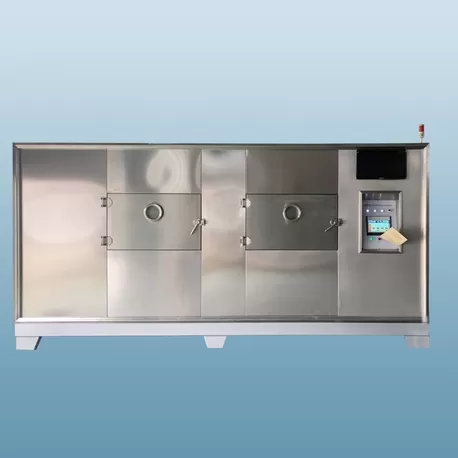
Freeze drying, or lyophilization, represents the top tier of food
preservation. As an established fruit freeze dryer manufacturer, Nasan designs
robust vacuum chambers built for continuous commercial output.
Best Suited For: Whole strawberries, raspberries, durian
chunks, blueberries, and functional fruit powders.
Operating Principle: The fruit freezes solid below its
eutectic point. Under high vacuum, ice sublimates directly into vapor without
passing through a liquid phase.
Core Strengths: Near-complete retention of vitamins and
antioxidants, zero structural shrinkage, vibrant colors, and rapid rehydration
capability.
Continuous Mesh Belt Dryers
Continuous tunnel dryers are designed for heavy agricultural operations
running single-crop harvests around the clock.
Best Suited For: High-volume processing of raisins, diced
apples, cranberries, and industrial-scale vegetable flakes.
Operating Principle: Raw fruit feeds continuously onto
multi-tiered, perforated stainless steel conveyor belts, traveling through
discrete temperature zones.
Core Strengths: Minimal labor requirements, high daily
throughput, and seamless integration with automated washing and slicing
lines.
3. Five Key Factors for Choosing Industrial Drying Machinery
Investing in commercial fruit dry machinery requires an audit of your factory
floor, raw utility connections, and operational budget. Focus on these five
engineering metrics to select the right unit.
Factor 1: Daily Capacity and Footprint Constraints
Calculate your daily input rather than dry output. If raw apples contain 85%
water and you aim to produce 500 kilograms of finished product at 10% moisture,
your equipment must remove roughly 2,800 kilograms of water per day.
Measure your ceiling clearances and floor space. Batch tray ovens demand room
for tray-loading trolleys. In contrast, continuous belt units require long,
linear production halls with dedicated infeed conveyors.
Factor 2: Moisture Content and Sugar Chemistry
Fruits high in fructose and glucose—such as grapes, dates, and ripe
mangoes—become sticky as water evaporates. Sticky fruits adhere aggressively to
bare stainless wire mesh, slowing down unloading and tearing delicate fruit
pieces.
Look for anti-stick food-grade Teflon coatings or electro-polished trays.
High-sugar fruits also require dehumidification curves that lower processing
temperatures as the product approaches its critical moisture point, preventing
caramelized off-flavors.
Factor 3: Heat Source Availability and Operating ROI
Thermal energy drives the bulk of your ongoing processing costs. Match your
machine's heat exchanger to your local utility costs:
Steam: Ideal if your facility already operates a
centralized industrial boiler fired by natural gas or biomass.
Electricity: Best for compact footprints or when pairing
heat pump systems with commercial solar arrays.
Direct/Indirect Gas: Suitable for continuous mesh belt
operations where regional pipeline gas rates are low.
Factor 4: Specific Energy Consumption (SEC)
Evaluate your prospective machinery using Specific Energy Consumption:
kilowatt-hours required to evaporate one kilogram of water (kWh/kg H₂O).
Conventional electric tray dryers often consume 1.2 to 1.8 kWh per kilogram of
evaporated moisture. High-efficiency heat pump dryers reduce this draw to 0.3 to
0.6 kWh/kg, delivering huge utility savings over an annual production cycle.
Factor 5: Customized Engineering and Sanitary Compliance
Standard off-the-shelf cabinets rarely address factory-specific challenges.
Assess whether your equipment vendor provides customized drying solutions, such
as custom trolley designs, explosion-proof exhaust fans for high-alcohol
agricultural byproducts, or clean-in-place (CIP) spray balls.
4. Why Partner with Nasan for Industrial Drying Systems?
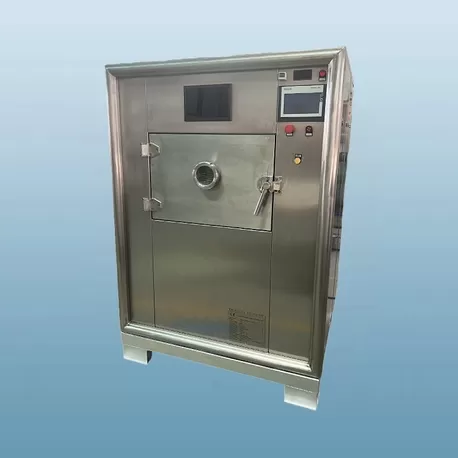
Securing high process yields requires a manufacturing partner that
understands thermodynamic engineering and real-world food science. Nasan
provides durable, high-yield drying infrastructure to food processors
worldwide.
Two Decades of Dedicated Manufacturing Expertise
Nasan has spent 20 years refining thermal and dehydration systems. Our
internal R&D team and quality assurance inspectors test every system against
rigorous industrial reliability metrics before shipping. We ensure every unit
delivers consistent airflow, balanced thermal fields, and zero hot spots.
A Broad Portfolio of Commercial Drying Equipment
Nasan manufactures a comprehensive range of industrial equipment. Our catalog
includes convective hot air circulation ovens, low-temperature industrial heat
pumps, advanced vacuum freeze dryers, and high-throughput tunnel systems. We
serve food brands, pharmaceutical labs, and industrial chemical processing
plants.
Proven Across More Than 40 Countries
Nasan equipment operates in demanding production environments across the
United States, Germany, France, Italy, the United Arab Emirates, Malaysia,
Australia, and Brazil. Our designs comply with stringent international safety
and hygiene codes, giving our global clients reliable uptime and long
operational lifespans.
Engineered-to-Order Process Solutions
We work from a simple engineering philosophy: build systems that are safe,
complete, efficient, and dependable. Whether your line requires non-standard
chamber dimensions, custom tray profiles, or specialized PLC automation with
remote SCADA monitoring, Nasan engineers build solutions around your factory's
exact requirements.
5. Frequently Asked Questions (FAQ)
Q1: What type of machine offers the best ROI for dried mango and
apple processing?
A1: For small to medium
processors, a commercial heat pump fruit dry system offers the fastest return on
investment. It slashes electrical power consumption by up to 60% compared to
standard heating elements. It also protects the natural yellow and golden colors
of apples and mangoes by operating under tight, low-temperature parameters.
Q2: How long is a typical drying cycle for fruit in commercial
dehydrators?
A2: Drying duration depends on slice
thickness, sugar concentration, and machine type. Hot air circulation dryers
typically finish sliced apples or bananas in 8 to 14 hours. High-sugar fruits
like whole figs or thick mango slices take 18 to 28 hours in heat pump units.
Lyophilization cycles in a fruit freeze dryer generally run between 18 and 36
hours.
Q3: Can Nasan supply custom trays for sticky, high-sugar
fruits?
A3: Yes. Nasan manufactures custom trays
for fruits with high Brix levels. We supply food-grade PTFE (Teflon) non-stick
coated wire screens, perforated silicone drying mats, and electropolished 316L
stainless steel sheet trays that prevent fruit tearing and streamline
sanitation.
Q4: How does Nasan handle international freight, commissioning, and
warranty support?
A4: Nasan provides international
export crating, full logistics coordination, and direct technical support. We
supply complete layout blueprints, connection schematics, and video
commissioning walkthroughs. On-site engineering installation and operator
training are available for large-scale lines, and our components include an
industrial standard warranty backed by international spare-part shipping.
Q5: What is the main operational difference between heat pump drying
and freeze drying?
A5: Heat pump dryers evaporate
water using warm, dehumidified air, producing a chewy, pliable dried fruit
slice. Freeze dryers bypass the liquid phase entirely, removing water through
sublimation under a deep vacuum. This leaves the fruit crisp, porous,
structurally uncompressed, and instantly soluble upon contact with moisture.
Ready to Modernize Your Fruit Drying Line?
Investing in the right drying equipment is critical for cutting utility
overhead and capturing premium market share. Contact the engineering team at
Nasan to discuss your targeted raw fruit capacity, analyze your operational
energy savings, and request a detailed project quotation.
Consult Our Engineering Team: Contact Nasan directly at info@nasandry.com or visit our industrial solutions portal to
request our 2026 commercial fruit dry machinery catalog.