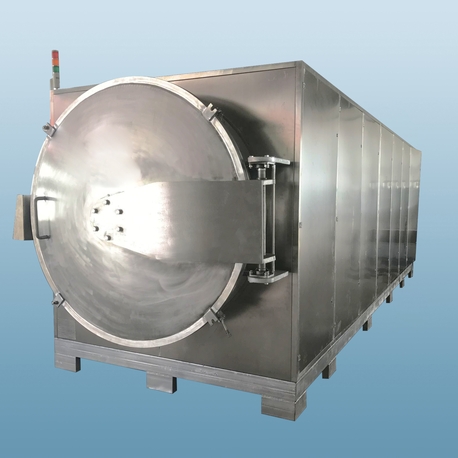
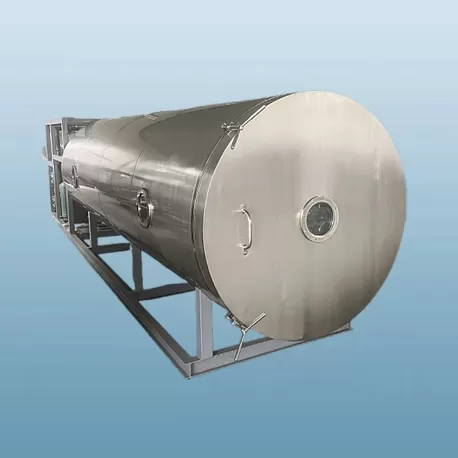
Industrial drying and extraction have long relied on thermal conduction and
convection. These methods, while established, often introduce gradients that
compromise product quality and consume excessive energy. The microwave extractor
represents a fundamental shift—leveraging volumetric heating to drive moisture
removal and active compound separation with unprecedented precision. For process
engineers and plant managers, the decision to adopt this technology involves
careful evaluation of capital expenditure, operational integration, and
long-term yield improvements. This article examines the technical foundations,
application landscapes, and practical considerations surrounding industrial
microwave extractor systems, with a focus on measurable performance
outcomes.
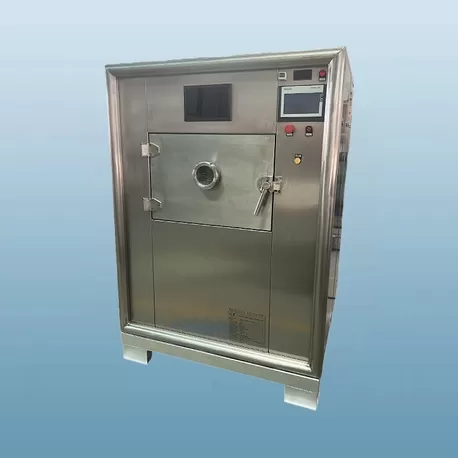
Understanding Microwave Extraction Technology
At its core, microwave extraction capitalizes on dielectric heating. When
polar molecules—water being the most common—are exposed to alternating
electromagnetic fields in the 915 MHz or 2.45 GHz range, they attempt to realign
with the rapidly changing field orientation. This molecular friction generates
heat directly within the material, bypassing the slow thermal diffusion that
limits conventional drying. The microwave extractor harnesses
this principle not merely for drying but for selective extraction of target
compounds, as the differential absorption rates between matrix components and
solvents can be exploited to achieve preferential heating.
This volumetric heating mechanism offers two distinct operational benefits.
First, the temperature profile across the product bed becomes significantly more
uniform, reducing the risk of surface overheating and case hardening. Second,
the rapid energy transfer accelerates both moisture evaporation and mass
transfer of solutes from the solid matrix into the liquid phase. For extraction
processes, this translates to shorter cycle times and higher recovery rates of
thermolabile or volatile compounds that would otherwise degrade under prolonged
thermal exposure.
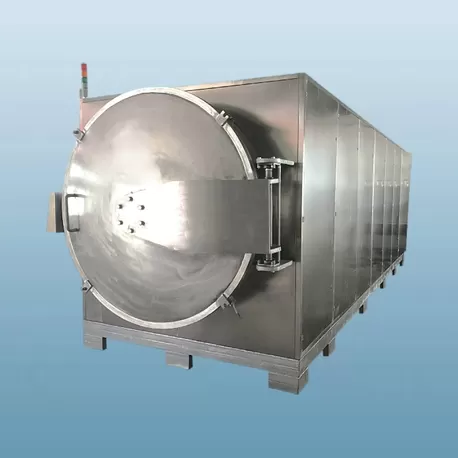
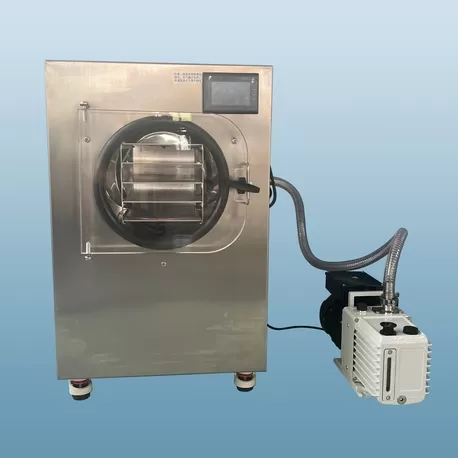
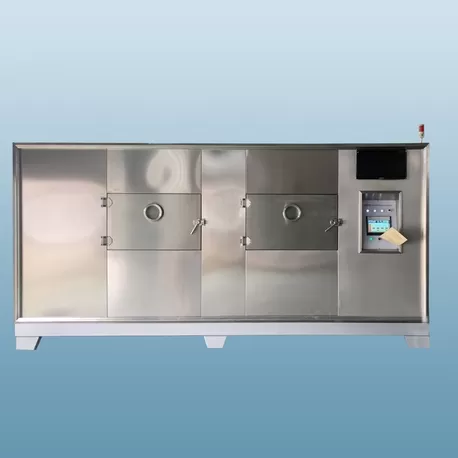
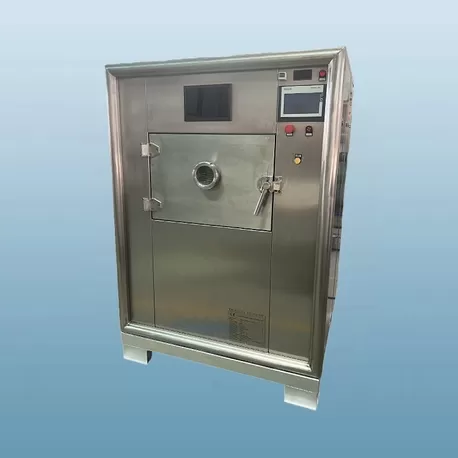
An industrial-grade microwave extraction system is considerably more complex
than a domestic microwave oven. The design must accommodate continuous or
semi-continuous processing, high power levels, and rigorous safety interlocks.
The principal subsystems include:
Power Generation and Delivery: Industrial
magnetrons—typically rated between 1 kW and 100 kW per unit—convert electrical
energy into microwave radiation. Multiple magnetrons are often arrayed in a
single cavity to achieve the required power density. The output is guided
through precision-machined waveguides that direct the energy into the processing
chamber with minimal reflection.
Resonant Cavity and Applicator Design: The cavity geometry
defines the standing wave pattern and, consequently, the spatial distribution of
energy. Multi-mode cavities are common for batch processing, while single-mode
or traveling-wave applicators are preferred for continuous, high-uniformity
operations. Advanced systems incorporate mode stirrers or rotating platforms to
average out hotspots.
Material Handling System: Whether belt conveyors, screw
feeders, or rotary drums, the transport mechanism must be compatible with the
microwave field—typically constructed from non-conductive or low-loss materials
such as PTFE, ceramics, or certain engineering plastics. The handling system
also influences residence time and exposure uniformity.
Temperature and Moisture Feedback: Closed-loop control
relies on infrared pyrometers, fiber-optic probes, or near-infrared (NIR)
sensors to monitor product temperature and residual moisture in real time. This
data feeds into programmable logic controllers (PLCs) that modulate power
output, belt speed, or extraction solvent flow rates.
Safety and Containment: Microwave leakage is strictly
regulated. Industrial systems incorporate multiple interlock switches, choke
flanges, and absorbing loads to ensure radiation levels remain below permissible
exposure limits. For extraction applications involving organic solvents,
explosion-proof enclosures and inert gas purging are often mandated.
Each of these subsystems must be meticulously engineered to operate in
harmony. A mismatch between power density and material throughput, for instance,
can lead to thermal runaway or incomplete extraction. This is where the
expertise of a specialized manufacturer becomes indispensable.
Nasan offers comprehensive technical support during the
specification phase, helping clients define the optimal configuration based on
their specific feedstocks and throughput targets.
Application Scenarios Across Industries
The versatility of the microwave extractor extends across multiple industrial
verticals. Each application imposes distinct constraints on system design and
operational parameters.
Food and Botanical Extraction: The food industry uses
microwave-assisted extraction (MAE) for recovering essential oils, oleoresins,
and bioactive compounds from herbs, spices, and fruits. The reduced processing
time preserves delicate flavor profiles and color, while the selective heating
minimizes co-extraction of unwanted waxes or chlorophyll. In nutraceutical
production, microwave extraction has gained traction for its ability to maintain
the integrity of polyphenols and other antioxidants.
Pharmaceutical Intermediates: Drying and extraction of
active pharmaceutical ingredients (APIs) demand strict adherence to Good
Manufacturing Practice (GMP). Microwave extractors offer precise control over
drying kinetics, which is critical for polymorphic control and residual solvent
management. The enclosed, hygienic design of modern systems facilitates cleaning
validation and prevents cross-contamination between batches.
Chemical and Fine Chemical Processing: For
solvent-intensive processes such as polymer drying or catalyst regeneration, the
microwave extractor can achieve rapid solvent removal without the thermal
degradation associated with conventional rotary evaporators or vacuum dryers.
The ability to operate at reduced pressures further enhances the separation of
high-boiling-point solvents.
Waste Treatment and Resource Recovery: An emerging
application involves the use of microwave extractors to reclaim valuable
compounds from industrial effluents or by-product streams. The technology can
break down emulsion layers and enhance the recovery of oils, fats, and heavy
metals from wastewater sludge, contributing to circular economy
objectives.
Selecting the correct system architecture hinges on a thorough
characterization of the feed material—its dielectric properties, bulk density,
moisture content, and thermal sensitivity. Pilot-scale testing is often
recommended to validate scale-up parameters before committing to a full-scale
installation.
Technical Specifications and Selection Criteria
Procurement of a microwave extractor requires a structured evaluation of
performance metrics and operational boundaries. The following parameters should
form the basis of any technical specification:
Frequency and Power Density: While 2.45 GHz is standard for
pilot and medium-scale operations, 915 MHz systems are preferred for
large-capacity installations due to deeper penetration depth and higher overall
efficiency. Power density, expressed in kW per square meter of cavity floor
area, directly impacts throughput and should be matched to the material's
dielectric loss factor.
Processing Modes: Batch versus continuous operation. Batch
systems offer flexibility for multiple product lines but suffer from
labor-intensive loading and unloading. Continuous systems, conversely, integrate
seamlessly into existing production lines and are better suited for
single-product, high-volume scenarios.
Solvent Compatibility: If the extraction involves flammable
or volatile solvents, the microwave extractor must be equipped with vapor-tight
seals, inert gas blanketing, and explosion-relief panels. The solvent's
dielectric constant also influences heating efficiency—a factor that should be
considered during process development.
Control and Data Acquisition: Modern systems are equipped
with PLC-based controllers and Supervisory Control and Data Acquisition (SCADA)
interfaces. These enable recipe management, data logging, and remote
monitoring—essential for quality assurance and regulatory compliance.
Compliance and Certifications: Although specific
certifications vary by region, the system should conform to applicable machine
directives, electromagnetic compatibility (EMC) standards, and pressure
equipment regulations. Suppliers should provide comprehensive documentation,
including risk assessments and validation protocols.
Cost considerations extend beyond the initial purchase price. Total cost of
ownership (TCO) includes energy consumption, maintenance intervals, consumables
(e.g., magnetron replacements), and downtime for cleaning or part replacement. A
detailed TCO analysis, supported by data from the equipment provider, will
illuminate the long-term financial implications of each candidate system.
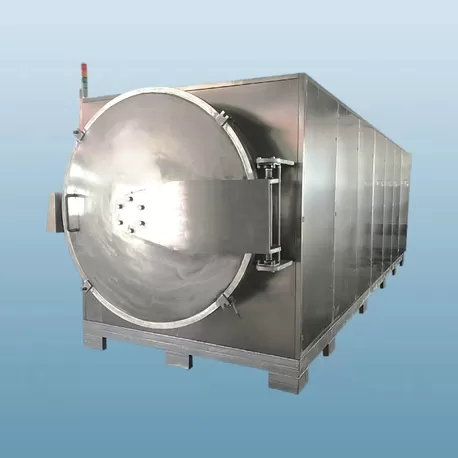
Operational Efficiency and Energy Considerations
Energy efficiency is often the primary driver for adopting microwave
extraction technology. Conventional thermal drying typically achieves
thermal-to-evaporative efficiencies in the range of 40–60%, with substantial
heat losses to the surroundings. A well-designed microwave
extractor, by contrast, can attain energy conversion efficiencies
exceeding 70% in optimized configurations, as the energy is generated directly
within the material and does not rely on preheating of air or surfaces.
This efficiency advantage becomes more pronounced when drying materials with
low thermal conductivity, such as porous ceramics, thick pastes, or organic
matrices with high bound-water content. In these cases, the absence of a
temperature gradient across the cross-section not only accelerates drying but
also yields a more homogeneous final product. From a sustainability perspective,
the reduced carbon footprint per kilogram of processed material aligns with
increasingly stringent environmental targets.
However, achieving optimal energy performance demands careful tuning of the
extraction parameters. Overly aggressive power settings can lead to plasma
generation or charring, while underpowered operation prolongs cycle times and
negates the efficiency gains. Process engineers should collaborate closely with
the system integrator to establish a set of baseline recipes that balance
throughput, quality, and energy input. Nasan provides on-site
commissioning support and operator training to ensure that these baseline
parameters are correctly implemented and subsequently refined through continuous
improvement cycles.
Installation and Commissioning Protocols
The installation of an industrial microwave extractor is a multi-phase
undertaking that demands coordination across electrical, mechanical, and control
disciplines. The process typically proceeds as follows:
Site Preparation: The installation area must accommodate
the system footprint, clearance for maintenance access, and adequate ventilation
for heat dissipation. Electrical supply requirements—often three-phase, with
high ampere ratings—must be verified and dedicated feeders installed.
Mechanical Assembly: Major components, including the
magnetron power supply, waveguide sections, and processing chamber, are lifted
into position and secured. Alignment tolerances for waveguide flanges are
critical; even minor misalignments can increase reflected power and reduce
efficiency.
Electrical and Control Wiring: Power cables, sensor leads,
and communication networks are routed and terminated according to the provided
schematics. Grounding and shielding must be executed to prevent electromagnetic
interference with adjacent equipment.
Functional Testing: Before introducing the product, the
system undergoes a series of dry runs to verify magnetron operation, waveguide
integrity, and control response. This includes calibration of temperature
sensors and verification of safety interlocks.
Process Validation: Using surrogate materials that mimic
the dielectric properties of the target feedstock, the system is tested across
the expected range of operating conditions. Data on power draw, temperature
profiles, and moisture reduction rates are collected and compared against design
specifications.
Commissioning is not complete until the operators demonstrate proficiency in
managing routine operations and responding to alarm conditions. Documentation
should include a troubleshooting guide, spare parts list, and a detailed
preventative maintenance schedule.
Maintenance and Long-Term Reliability
Industrial environments impose severe demands on the durability of a
microwave extractor. The combination of high voltage, microwave radiation, and
often corrosive process vapors necessitates a rigorous maintenance regime. Key
areas of focus include:
Magnetron Health: Magnetron output gradually declines over
its service life, typically ranging from 5,000 to 10,000 hours of operation.
Regular monitoring of anode current and reflected power helps predict
end-of-life and enables planned replacement during scheduled shutdowns.
Waveguide and Cavity Cleanliness: Product fouling on
waveguide windows or cavity walls can absorb microwave energy and lead to
localized overheating. These surfaces should be inspected and cleaned at regular
intervals using non-abrasive methods that do not scratch the conductive
layer.
Cooling System: High-power magnetrons are typically
water-cooled or forced-air-cooled. Cooling system integrity—checking for
blockages, leaks, and coolant degradation—is essential to prevent thermal damage
to the power generation modules.
Seals and Gaskets: The integrity of door seals and flange
gaskets is paramount for radiation safety and, in solvent applications, for
preventing vapor leakage. Annual leakage testing using a calibrated microwave
detector is a recommended best practice.
Predictive maintenance, enabled by condition-monitoring sensors and vibration
analysis, can further extend the mean time between failures (MTBF). Many
operators integrate these data streams into their enterprise asset management
(EAM) systems to prioritize maintenance actions and optimize spare parts
inventory. Nasan offers a remote diagnostic service that
leverages on-board data logging to identify emerging issues before they escalate
into costly breakdowns, ensuring that production continuity is maintained.
Addressing Common Operational Challenges
Despite its many advantages, microwave extraction is not without its
challenges. Understanding these pitfalls is the first step toward mitigating
them.
Non-Uniform Heating: Standing wave patterns can create
localized hot and cold zones within the cavity. While mode stirring and
variable-frequency microwave (VFM) techniques can improve uniformity, some
products still require turntables or material re-orientation to achieve
consistent results.
Thermal Runaway: Certain materials exhibit a positive
temperature coefficient of loss factor—as they heat, they absorb microwave
energy more readily, creating a feedback loop that can lead to uncontrolled
temperature spikes. This requires careful power modulation and, in some cases,
the inclusion of heat-sink materials or temperature-limiting chemical
additives.
Arcing and Plasma Formation: The presence of metallic
contaminants or sharp edges within the microwave field can induce arcing, which
damages both the product and the cavity walls. Pre-processing steps such as
magnetic separation or metal detection are critical for operations that handle
unrefined agricultural or mineral feedstocks.
Scale-Up Non-Linearities: The relationship between power
input, material mass, and extraction efficiency is not strictly linear. A
process that performs well at pilot scale may exhibit unexpected behavior at
full production scale due to changes in field distribution or material bed
dynamics. Incremental scale-up, combined with rigorous modeling, is the prudent
approach.
These challenges are not insurmountable. Advances in real-time impedance
matching and adaptive control algorithms now allow the microwave extractor to
adjust its output dynamically, compensating for variations in feed composition
and environmental conditions. The result is a more robust process that maintains
consistent output quality across shifts and seasons.
Frequently Asked Questions
The following questions are commonly raised by engineering and operations
teams evaluating microwave extraction technology. The answers reflect industry
consensus and practical experience from field installations.
Q1: What is the typical payback period for an industrial microwave
extractor?
A1: The payback period depends on the specific
application, energy costs, and productivity improvements. For high-throughput
operations with energy-intensive conventional drying, payback periods of 18–36
months are common. The calculus should factor in not just energy savings but
also yield improvements, reduced scrap rates, and lower labor costs associated
with automated systems.
Q2: Can a microwave extractor process materials with high fat or oil
content?
A2: Yes, but oils have relatively low dielectric loss
factors compared to water, so the heating effect is less pronounced. In such
cases, the system design may incorporate supplementary convective or conductive
heating elements, or the process may be run at elevated temperatures to reduce
oil viscosity and enhance mass transfer. Careful process development is required
to avoid lipid oxidation.
Q3: How does the microwave extractor compare to supercritical fluid
extraction (SFE) for botanical applications?
A3: Microwave
extraction and SFE are complementary rather than competitive. Microwave systems
operate at ambient or near-ambient pressures and are generally less
capital-intensive than SFE plants, which require high-pressure vessels and CO₂
recycling loops. However, SFE offers the advantage of solvent-free extracts,
whereas microwave systems typically require a polar solvent such as water or
ethanol. The choice depends on the target compound's solubility and the final
product's purity requirements.
Q4: What safety certifications should an industrial microwave
extractor carry?
A4: At a minimum, the system should comply with the
applicable regional standards: in the US, that includes FDA 21 CFR Part 1030 for
microwave radiation safety; in Europe, compliance with EN 55011 and EN 61000 for
EMC is expected. Additionally, for operations using flammable solvents, ATEX or
IECEx certification for explosion protection is mandatory. Always verify that
the supplier provides declaration of conformity and a comprehensive risk
assessment.
Q5: How often should magnetrons be replaced, and what is the cost
implication?
A5: Magnetron service life varies between 5,000 and
10,000 operating hours, depending on the duty cycle and cooling efficiency.
Replacement costs range from several hundred to several thousand dollars per
unit, depending on power rating. Many operators schedule replacements during
annual plant shutdowns to minimize unplanned downtime. A proactive replacement
strategy, informed by performance monitoring, is more cost-effective than
reactive maintenance.
Q6: Is it feasible to retrofit a microwave extractor into an existing
production line?
A6: Retrofit feasibility depends on the available
space, electrical infrastructure, and the physical integration points with
upstream and downstream equipment. Many manufacturers offer modular designs that
can be inserted between existing conveyors or into existing drying tunnels. A
site survey by the equipment provider is the first step in assessing retrofit
viability. With appropriate planning, most installations can be completed within
a standard plant shutdown window.
Optimizing Long-Term Value
The adoption of a microwave extractor is not a one-time procurement decision
but an ongoing partnership between the operator and the technology provider. The
most successful implementations share a common feature: a commitment to
continuous process optimization. This involves regular review of operational
data, periodic recalibration of process recipes, and proactive upgrades to
control software as new features become available.
The body of experience built over months and years of operation often reveals
subtle interactions between extraction parameters that were not apparent during
initial trials. For example, a slight reduction in power input may yield a
disproportionate improvement in product consistency, or a change in material
pre-conditioning could reduce cycle time by a measurable margin. These insights
are the true value of operational experience and should be systematically
captured and applied.
For organizations that lack the internal resources for such optimization,
engaging with a knowledgeable supplier can fill the gap. Nasan supports its clients through the entire lifecycle of the equipment—from initial
feasibility studies through to advanced process optimization workshops. This
collaborative approach ensures that the microwave extractor continues to deliver
value long after the warranty period has expired.
Ready to explore how a microwave
extractor fits your drying or extraction workflow? Contact the
Nasan engineering team for a confidential consultation and a
preliminary system design tailored to your process requirements.
Nasan — Global Solutions for
Industrial Drying and Extraction
Email: info@nasandry.com
Web:
www.nasandry.com