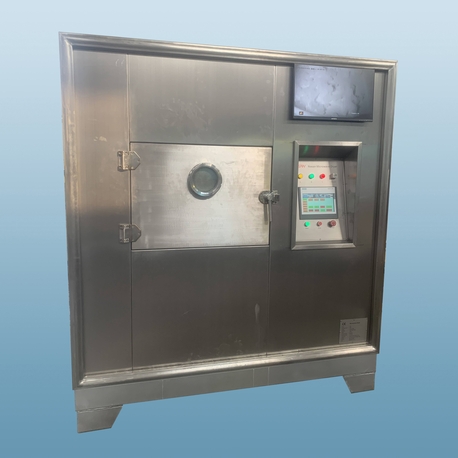
Lyophilization, commercially known as freeze drying, represents the gold
standard in water removal technology for heat-sensitive biopharmaceuticals,
functional ingredients, and high-value food matrices. Unlike conventional
thermal dehydration, which relies on evaporative mass transfer driven by heat, a
commercial freeze dryer removes water via solid-to-gas phase
transition (sublimation) under low-pressure vacuum conditions.
While consumer marketing often frames lyophilization as a simple, push-button
method for shelf-stable emergency rations, the industrial reality is dictated by
thermodynamics, mass transfer resistance, and rigorous process validation.
Whether designing a pilot-scale facility or scaling commercial production,
selecting the proper freeze dryer requires a thorough grasp of
phase equilibrium, structural collapse dynamics, and total operational
expenditure.

The Thermodynamics of Lyophilization: How a Freeze Dryer Operates
To understand the function of a commercial freeze dryer, one
must examine the phase diagram of water. Evaporation in standard air dehydrators
occurs along the liquid-vapor boundary line. Freeze drying operates exclusively
below the triple point of water—specifically 0.01°C (32.018°F)
at a partial pressure of 611.65 Pascals (4.58 Torr / 0.088 psi).
By establishing chamber conditions well below this equilibrium threshold, ice
cannot melt into liquid water; it sublimates directly into vapor. A complete
lyophilization cycle consists of three interdependent, highly controlled
phases:
1. Freezing (Thermal Solidification)
The product matrix is cooled to a solid state, typically between -30°C and
-50°C. The cooling rate directly dictates ice crystal morphology:
Rapid Freezing: Forms small, dendritic ice crystals. This
minimizes physical cellular damage in delicate biological tissues but creates
high microscopic vapor resistance during drying, substantially increasing cycle
duration.
Slow, Controlled Freezing: Promotes larger, continuous ice
channels. These open pathways facilitate faster vapor migration during
sublimation, shortening cycle times, though process engineers must monitor
crystallization to prevent irreversible cellular rupture.
2. Primary Drying (Sublimation Phase)
Once the chamber reaches deep vacuum (typically 50 to 200 mTorr), controlled
heat is applied to the product shelves. This input of latent heat of sublimation
(approximately 2,838 kJ/kg of ice) causes unbound ice to sublimate. The vapor
travels from the product sublimation front, through the drying chamber, and
deposits onto an ultra-cold refrigerated condenser coil (operating between -50°C
and -85°C), which isolates the vacuum pump from vapor overload. Primary drying
accounts for removing roughly 90% to 95% of total moisture.
3. Secondary Drying (Isothermal Desorption)
After all visible ice sublimates, bound moisture (water molecules chemically
or electrostatically adsorbed to the product matrix) remains. The system
increases shelf temperature—often up to 25°C to 40°C—while pulling the deepest
achievable vacuum. Desorption strips the residual moisture down to 1%–3%,
securing biological stability and halting enzymatic activity.
Critical Process Parameters: Preventing Structural Collapse
Operating an industrial freeze dryer requires maintaining
the product below two critical temperature thresholds during primary drying:
Eutectic Temperature (Teu): In crystalline formulations,
the lowest temperature at which the entire system remains completely solid.
Exceeding this causes immediate melting ("melt-back").
Glass Transition / Collapse Temperature (Tc / Tg'): In
amorphous matrices (such as sugar-rich fruits or protein solutions), exceeding
this limit softens the structural backbone. The porous cake collapses under
atmospheric vacuum dynamics, resulting in an un-rehydratable, sticky mass with
trapped residual moisture.
Achieving this thermal balance requires precise control over shelf heating
profiles and condenser heat-exchange dynamics—capabilities where engineered
systems like those developed by Nasan demonstrate distinct
operational advantages over basic, unmonitored units.
Freeze Dryer vs. Industrial Dehydrator: Engineering & Performance
Comparison
Product developers and facility managers must distinguish between moisture
extraction methodologies. The structural and nutritional outputs of a vacuum
freeze dryer differ fundamentally from hot-air or convective
belt dehydrators.
| Performance Metric | Industrial Freeze Dryer | Convective / Warm Air Dehydrator |
|---|
| Mechanism of Removal | Sublimation & Desorption under vacuum | Thermal evaporation via forced hot air |
| Operating Temperature | -40°C to +35°C (Product stays cold/temperate) | 50°C to 85°C+ |
| Final Residual Moisture | 1% – 3% | 5% – 15% |
| Water Activity (aw) | < 0.20 (Microbiologically inert) | 0.40 – 0.60 (Enzymatic browning risk) |
| Cellular Matrix Integrity | Preserved; rigid porous scaffold maintained | Shrunk, collapsed, dense, case-hardened |
| Nutrient / Bioactive Retention | 95% – 98% (Vitamins, terpenes, volatiles intact) | 60% – 75% (Heat-sensitive compounds oxidized) |
| Rehydration Kinetics | Instantaneous via capillary action | Slow, incomplete, altered mouthfeel |
| Shelf Stability | 15 to 25+ years (in hermetic barrier packaging) | 1 to 3 years maximum |
Bioburden, Food Safety, and Packaging Science
A persistent misconception in food processing is that operating a
freeze dryer functions as a lethal kill-step for pathogens.
It does not.
Lyophilization is standard methodology across global culture repositories
(such as the ATCC) to preserve viable bacterial cultures, yeast, and viruses for
decades. Microorganisms survive the sublimation cycle intact; they simply enter
anhydrobiosis (dormancy). If input materials carry Salmonella,
Listeria monocytogenes, or spores of Clostridium botulinum,
those pathogens remain fully viable upon rehydration.
Consequently, safe manufacturing demands strict adherence to HACCP
guidelines:
Validated Upstream Interventions: Thermal blanching, steam
pasteurization, or high-pressure processing (HPP) must occur prior to loading
the drying trays.
Targeting Low Water Activity: Achieving a water activity
($a_w$) below 0.30—and ideally below 0.20—ensures zero microbial proliferation
and halts lipid oxidation pathways.
Hermetic Barrier Packaging: Lyophilized structures are
aggressively hygroscopic. Products must be packed in multi-layer foil laminates
(e.g., PET/AL/PE) with active oxygen scavengers. Ingress of even minor ambient
humidity will cause immediate textural staling and microbiological
vulnerability.
Total Cost of Ownership (TCO) and Production Economics
Commercial viability requires analyzing capital expenditures (CapEx) against
utility and maintenance realities (OpEx). A professional-grade freeze
dryer represents an energy-intensive industrial process because it
simultaneously manages two high-power thermodynamic cycles: mechanical
refrigeration and continuous vacuum generation.
Cycle Time Restraints: While thermal dehydrators complete
runs in 6 to 12 hours, a commercial freeze drying batch requires anywhere from
18 to 48 hours depending on product thickness, initial moisture loading, and
sugar content. Dense fruits with high fructose levels (e.g., mangoes, peaches)
resist sublimation, extending running times significantly.
Refrigeration Capacity: Sublimated vapor cannot pass
directly through standard oil-sealed mechanical pumps without degrading pump oil
and destroying vacuum depth. The condenser system must possess enough cooling
duty to condense vapor continuously as ice on coils without allowing the surface
ice temperature to creep toward the collapse point.
Preventative Maintenance: Rotary vane and screw vacuum
pumps require routine oil filtration, gas ballast procedures to purge trapped
condensates, and seal maintenance to avoid costly mid-cycle vacuum
failures.
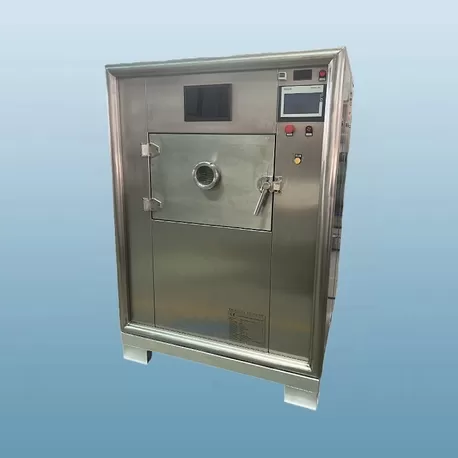
Industrial Scaling: Why Processors Choose Nasan
Scaling from pilot testing to continuous commercial manufacturing requires
equipment engineered with thermal uniformity, robust vacuum stability, and
structural longevity. Entry-level units often suffer from uneven shelf
temperature distribution, leading to localized melting, inconsistent residual
moisture levels, and frequent vacuum oil contamination.
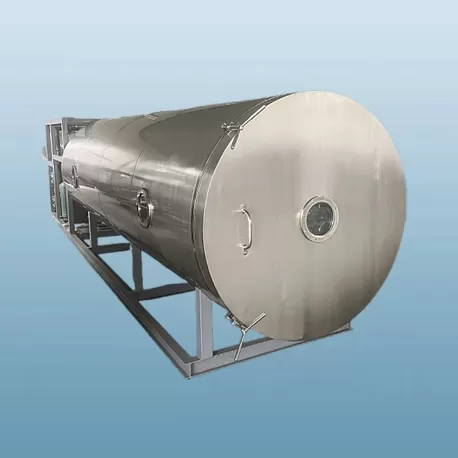
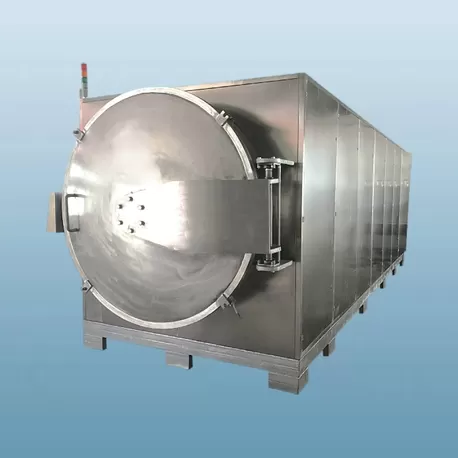
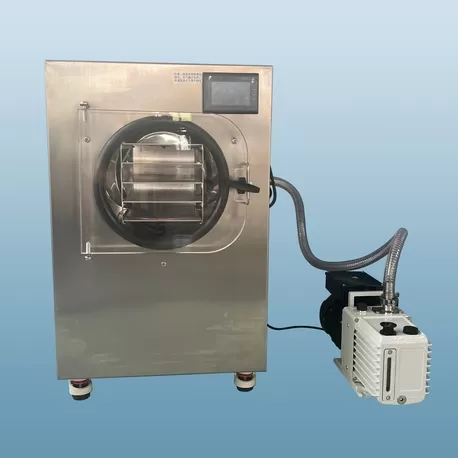
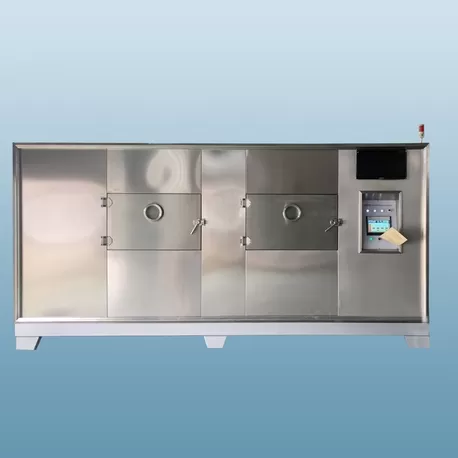
Nasan designs and manufactures advanced freeze
dryer systems built for demanding production environments. Utilizing
fluid-circulated thermal shelves, optimized vapor condensers, and automated
cycle programming, Nasan equipment delivers uniform sublimation rates across
every tray. Whether processing specialized nutraceuticals, sensitive
biologicals, or high-value food ingredients, Nasan systems maximize
thermodynamic efficiency while keeping lifecycle maintenance low.
Frequently Asked Questions (FAQ)
What is the difference between a freeze dryer and a vacuum dehydrator?
While both operate under low atmospheric pressure, a vacuum dehydrator
applies heat to pull liquid water through evaporation at reduced boiling points.
A freeze dryer completely freezes the product first, removing
water through sublimation (solid directly to gas) without transitioning through
a liquid phase. This prevents boiling, shrinkage, and thermal degradation.
Can a freeze dryer kill bacteria or sterilize products?
No. Lyophilization preserves microorganisms; it does not eliminate them.
Pathogens enter a dormant state in the absence of moisture and reactivate upon
rehydration. All food and pharmaceutical formulations must undergo upstream
microbial validation before entering the freeze-drying chamber.
How long do products processed in an industrial freeze dryer last?
When dried to optimal residual moisture (under 2%) and sealed in light-proof,
oxygen-impermeable containers (such as nitrogen-flushed Mylar or sealed cans
with oxygen absorbers), products retain nutritional and organoleptic properties
for 15 to 25+ years at ambient temperatures.
Why are freeze-drying cycles significantly longer than standard drying
cycles?
Sublimation requires applying energy precisely without exceeding the
product's eutectic or collapse temperatures. Because the vacuum environment
limits convective heat transfer, heat must be applied primarily via conduction
through low-density dry product layers, which act as natural thermal
insulators.
What routine maintenance is required for a commercial freeze dryer?
Primary maintenance tasks include monitoring and changing vacuum pump oil (or
servicing dry-scroll seals), inspecting chamber and door gaskets for vacuum
integrity, regularly defrosting and cleaning the condenser array, and
calibrating thermocouple arrays and Pirani vacuum gauges.
Upgrade Your Lyophilization Capability with Nasan
Are you looking to scale your production capacity or eliminate process
bottlenecks in your drying operations? The engineering team at
Nasan provides fully customized, industrial-grade
freeze dryer systems tailored to your specific throughput,
compliance, and material requirements. Contact a Nasan technical
specialist today to discuss equipment specifications, request a formal
quotation, or schedule a pilot trial for your product line.