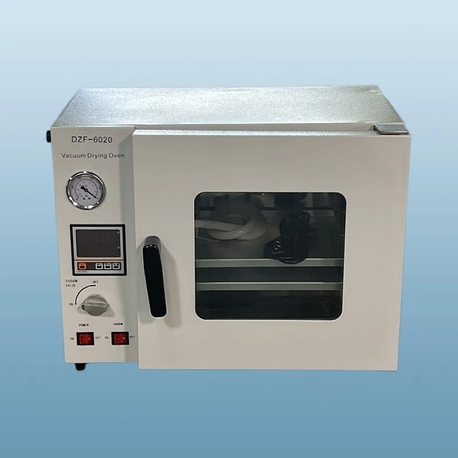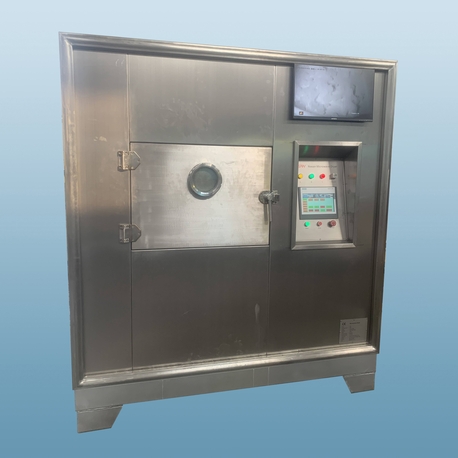


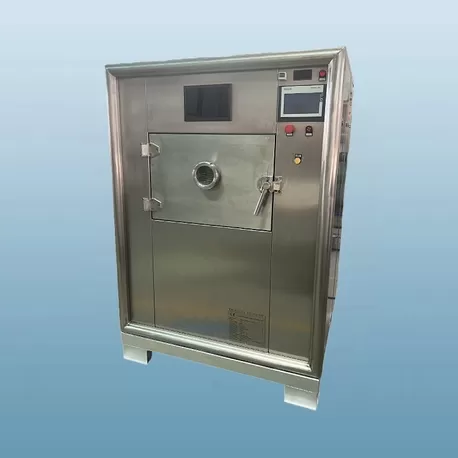

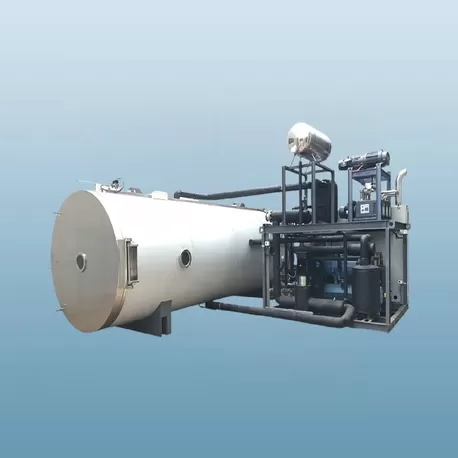
For decades, industrial drying processes relied on conventional methods that were often slow, energy-intensive, and inconsistent. The arrival of the industrial microwave kiln has marked a significant shift. This technology offers a fundamentally different approach to removing moisture from materials, bringing unprecedented control and efficiency to production floors worldwide. Companies like Nasan are at the forefront, engineering robust systems that meet the rigorous demands of commercial-scale operations. This article examines how microwave kiln systems work, why they are gaining traction, and where they deliver the most value.

Unlike traditional thermal dryers that rely on conduction, convection, or radiation to heat material from the outside in, a microwave kiln uses electromagnetic waves. These waves penetrate the material and excite water molecules directly throughout its entire volume.
This direct interaction causes rapid molecular friction, generating heat instantly within the product. The process converts electromagnetic energy into thermal energy with high efficiency right where it's needed: at the moisture sites.
Key components of a modern system include:
A magnetron to generate microwave energy.
A thermally insulated chamber designed to contain and distribute waves evenly.
Advanced waveguide systems to direct energy.
Precise sensors and control units to monitor temperature and moisture in real-time.
This internal heating mechanism is the source of the technology's primary benefits, fundamentally changing drying dynamics for materials like ceramics and specialty chemicals.
The shift to microwave drying from conventional methods is driven by several compelling operational benefits.
Because heat is generated within the material, the process bypasses the limitations of thermal conductivity. Drying times can be reduced by 50% to 70% compared to conventional ovens or kilns. This directly increases production throughput.
Traditional methods often cause case-hardening—a hard, dry shell forming over a wet core. A well-designed microwave kiln provides uniform volumetric heating, leading to consistent moisture removal. This minimizes stress, cracking, and defects in sensitive products.
Systems only heat the product and its moisture, not the entire chamber or large volumes of air. This targeted approach, championed by engineers at Nasan, can lead to energy savings of 30% or more, offering a rapid return on investment.
Modern units allow for precise control over power levels and temperature profiles. Operators can program cycles tailored to specific materials, ensuring optimal results batch after batch.
The versatility of the industrial microwave kiln has opened doors across numerous sectors.
This is a classic application. Microwave kilns are used for drying ceramic powders, greenware, and refractory materials quickly and evenly, which is critical before high-temperature firing.
The technology gently and precisely dries heat-sensitive catalysts, powders, and granules without degrading their active properties, a crucial factor in product efficacy.
It is employed for drying herbs, spices, fruits, and grains at low temperatures, helping to preserve flavor, color, and nutritional value far better than hot-air methods.
Microwave systems provide controlled, uniform drying for specialty woods, pulp, and paper products, reducing warping and improving quality.

Understanding how this technology stacks up against established alternatives clarifies its value proposition.
Speed: Microwave is dramatically faster.
Uniformity: Microwave offers superior internal heating; convection risks uneven surface drying.
Energy Use: Microwave is more energy-efficient for many products.
Footprint: Microwave systems are often more compact for equivalent throughput.
Penetration: Microwave heats volumetrically; IR only heats the surface.
Material Sensitivity: Microwave is better for thicker, non-transparent materials where IR penetration is poor.
Control: Both offer good control, but microwave control is based on internal moisture content.
The choice for a facility, therefore, depends on material properties, required throughput, and quality targets. For a growing number of applications, the microwave kiln presents the most balanced and advanced solution.
The industrial microwave kiln is more than just an incremental improvement in drying technology. It represents a paradigm shift towards faster, more controlled, and more sustainable manufacturing. By addressing the core inefficiencies of traditional methods, it delivers tangible benefits in product quality, operational cost, and production speed. As this technology continues to mature with contributions from specialized manufacturers, its adoption across sectors from ceramics to chemicals is set to expand. For operations seeking to modernize their drying processes, evaluating a system from a proven provider like Nasan is a logical and forward-thinking step.
Q1: How does a microwave kiln differ from a kitchen microwave oven?
A1: While both use magnetrons to generate microwaves, an industrial microwave kiln is built with robust, durable materials for continuous operation. It features precise industrial controls, advanced waveguide design for even distribution, and safety interlocks for commercial use. The power levels and chamber designs are tailored for industrial materials processing, not food.
Q2: Are microwave kilns truly more energy-efficient than gas or electric convection kilns?
A2: Yes, in most drying applications, they are. The efficiency comes from directly heating the moisture within the material rather than heating the air, the chamber walls, and then waiting for heat to transfer. This targeted approach often reduces total energy consumption by 30-50%, though the exact savings depend on the material's dielectric properties.
Q3: Is microwave drying safe for all types of materials?
A3: Not all materials are suitable. Materials must contain polar molecules (like water) to absorb microwave energy effectively. Metals can cause arcing, and some materials may heat unevenly or too quickly. A thorough material test in a lab-scale unit, like those offered by Nasan, is essential before scaling up to ensure safety and process viability.
Q4: What are the main maintenance considerations for an industrial microwave kiln?
A4: Primary maintenance involves regular inspection and cleaning of the chamber to remove residue. The magnetron, as the core component, has a finite lifespan (typically thousands of hours) and may need eventual replacement. Regular checks of safety seals, sensors, and waveguide components are also part of a standard maintenance schedule to ensure consistent performance.
Q5: Can a microwave kiln be integrated into an existing continuous production line?
A5: Absolutely. Many industrial microwave kiln systems are designed for integration. They can be configured as tunnel ovens for conveyor-based lines or as batch stations within an automated workflow. Leading suppliers provide engineering support to ensure the system interfaces correctly with upstream and downstream equipment for seamless operation.