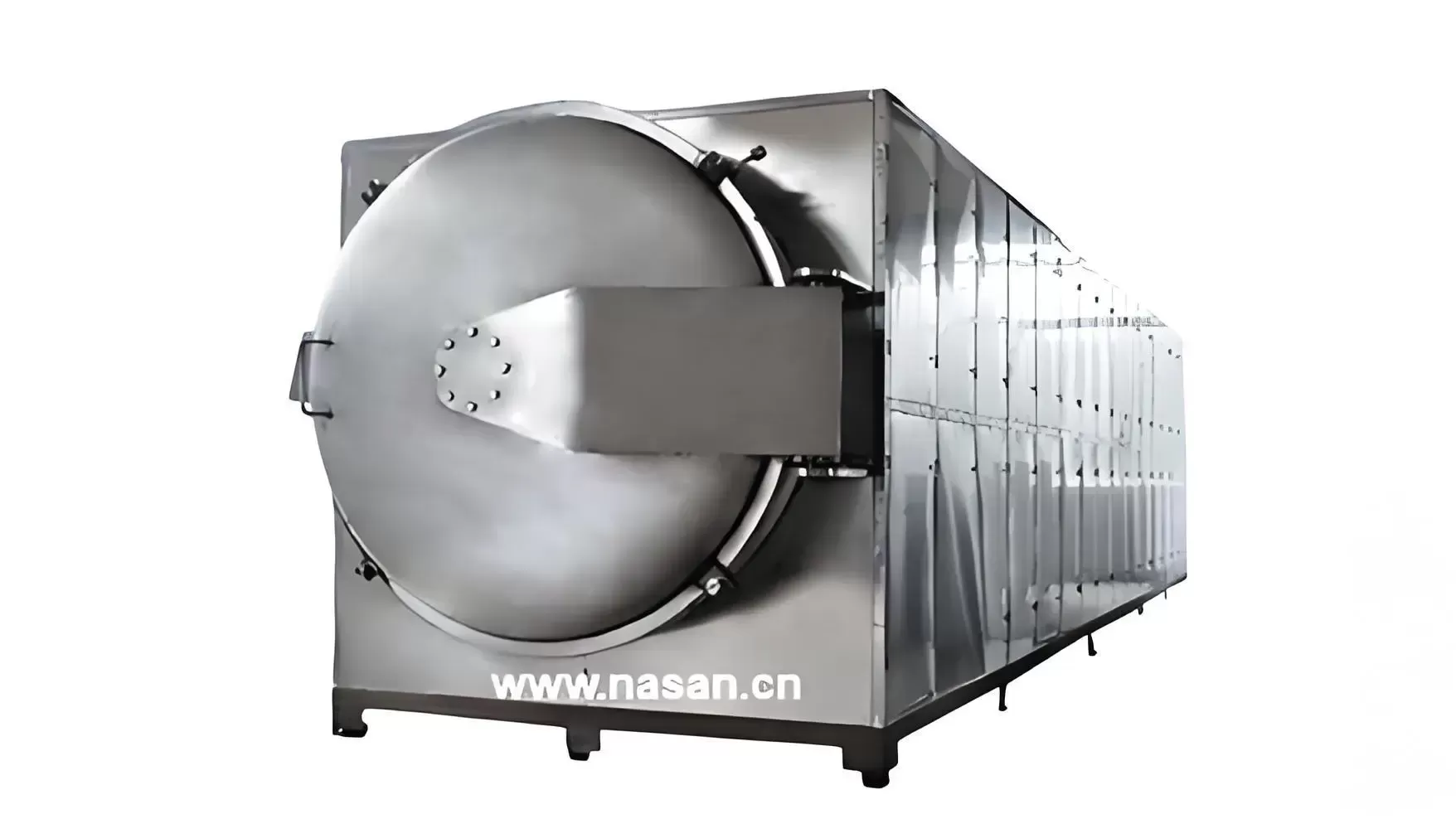



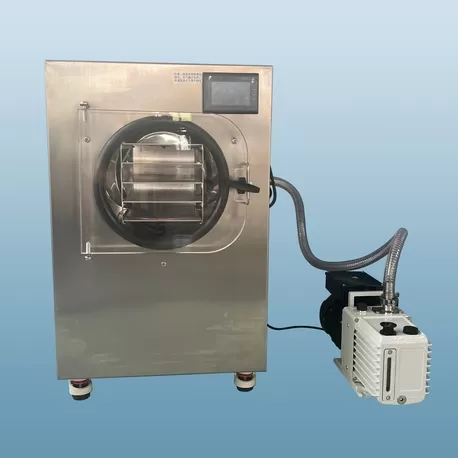
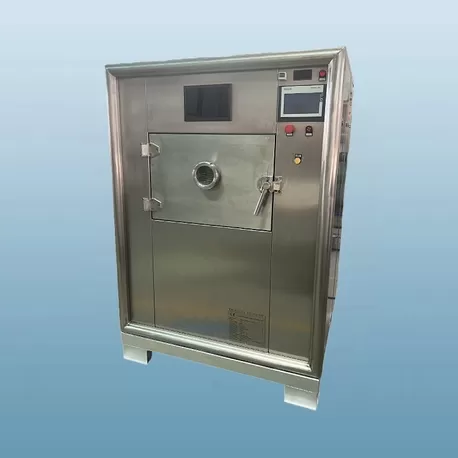
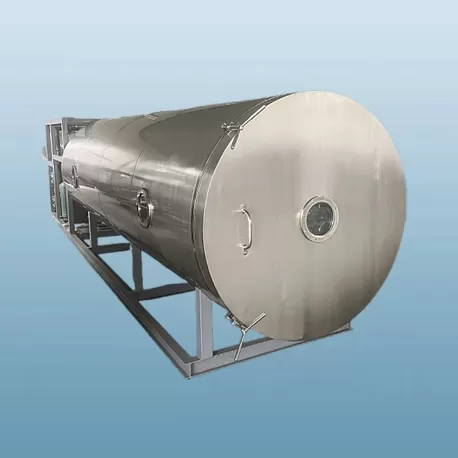
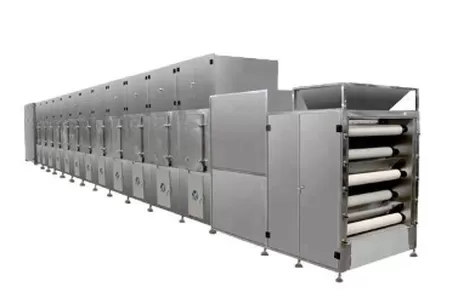
Modern process engineering requires drying technologies that eliminate the energy bottlenecks and thermal degradation inherent to conventional hot-air convection, conductive dryers, and freeze-drying systems. Industrial microwave drying leverages dielectric heating physics to drive rapid, uniform moisture removal across food, chemical, ceramic, and pharmaceutical processing applications. By directly exciting polar water molecules within the material matrix rather than relying on slow surface-to-core conduction, systems engineered by industry pioneers like NASAN achieve thermal efficiency rates near 99%, consuming only 1.0 to 1.5 kWh per kilogram of evaporated water—reducing processing cycles from hours to minutes.
The Physics of Industrial Microwave Drying: Volumetric Heating vs. Surface
Convection
Conventional thermal dryers rely on convective air or heated metallic surfaces to transfer energy to the product surface, relying on thermal conductivity to drive heat inward. This mechanism inherently creates steep thermal gradients, slow drying kinetics, and risk of surface scorching or case hardening. In contrast, industrial microwave drying operates via volumetric dielectric heating.
When high-frequency electromagnetic radiation penetrates a material, it interacts directly with polar molecules (primarily water) and dissolved ions:
Dipole Rotation: Polar water molecules attempt to align with the alternating electric field (reversing billions of times per second). Internal friction generated by this molecular rotation converts electromagnetic energy into thermal energy instantly throughout the entire volume of the material.
Ionic Conduction: Dissolved ions migrate in response to the oscillating field, generating additional volumetric heat through collision losses.
Electromagnetic Frequencies and Penetration Depth Mechanics
Industrial processing relies on two designated ISM (Industrial, Scientific, and Medical) frequencies: 915 MHz and 2.45 GHz. Selecting the correct frequency depends on the dielectric properties of the target material and the physical dimensions of the process bed:
915 MHz (Longer Wavelength ~32.7 cm): Delivers significantly deeper field penetration into bulk materials, dense slurries, and thick-bed continuous lines. It is ideal for large-scale production facilities requiring high power throughput per unit length.
2.45 GHz (Shorter Wavelength ~12.2 cm): Features a higher energy absorption rate in thin layers or low-mass materials, making it suitable for precise moisture leveling, laboratory pilot testing, and specialized thin-film drying.
Penetration depth ($d_p$) is defined as the point at which microwave energy intensity drops to $1/e$ (approximately 37%) of its surface value. If the material layer exceeds $d_p$, unabsorbed energy reflects back to the generator or trough walls. Advanced systems mitigate this through auto-tuning impedance matchers, continuously adjusting wave alignment to maintain energy transfer efficiency.
Eliminating E-Field Hotspots via Mechanical Agitation
Electromagnetic wave reflection inside rigid metallic cavities naturally creates standing waves, resulting in areas of constructive interference (hotspots) and destructive interference (coldspots). To maintain uniform drying across bulk powders and sticky media, modern microwave processors integrate specialized mechanical agitators driven by Variable Frequency Drives (VFDs).
By continuously reorienting particles through these local electric field nodes, agitator-equipped reactors prevent localized overheating, ensure homogeneous moisture distribution, and eliminate the need for excessive thermal dwell times.
Vacuum Microwave Dehydration: Protecting Heat-Sensitive Compounds
For thermally sensitive materials—such as pharmaceutical active ingredients, nutraceuticals, high-fat dairy solids, and delicate food bioactives—combining microwave energy with reduced pressure yields exceptional product preservation.
By lowering the ambient pressure below 100 mbar, the boiling point of water drops to between 30°C and 50°C. Applying industrial microwave drying under vacuum conditions offers critical processing advantages over traditional freeze drying:
Vapor Pressure Gradient: Microwave energy generates heat within the product core, driving water vapor outward toward the low-pressure boundary. This internal vapor pressure prevents structural collapse and maintains structural porosity without forming a hardened outer crust.
Cycle Time Reduction: Freeze drying typically requires 24 to 48 hours of energy-intensive sublimative processing. Industrial vacuum microwave systems accomplish equivalent moisture reduction in 30 to 90 minutes.
Energy Efficiency Differential: Vacuum microwave units consume approximately 1.2 to 1.8 kWh per kg of water removed, compared to the 10 to 15 kWh per kg required by refrigeration compressors and deep-vacuum sublimators in industrial freeze dryers.
Operational Safety, Radiation Mechanics, and Interlock Engineering
A common point of operational review among plant engineering teams is radiation safety. Industrial microwave systems generate non-ionizing radiation. Unlike ionizing radiation (X-rays, gamma rays), non-ionizing electromagnetic waves lack sufficient quantum energy to ionize atoms or damage DNA strands; energy transfer remains strictly thermal.
To ensure worker safety and regulatory compliance (OSHA, CE, UL), equipment manufacturers integrate robust hardware and safety interlocks into every enclosure:
Multi-Tiered Safety Interlocks: Redundant electromechanical interlocks instantly sever magnetron high-voltage power supplies if access doors, inspection hatches, or maintenance panels are breached during operation.
Waveguide Attenuation and Chokes: Resonant mechanical traps (quarter-wave reactive chokes) engineered into material entry and exit ports attenuate stray microwave energy well below the strict safety standard of 5 mW/cm² measured at 5 cm from the surface.
Impedance Monitoring and Arcing Prevention: Automatic impedance tuners track reflected power in real time. When processing organic volatile compounds (VOCs) or combustible powders, the process chamber is continuously blanketed with inert gas (Nitrogen or Argon) to prevent electrical arcing and eliminate explosion risks.
Total Cost of Ownership (TCO) and Capital Return Calculations
Evaluating an investment in modern industrial microwave drying equipment requires looking beyond initial capital expenditure (CapEx) to total life-cycle operating costs (OpEx).
| Economic Metric | Conventional Hot-Air Convection | Industrial Freeze Drying | NASAN Industrial Microwave |
|---|---|---|---|
| Energy Consumption (per kg H₂O) | 3.5 – 6.0 kWh | 10.0 – 15.0 kWh | 1.0 – 1.5 kWh |
| Thermal Transfer Efficiency | 25% – 45% | 15% – 30% | 85% – 99% |
| Typical Processing Cycle | 4 – 12 Hours | 24 – 48 Hours | 30 – 90 Minutes |
| Equipment Footprint Required | Baseline (100%) | Large (150%) | Compact (30% – 50% Reduction) |
| Carbon & Gas Emissions | High (Combustion Byproducts) | Indirect (High Electrical Load) | Zero On-Site Direct Emissions |
Systems built by NASAN dramatically reduce OpEx by eliminating steam boilers, thermal oil circulation systems, and continuous exhaust gas scrubbing infrastructure. The high energy absorption rate directly translates into paybacks typically achieved within 18 to 36 months of commissioning.
Selecting the Ideal System Architecture: Continuous Belt vs. Batch Agitated Systems
Plant engineers must choose between two primary mechanical configurations based on feed stream properties and upstream/downstream material handling requirements:
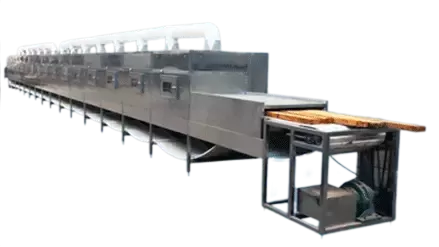
Continuous Tunnel / Belt Dryers
Best Suited For: High-volume, free-flowing bulk solids, extruded products, grains, sliced food items, and continuous ceramic sheets.
Key Characteristics: Material moves on a PTFE or fiberglass belt through lined microwave cavities equipped with distributed magnetron heads. Multiple temperature and moisture sensors along the belt control local microwave power levels to match the falling-rate drying curve.
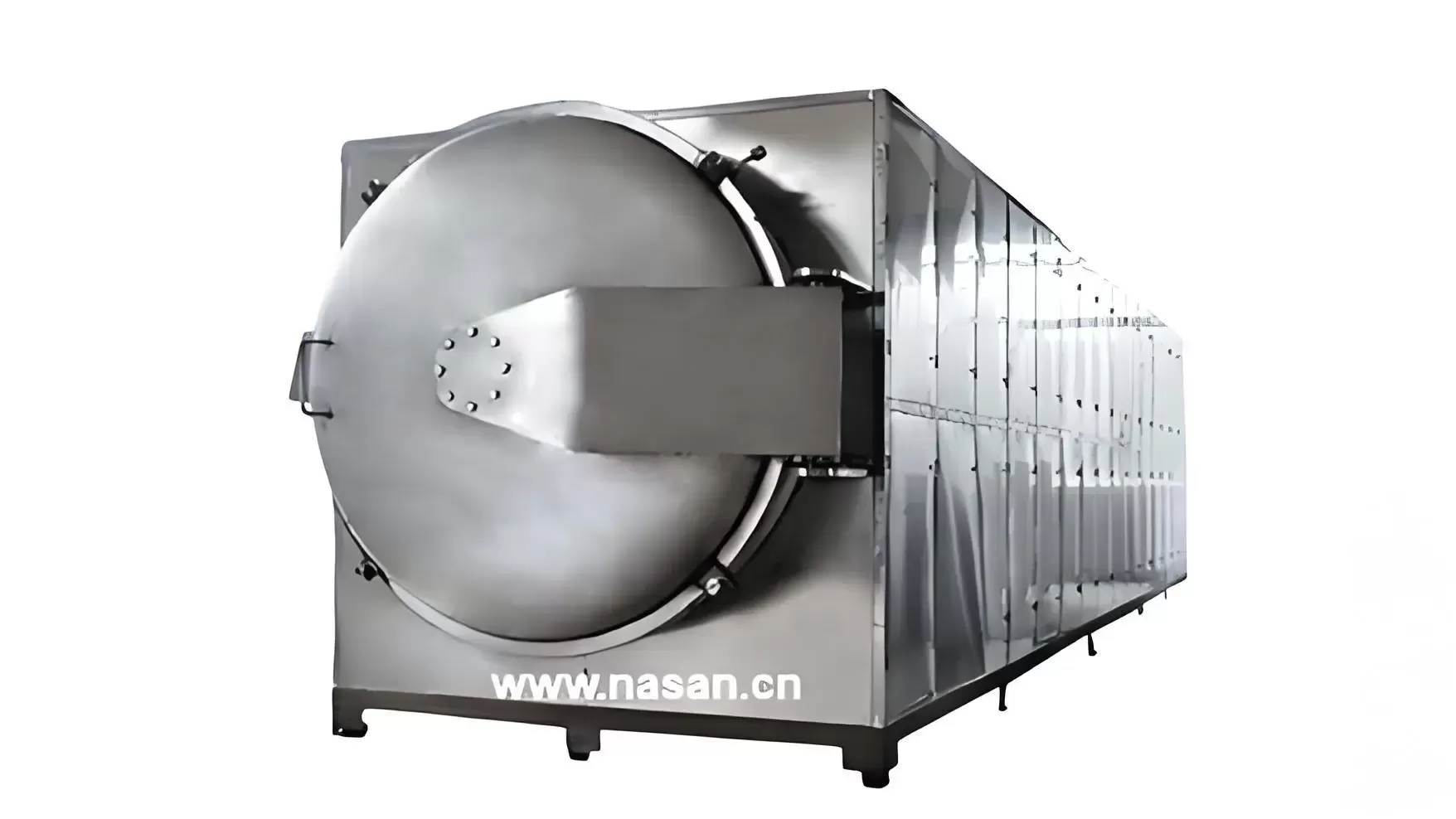
Agitated Batch Vacuum Microwave Reactors
Best Suited For: Thermally sensitive powders, viscous pastes, wet slurries, high-value active pharmaceutical ingredients (APIs), and cohesive bulk solids.
Key Characteristics: Incorporates low-shear mechanical plows or ribbons within a sealed, corrosion-resistant vacuum vessel. The combination of gentle agitation, uniform field distribution, and deep vacuum processing yields uniform final moisture levels below 0.5% without localized scorching.
Frequently Asked Questions
1. Does industrial microwave drying damage the physical structure or chemical properties of heat-sensitive materials?
No. Because energy is absorbed directly by polar water molecules, the dry solid matrix absorbs minimal thermal energy. Under vacuum conditions, thermal processing occurs at temperatures between 30°C and 50°C, preserving bioactives, active chemical bonds, surface color, and natural flavor profiles better than conventional hot-air equipment.
2. What maintenance is required for industrial microwave equipment?
Industrial microwave systems require significantly less mechanical maintenance than steam or gas-fired systems. Maintenance focuses on monitoring magnetron tube health, inspecting cavity door gaskets, keeping waveguides clean, and servicing mechanical agitator drive seals. There are no gas burner lines, heat exchanger tubes, or thermal fluid pumps to overhaul.
3. How do you scale up process parameters from pilot testing to full industrial production?
Scale-up is straightforward due to linear power scaling. Because dielectric energy absorption depends on power density (kW per kg of wet feed material), performance data collected on pilot-scale units directly transfers to continuous or larger batch systems by matching the power-to-mass ratio and field frequency.
4. How does the system handle materials with uneven moisture distribution or varying particle sizes?
Microwaves exhibit a self-limiting moisture leveling effect: areas with higher moisture content feature a higher dielectric loss factor, naturally absorbing more microwave energy. As these regions dry, their energy absorption drops, shifting the field density toward wetter zones. Mechanical agitators further enhance thermal uniformity across varying particle sizes.
5. Can microwave drying systems process flammable solvents or VOC-containing slurries safely?
Yes. Systems designed for solvent recovery feature explosion-proof motor assemblies, pressure-rated vacuum vessels, continuous nitrogen purging, and auto-tuning magnetrons to prevent internal arcing. Condensers fitted to the exhaust streams efficiently recover vaporized solvents without releasing emissions into the plant environment.
Consult with NASAN Engineering for Process Validation
Transitioning from inefficient conventional thermal equipment to advanced dielectric processing requires precise application engineering. NASAN provides full-spectrum technical support, from initial material dielectric property testing and pilot trial evaluations to custom-engineered turnkey installations. Contact the thermal engineering team at NASAN today to request a process evaluation, run pilot trials with your target materials, and review custom operational ROI models for your facility.