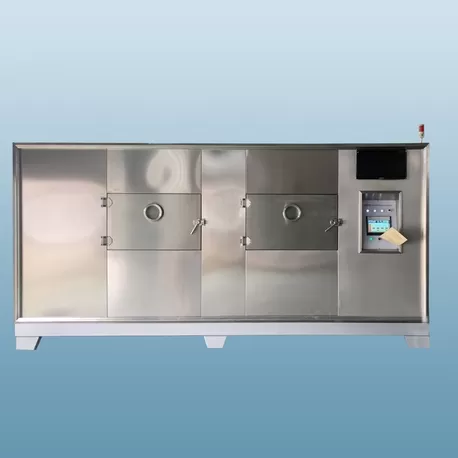
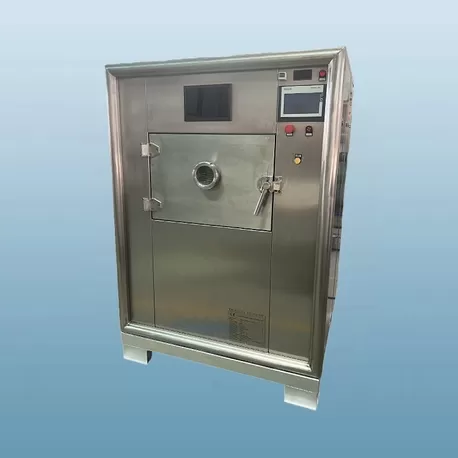
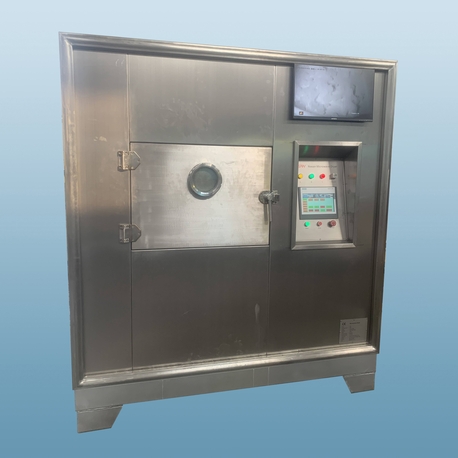
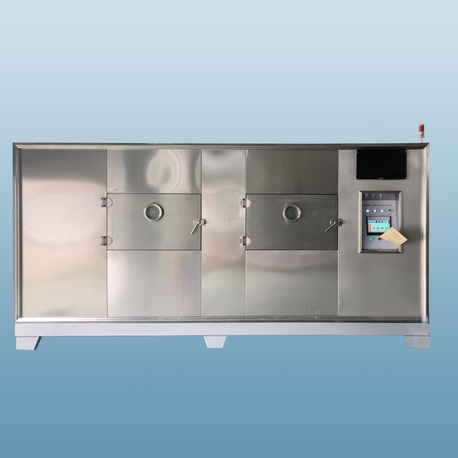
Commercial Microwave Systems for Industrial Thermal ProcessingThe adoption of commercial microwave systems in industrial settings has shifted from experimental to essential. Unlike residential ovens, industrial microwave generators (magnetrons) operate at power levels from 6 kW to over 100 kW, delivering volumetric heating that cuts processing time by up to 80 % compared to conventional convection methods. For food processors, pharmaceutical manufacturers, and advanced material industries, the ability to precisely deposit energy into the product matrix translates directly into higher throughput, lower energy bills, and improved product characteristics.
As a specialist in thermal processing solutions, Nasan has engineered a range of commercial microwave platforms that integrate with existing production lines or operate as standalone units. This article provides a technical examination—free of marketing hyperbole—of how these systems work, where they deliver measurable ROI, and what engineering parameters matter most during selection.

1. Core Engineering Principles of Industrial Microwave Systems
Industrial microwave heating relies on dielectric loss mechanisms. When polar molecules (primarily water) and ions are subjected to an oscillating electromagnetic field at 915 MHz or 2450 MHz, they attempt to align with the field, generating heat through molecular friction. The key differentiators between a domestic appliance and a commercial microwave system are:
Magnetron configuration: Multiple magnetrons (typically 1.5 kW to 15 kW each) are arranged to ensure field uniformity in a continuous-flow cavity.
Frequency selection: 915 MHz offers greater penetration depth (up to 30 cm in wet materials) and is preferred for bulk products like meat blocks or wood. 2450 MHz is used for thinner products (snacks, herbs) where rapid heating is required.
Waveguide and applicator design: Proper impedance matching prevents reflected power that could damage magnetrons. Advanced systems incorporate circulators and dummy loads to absorb reflected energy.
Conveyorised or batch architecture: Continuous systems for high throughput; batch systems for small volumes or specialised processes (e.g., ceramic drying).
Power density (kW/kg of product) and residence time are calculated based on the material’s dielectric properties, which change as temperature and moisture content evolve.
2. Key Application Areas and Performance Data
2.1. Finished Product Drying and Post‑Baking
In the biscuit and snack industry, a commercial microwave finishing dryer removes residual moisture after conventional baking. This allows the main oven to run faster, increasing line capacity by 20–30 %. Nasan installed a 75 kW system for a cracker producer: moisture uniformity improved from ±1.2 % to ±0.3 %, and checking (cracking) during cooling was virtually eliminated.
2.2. Meat and Poultry Tempering
Frozen meat blocks (‑18 °C to ‑2 °C) can be tempered in minutes instead of days. A 50 kW commercial microwave tempering tunnel processes 2 t/h with temperature variation ≤ 2 °C across the block. This eliminates drip loss (typically 3–5 % in air tempering) and preserves protein functionality.
2.3. Pasteurisation and Enzyme Inactivation
Microwave heating is inherently volumetric, meaning particulates and liquids heat simultaneously. For rice bran stabilisation, a 915 MHz system inactivates lipase enzymes at 100 °C in 90 seconds, compared to 30 minutes with steam. This preserves the bran’s shelf life without destroying nutrients.
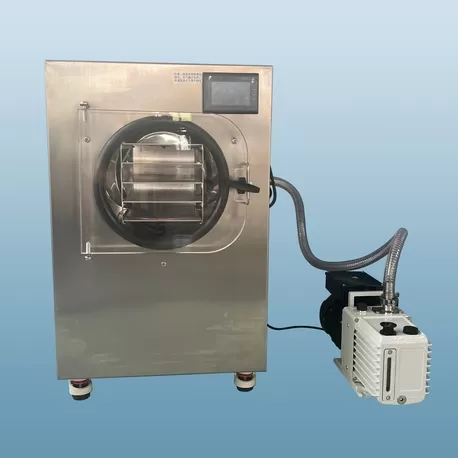
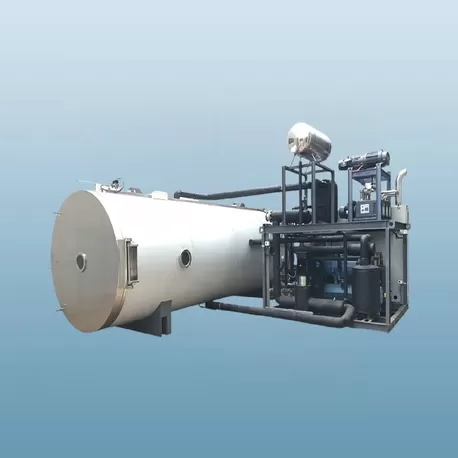
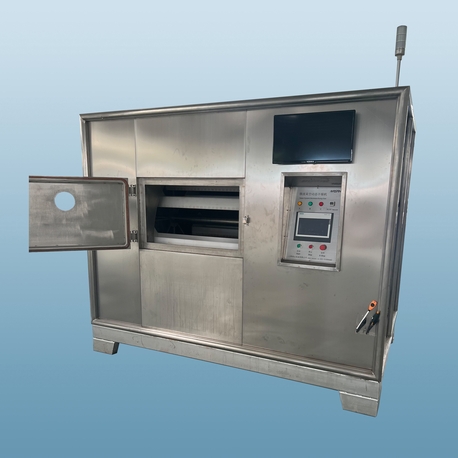
Combining vacuum with microwave energy allows drying at low temperatures (40–50 °C). This is used for high-value fruit powders and pharmaceutical intermediates. Nasan’s vacuum microwave dryers achieve evaporation rates of 50 kg/h with specific energy consumption below 1.2 kWh/kg.
3. Integration with Existing Process Lines
Retrofitting a commercial microwave module into a convection line requires careful analysis of mass and energy balances. Key integration points include:
Pre-conditioning: Surface moisture removal via hot air or infrared before the microwave section prevents arcing and improves energy efficiency.
Equalisation zones: After microwave application, a tempering belt allows internal moisture to redistribute, preventing case hardening.
Control architecture: Nasan uses PLCs with fibre‑optic temperature sensors (non‑contact) and humidity feedback to modulate magnetron power in real time.
In a recent project for a pasta manufacturer, a 100 kW microwave module was inserted between a conventional dryer and a cooler. The result was a 40 % increase in line speed while maintaining final moisture at 11 % (down from 14 % after the convection section).
4. Addressing Industry Pain Points with Engineered Solutions
4.1. Uneven Heating and Hot Spots
Field non‑uniformity is the most cited concern. Modern Nasan designs use rotating mode stirrers, variable‑speed conveyors, and multiple feed points to achieve a uniformity index (CV) below 10 %. For sensitive products, we employ solid‑state generators that allow precise phase control, although magnetron‑based systems remain the workhorse for high power.
4.2. Arcing and Plasma Formation
Metallic inclusions or sharp edges on products can cause arcing. Solutions include: metal detectors upstream, product density control, and specialised conveyor belts with carbon‑filled materials that dissipate static. Nasan’s applicators are designed with high‑voltage protection and automatic shut‑off in case of reflected power spikes.
4.3. Energy Efficiency and Total Cost of Ownership
Industrial microwave efficiency (wall‑plug to energy in product) ranges from 65 % to 75 % for 2450 MHz and up to 85 % for 915 MHz systems. While the capital cost per kW is higher than gas‑fired alternatives, the reduction in drying time and floor space often yields payback within 18 months. Nasan provides energy audits that compare kWh/kg for microwave vs. convection for specific products.
5. Frequently Asked Questions About Commercial Microwave Systems
Q1: What is the typical power range for an industrial microwave dryer?
A1: Systems start at 6 kW for R&D and pilot lines, scaling to 300 kW or more for high‑capacity applications. Multiple units can be staged in series. Nasan’s modular design allows incremental power addition as production grows.
Q2: Can a commercial microwave system be used for products with low moisture?
A2: Yes, but the dielectric loss factor decreases as water is removed. For final drying stages (below 10 % moisture), microwave energy couples less effectively. In such cases, hybrid systems (microwave + hot air) or radio frequency (RF) may be more suitable. Nasan offers feasibility testing to determine the optimal technology.
Q3: How does microwave processing affect microbial load?
A3: Microwave heating is thermal, so microbial reduction follows the same time‑temperature kinetics as conventional heating, but the rapid temperature rise can achieve pasteurisation with less thermal degradation. For solid foods, surface and interior temperatures equalise faster. Third‑party validation for Salmonella and Listeria reduction is available for Nasan systems.
Q4: What safety certifications are required for industrial microwave equipment?
A4: Equipment must comply with FCC/ICNIRP regulations for electromagnetic leakage (<5 mw="">
Q5: What is the expected service life of magnetrons in continuous use?
A5: Magnetron lifetime depends on operating conditions. At rated power with good cooling and low reflected power, typical lifetimes are 8 000–12 000 hours. Nasan’s control system logs run hours and recommends pre‑emptive replacement during scheduled maintenance, minimising unplanned downtime.
Q6: Can I process multiple products with different geometries in the same microwave line?
A6: Yes, if the product load is consistent. Changes in mass or dielectric properties affect the impedance match. Nasan’s Auto‑Tune system uses a three‑stub tuner and reflected power feedback to maintain optimal coupling even during product transitions.
Engineering Partnership for Advanced Thermal Processing
Selecting a commercial microwave system is a multidisciplinary decision involving electromagnetics, food science, and process integration. When correctly specified, these systems deliver unmatched speed, energy efficiency, and product quality. Nasan provides end‑to‑end support—from dielectric property measurement and pilot testing to installation and lifecycle service. For processors ready to move beyond conventional heating constraints, our engineering team is available to discuss project‑specific requirements and performance guarantees.