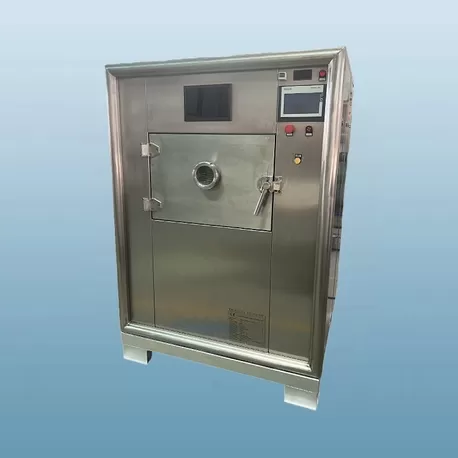
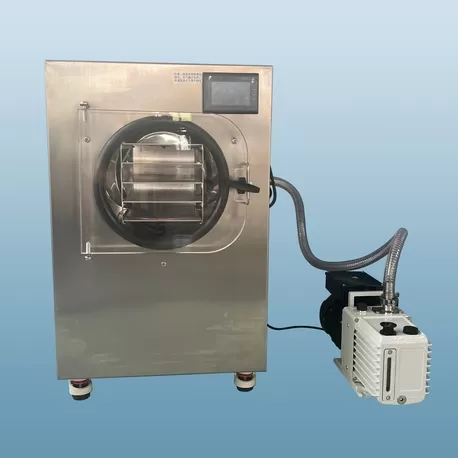
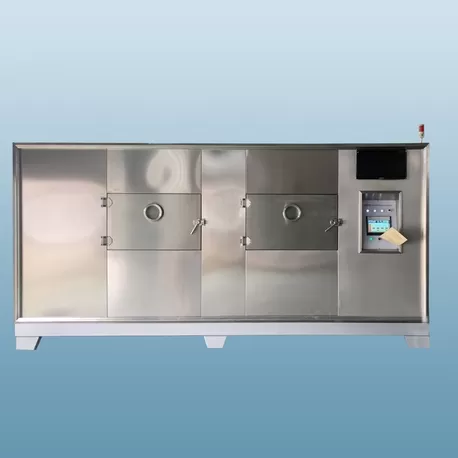
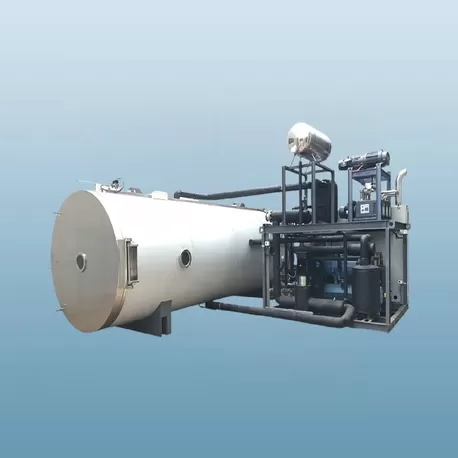
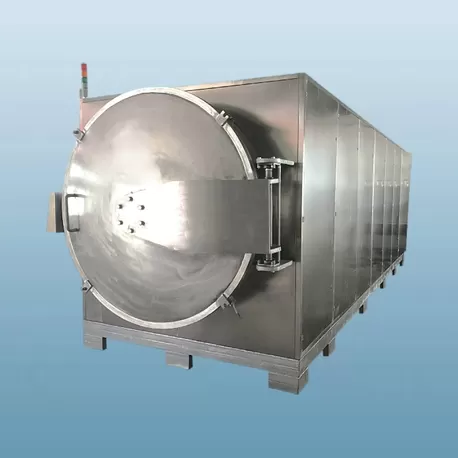
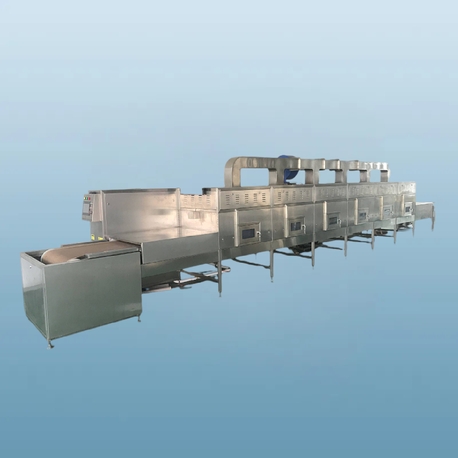
The global market for dehydrated vegetables is expanding at a compound annual growth rate of over 6%, driven by the need for clean-label ingredients, food waste reduction, and supply chain flexibility. For food processors, an industrial vegetable dehydrator is the cornerstone of profitability and product consistency. Unlike small-scale batch units, modern systems integrate precise thermodynamics, material handling, and food safety protocols to deliver uniform moisture content (typically below 10% w.b.) while preserving the phytochemical profile of the raw material.
As a trusted partner in thermal processing, Nasan has engineered drying lines that address the specific rheological and sensorial challenges of vegetables. This article provides a technical deep dive—without buzzwords—into the selection, operation, and optimisation of commercial vegetable dehydrators, backed by operational data and industry best practices.

1. Core Drying Technologies for Vegetables: A Comparative Analysis
Choosing the right drying principle is the first critical decision. The main technologies deployed in industrial vegetable dehydrator systems include:
Convection belt drying: Heated air (60–90 °C) passes through a perforated belt carrying the product. Best for root vegetables (carrots, potatoes) and onions. Offers high throughput (up to 2 t/h) and moderate energy consumption (1.2–1.5 kWh/kg of water removed).
Heat pump drying: Closed-loop dehumidification with temperature control as low as 30 °C. Ideal for heat‑sensitive leaves (spinach, herbs) where chlorophyll retention is critical. Coefficient of performance (COP) can reach 3.5–4.5, cutting energy costs by 40 % compared to electric heating.
Vacuum belt drying: Gentle drying under reduced pressure. Used for high‑value ingredients where maximum nutrient retention (e.g., vitamin C in bell peppers) is required. Capital expenditure is higher, but the premium product justifies the investment.
Microwave‑assisted drying: Volumetric heating shortens drying time. Often combined with hot air to finish drying without case hardening.
Each technology demands a different pre‑treatment and control strategy. Nasan offers modular configurations that allow processors to switch between modes or combine them, depending on seasonal vegetable varieties.
2. Key Specifications That Define Dehydrator Performance
Beyond the basic drying principle, procurement engineers must evaluate quantitative metrics that directly affect ROI:
Evaporation rate (kg H₂O/h): A 2 m wide belt dryer from Nasan typically evaporates 250–800 kg/h, scaled by the number of modules.
Specific energy consumption (kWh/kg蒸发): Values below 1.0 kWh/kg are achievable with heat pump integration. For a typical onion dehydration line, this translates to annual savings of €50 000 at 3000 h operation.
Uniformity index (CV% of final moisture): Advanced air distribution and belt speed control guarantee a coefficient of variation ≤ 5 %, essential for consistent shelf‑life.
Product temperature history: To avoid enzymatic browning without chemical pre‑treatment, the vegetable dehydrator must allow rapid temperature ramp‑down in the final zone.
Processors often underestimate the impact of hygroscopic equilibrium. A well‑engineered vegetable dehydrator maintains a controlled dew point in each zone, preventing rehydration of already‑dried material.
3. Addressing Industry Pain Points with Advanced Engineering
3.1. Nutrient Retention and Colour Preservation
Vegetables lose quality through enzymatic and non‑enzymatic reactions. For green beans and broccoli, chlorophyll degradation accelerates above 65 °C. Modern dehydrators incorporate pre‑drying conditioning: a short steam blanching (90 °C, 2 min) inactivates peroxidase, after which drying proceeds at 55 °C. Nasan’s PLC‑controlled systems store up to 200 recipes, automatically adjusting belt speed, airflow, and humidity to match the raw material’s initial moisture (often 85 %–95 % w.b.).
3.2. Hygienic Design and Regulatory Compliance
Food safety is non‑negotiable. An industrial vegetable dehydrator must meet GFSI benchmarked standards. Nasan constructs its dryers entirely from AISI 304L stainless steel, with fully welded frames, sloped surfaces for drainage, and quick‑release access panels. This design minimises microbial harbourage points and allows CIP (clean‑in‑place) procedures. In a recent audit for a US‑based spice company, the line achieved a total plate count below 10 CFU/g after a 30‑minute wash cycle.
3.3. Energy Volatility and Operating Cost Control
With electricity and gas prices fluctuating, energy‑efficient architectures are vital. Heat‑pump‑assisted vegetable dehydrators recover latent heat from the exhaust air. For a 500 kg/h carrot line, this reduces primary energy demand from 180 kW to 110 kW. Nasan offers hybrid models that can switch between heat pump, gas, and waste‑heat recovery modes, future‑proofing the plant against energy price shifts.

4. Case Application: Optimising a Multi‑Vegetable Processing Line
A mid‑sized processor in the Mediterranean region approached Nasan to replace an outdated single‑stage dryer. They processed tomatoes, zucchini, and eggplants—each with different cellular structures and sugar contents. The challenge was to achieve a final moisture of 8 % while keeping the tomato pieces from sticking and the eggplant from collapsing.
Nasan installed a three‑stage continuous belt vegetable dehydrator with independent temperature and airflow zones. Stage 1 (75 °C, high velocity) rapidly removes surface moisture. Stage 2 (65 °C, lower velocity) allows moisture equalisation. Stage 3 (50 °C, controlled humidity) finishes drying without case hardening. The result: throughput increased by 35 %, energy consumption dropped by 22 %, and the rehydration ratio improved from 1:4.5 to 1:5.2. The payback period was 14 months.
5. Frequently Asked Questions About Industrial Vegetable Dehydrators
Q1: What is the typical capacity range for a commercial vegetable dehydrator?
A1: Modular systems start at around 100 kg of fresh product per hour and can exceed 5 t/h for multi‑stage lines. The choice depends on harvest windows and desired annual output. Nasan offers pre‑engineered scales to match seasonal peaks.
Q2: How do I determine the best drying temperature for a specific vegetable?
A2: Laboratory drying tests combined with thermogravimetric analysis are recommended. Most vegetables with low starch (leafy greens, peppers) dry well at 55–65 °C; high‑sugar vegetables (tomatoes, onions) require a gradual profile starting lower (50 °C) to avoid caramelisation. Nasan’s food science team can provide reference curves.
Q3: Can a vegetable dehydrator handle different products without cross‑contamination?
A3: Yes, if designed with hygienic zoning. Nasan’s systems feature partitioned belts, dedicated air loops, and quick‑clean belts. Changeover between e.g., garlic (strong aroma) and potatoes can be accomplished in under two hours with validated cleaning protocols.
Q4: What is the average lifespan of an industrial vegetable dryer?
A4: With proper maintenance (bearing lubrication, belt tracking, and coil cleaning), a stainless‑steel dryer typically operates for 15–20 years. Nasan provides remote monitoring and predictive maintenance alerts to maximise uptime.
Q5: How does humidity control inside the dryer affect product quality?
A5: Absolute humidity (g water/kg dry air) governs the drying rate and the risk of condensation. In the falling‑rate period, too low humidity can cause surface hardening. Advanced dehydrators maintain zone‑specific relative humidity set points (e.g., 20 % in the first zone, 40 % in the last) to optimise moisture diffusion. Nasan’s patented air recirculation logic achieves this without external steam injection.
Q6: Is it feasible to retrofit an existing line with a heat pump module?
A6: Yes, many processors upgrade to reduce carbon footprint. Nasan offers bolt‑on heat pump units that integrate with existing exhaust ducts. In a recent project for a garlic powder plant, the retrofit cut natural gas consumption by 70 %.
Engineering Partnership for Long‑Term Value
Selecting a vegetable dehydrator is not merely a purchase—it is a long‑term commitment to product quality and operational efficiency. By combining robust mechanical design with adaptive process control, manufacturers can turn seasonal vegetables into high‑margin ingredients available year‑round. Nasan continues to set benchmarks in the field, offering tailor‑made solutions backed by decades of thermal engineering expertise. For detailed project evaluations or to schedule a lab drying test, contact our applications team.