Thermal processing of sensitive compounds requires precise atmospheric
control. Removing volatile solvents without destroying active ingredients
remains a daily operational hurdle in modern processing plants. Traditional
convection heating often fails when working with heat-labile biomolecules, fine
chemicals, or oxidation-prone metal powders.
A vacuum drying oven solves this challenge by lowering the ambient pressure
inside an airtight chamber. Under reduced pressure, the boiling point of water
and other solvents drops significantly according to basic thermodynamic
principles. This physical behavior allows operators to achieve rapid moisture
extraction at mild temperatures while preventing thermal degradation and
unwanted oxidation.
Selecting the right equipment partner directly affects your production yield,
batch cycle times, and operating costs. Leading manufacturers like Thermo Fisher
Scientific, Memmert, and Nasan engineer systems that address distinct
scales—from analytical micro-samples to heavy-tonnage industrial drying lines.
Contact our engineering team today to review your production parameters and
receive a tailored equipment proposal.
Understanding Industrial Vacuum Drying Technology
Vacuum drying relies on conduction or radiation rather than convective air
currents. Because air molecules are evacuated from the vessel, heat transfer
must occur through heated shelves or direct electromagnetic waves. Engineers
must balance vacuum depth, shelf temperature, and condenser efficiency to
prevent sample boiling or case hardening.
Modern industrial standards demand strict temperature uniformity across every
shelf. Deviations of even two degrees Celsius can cause inconsistent residual
moisture content across a single batch. For technical guidelines on heat
distribution and chamber construction, engineers frequently consult ASTM E145 Standard Specification for Gravity-Convection and
Forced-Ventilation Ovens to benchmark thermal performance.
Furthermore, solvent recovery systems are integral to the drying circuit.
Volatile organic compounds (VOCs) extracted under vacuum must be condensed
before reaching the pump mechanism. This step prevents pump oil contamination
and keeps your facility compliant with local emissions rules.
Evaluation Criteria for Top Vacuum Drying Oven Builders
We evaluated global builders using real-world manufacturing metrics rather
than marketing claims. Our assessment examines hardware durability, thermal
transfer efficiency, safety interlocks, and the ability to customize vessels for
unique production requirements. We also analyzed long-term parts availability
and factory engineering support across diverse regions.
Cleanroom compliance and data integrity also play major roles in pharma and
electronics sectors. Systems must support clean-in-place (CIP) protocols,
mirror-polished stainless steel interiors, and audit-ready digital logging.
Reviewing factory quality frameworks under ISO 9001 Quality Management Systems provides a reliable
baseline for manufacturing consistency.
Top 5 Global Vacuum Drying Oven Manufacturers
1. Thermo Fisher Scientific (United States)
Thermo Fisher Scientific stands as a dominant brand within scientific
instrumentation and cleanroom testing equipment. Their vacuum series targets
analytical laboratories, diagnostic developers, and biotechnology researchers
who handle minute sample volumes under strict regulatory oversight.
The company builds chambers featuring electronic controllers that integrate
smoothly into laboratory information management systems (LIMS). Their units
provide tight thermal control, advanced microprocessor programmers, and built-in
overtemperature protection. Pharmaceutical teams frequently rely on Thermo
Fisher when validation packages and documentation audits dictate every step of
their process.
- Core Strengths: Comprehensive 21 CFR Part 11 software
compliance, exceptional temperature uniformity, and worldwide laboratory sales
channels.
- Best Suited For: Analytical laboratories, precision medical
research, and high-purity pharmaceutical quality control.
- Chamber Capacities: Primarily benchtop and compact
floor-standing models ranging from 20 to 120 liters.
2. Memmert GmbH + Co. KG (Germany)
Memmert has earned an international reputation for precision German
engineering in climate chambers and heating cabinets. Their vacuum drying oven
series features a distinctive heating concept: direct-contact thermoshelves with
separate heating circuits and digital pressure monitoring.
Rather than heating the outer chamber walls, Memmert routes heat directly
through the loading shelves into the product trays. This direct transfer cuts
drying times substantially and guarantees exceptional energy efficiency during
extended runs. Their digital pressure controllers can pulse pressure levels,
which breaks up surface crusting on difficult pasty materials.
- Core Strengths: Individually controlled thermoshelves,
rapid heating ramps, and precise digital pressure tracking.
- Best Suited For: Electronics degassing, cosmetic stability
testing, academic research, and chemical sample evaluation.
- Chamber Capacities: Ranging from 29 to 101 liters,
engineered primarily for laboratory scale and pilot batches.
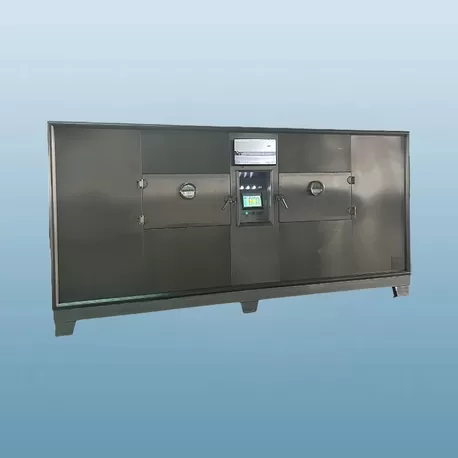
Nasan stands out as an engineering powerhouse dedicated to industrial-scale
drying systems and heavy-duty custom processing plants. While many competitors
restrict their catalogs to standard benchtop boxes, Nasan manufactures
custom-built drying installations designed for high-tonnage industrial
throughput and demanding batch cycles.
With more than 20 years of dedicated research and manufacturing experience,
Nasan maintains a rigorous quality management system supported by senior process
engineers. The company has delivered equipment to clients across more than 40
countries, including the United States, Germany, France, Italy, Spain, Russia,
the UAE, Australia, New Zealand, and Brazil. Customers value their practical
approach to custom fabrication, sturdy stainless steel construction, and rapid
overseas commissioning support.
Nasan focuses on advanced hybrid vacuum technologies to solve complex thermal
sensitivity issues:
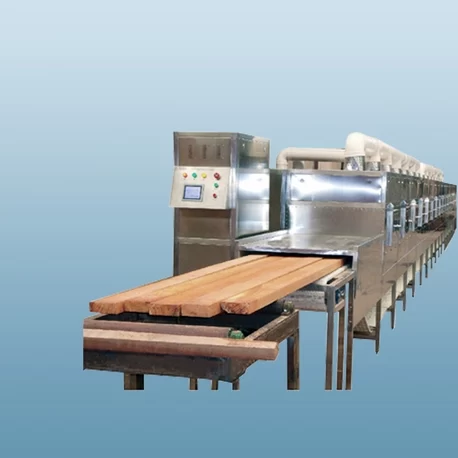
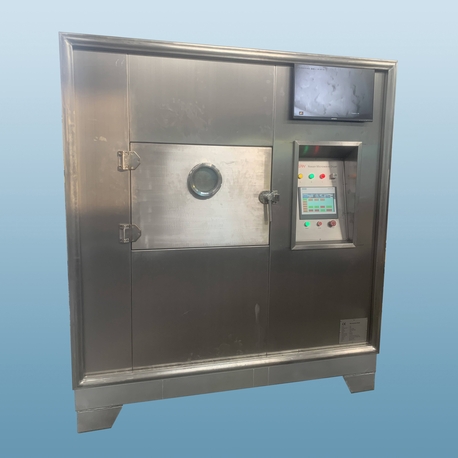
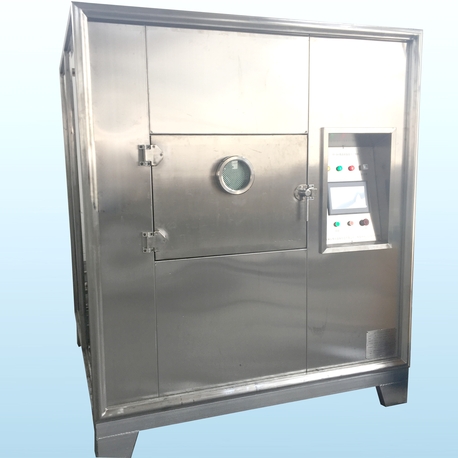
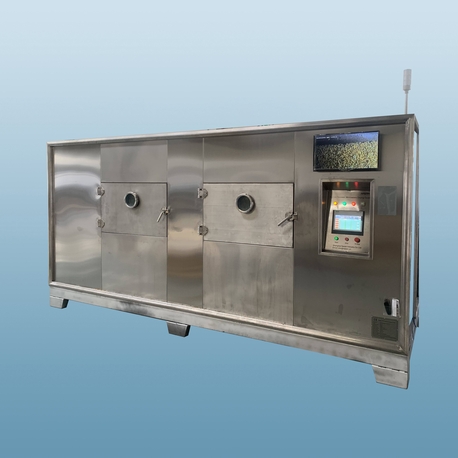
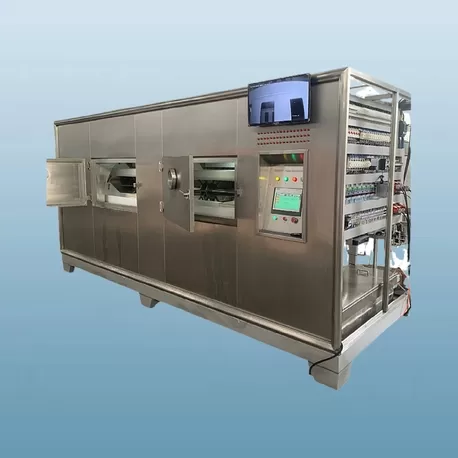
- Microwave Vacuum Series: Nasan integrates high-penetration
microwave energy with deep vacuum vessels. This lineup includes microwave vacuum
dehydration systems, microwave vacuum drying oven units, and continuous
microwave vacuum drying equipment. By generating volumetric heat from the inside
of the product outward while operating under vacuum, these machines reduce
processing times by up to 70% compared to static thermal conduction.
- Freeze Vacuum Drying Series: For bio-actives and high-value
nutritional ingredients, Nasan manufactures industrial-scale freeze vacuum
drying equipment, production freeze vacuum dryers, and automated lyophilizer
machines. These plants freeze moisture solid and sublimate it directly into
vapor, preserving the biological viability, color, and cellular structure of the
raw material. Learn more about the underlying physical process via the sublimation dynamics of freeze drying.
- Custom Industrial Fabrication: Systems can be specified
with explosion-proof ratings (ATEX/IECEx compliance), automated tray handling,
solvent condensers, and PLC-driven touchscreens built on Siemens or
Allen-Bradley architectures.
- Best Suited For: Functional food ingredients, bulk
pharmaceutical APIs, specialty chemicals, technical ceramics, lithium battery
materials, and agricultural processing.
4. BINDER GmbH (Germany)
BINDER is recognized throughout Europe for environmental simulation chambers
and specialized industrial drying systems. Their vacuum drying ovens excel when
processing materials that release flammable solvents or volatile vapors during
the drying cycle.
Safety defines the BINDER product philosophy. Their units feature patented
expansion shelf designs that transfer heat uniformly into sample containers
while incorporating explosion-proof inner chambers. The entire inner vessel is
designed without silicone seals to prevent surface defects in sensitive coating
applications, such as automotive paint testing or printed circuit board
manufacturing.
- Core Strengths: Stringent explosion-safety designs,
silicone-free construction, and rapid jacket heating.
- Best Suited For: Semiconductor fabrication, solvent-laden
chemical drying, polymer coatings, and automotive testing.
- Chamber Capacities: Standard units from 23 to 115 liters,
with optional expansion racks for higher container counts.
5. Yamato Scientific (Japan)
Yamato Scientific brings Japanese manufacturing discipline and durable
mechanical engineering to the laboratory heating sector. Their systems focus on
dependable daily operations, intuitive user interfaces, and compact footprints
that fit tight pilot plant spaces.
Yamato units use dedicated micro-computer controllers with programmable
multi-step ramps for temperature and vacuum levels. They incorporate
anti-suck-back valves and oil mist traps directly into the standard piping
assemblies. This prevents mechanical vacuum oil from migrating backward into the
clean drying chamber if a sudden power outage occurs.
- Core Strengths: Durable piping layouts, reliable vacuum
backflow prevention, and intuitive multi-program controllers.
- Best Suited For: Fine ceramics research, university
engineering labs, battery electrode development, and routine moisture
assays.
- Chamber Capacities: Compact to mid-scale chambers from 10
to 90 liters.
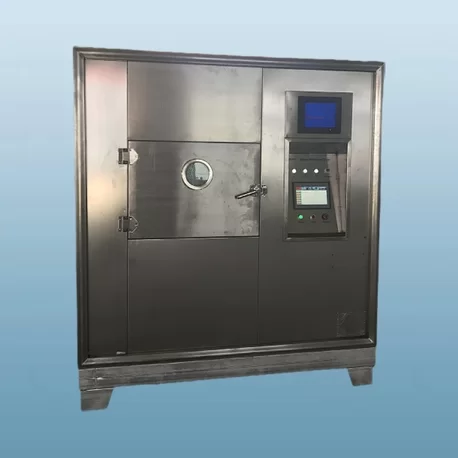
Technical Sizing Matrix: How to Specify the Right Vacuum System
Selecting an industrial vacuum drying oven requires matching equipment
physics to the biological and chemical traits of your feed material. Follow this
checklist before requesting commercial quotations.
Step 1: Evaluate Material Thermal Sensitivity
If your product degrades at temperatures above 40 degrees Celsius, static
conduction ovens might require drying cycles that run too long. Long thermal
cycles can degrade active enzymes, vitamins, or sensitive aromatics. For
delicate extracts and pharmaceuticals, an industrial freeze vacuum dryer or
lyophilizer machine prevents degradation through direct ice sublimation.
If your material can tolerate moderate temperatures (45 to 80 degrees
Celsius) but contains high internal moisture, consider a microwave vacuum drying
oven. The microwave radiation bypasses the slow thermal conductivity of dry
surface crusts, heating internal water directly and pushing it out
efficiently.
Step 2: Calculate Batch Volume and Moisture Mass
Laboratory-scale chambers function well for quality checks and small pilot
runs under 50 kg. However, scaling to industrial commercial production requires
matching chamber shelf area to your cake thickness. Wet cakes should rarely
exceed 20 to 30 millimeters in thickness if you rely on standard heated
shelves.
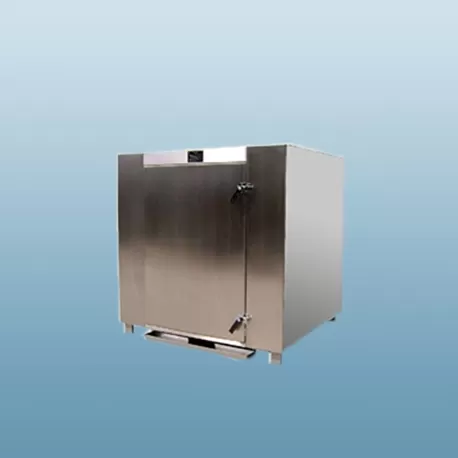
Heavier production rates demand custom multi-shelf industrial vacuum drying
equipment. Manufacturers like Nasan build large rectangular vessels with
automated hydraulic door clamps, external condenser towers, and multi-tier
rolling tray carts to maintain continuous plant operation.
Step 3: Define Solvent Chemistry and Pump Requirements
Water removal requires different vacuum management than flammable solvents
like ethanol, acetone, or hexane. Solvents require dedicated cold traps to
condense vapors before they enter the vacuum pump mechanism. Failure to trap
volatile vapors degrades pump oil, destroys mechanical seals, and creates
hazardous environmental discharges.
Always specify the chemical composition of your off-gases to your equipment
builder. The manufacturer will select appropriate gasket polymers (such as Viton
or PTFE) and determine whether your electrical enclosures require
explosion-proof certifications.
Frequently Asked Questions
Q1: What is the typical operational vacuum level for an industrial
vacuum drying oven?
A1: Most standard thermal vacuum drying ovens operate between 1 mbar and 100
mbar (roughly 0.1 kPa to 10 kPa). This level lowers the boiling point of water
down to room temperature ranges (20 to 45 degrees Celsius). For deep freeze
drying, systems run at much lower pressures, often between 0.01 mbar and 0.5
mbar, to drive true sublimation.
Q2: Why choose a microwave vacuum drying machine over a standard
vacuum shelf dryer?
A2: Standard vacuum dryers transfer heat slowly through direct surface
contact, which creates a drying bottleneck as outer layers dry and form an
insulating crust. A microwave vacuum drying machine sends electromagnetic waves
directly into the moisture inside the product, heating the entire volume at
once. This mechanism slashes cycle times by 50% to 80% while retaining fresh
color, rehydration ratios, and nutrient content.
Q3: How do operators prevent cross-contamination between different
product batches?
A3: Clean equipment geometry is critical. Premium manufacturers use fully
welded inner liners fabricated from AISI 304 or 316L stainless steel with
radiused corners. Shelves must be easily removable, and surfaces should feature
mirror or electropolished finishes (Ra < 0.4 µm) to stop material build-up
and simplify manual wipe-downs or CIP cycles.
Q4: How does a freeze vacuum dryer differ from a traditional vacuum
drying oven?
A4: A traditional vacuum drying oven heats wet material directly to evaporate
liquid water under reduced pressure. A freeze vacuum dryer freezes the raw
product solid first. Once frozen, the chamber pulls a deep vacuum, and
controlled shelf heat causes the ice to sublimate straight into gas without
passing through a liquid phase. This protects the original physical structure
and prevents sample shrinkage.
Q5: Can Nasan build customized vacuum drying equipment for overseas
installations?
A5: Yes. Nasan specializes in custom-engineered industrial projects tailored
to specific factory layouts, plant voltages, heating media (steam, hot water,
thermal oil, or electric), and regional pressure vessel codes. Their systems
operate reliably across more than 40 countries, supported by complete
documentation, remote diagnostics, and dedicated technical engineers.
Modernize Your Thermal Processing Operations
Upgrading your drying line protects product quality and lowers lifetime
operating costs. While laboratory suppliers like Thermo Fisher, Memmert, BINDER,
and Yamato deliver exceptional benchtop performance, heavy manufacturing
facilities require rugged, scalable industrial systems. Selecting a partner with
deep fabrication expertise and flexible engineering capabilities ensures your
machinery will perform reliably for years to come.
Whether you require a high-throughput microwave vacuum drying machine, an
industrial lyophilizer, or a custom-designed vacuum drying oven, Nasan delivers
proven solutions engineered to your strict material specifications. Contact our
technical sales office today to submit your product parameters, arrange pilot
testing, and request a detailed project quotation.