


Water Chillers: A Comprehensive Guide to Industrial and Commercial Cooling Solutions
...
View Details
2026-07-17
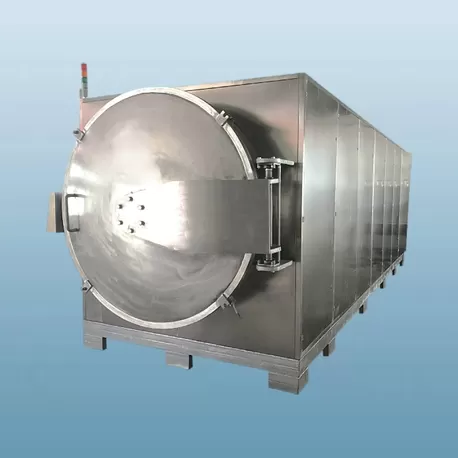
Maintaining precise temperature control is critical in countless industrial and commercial operations. From plastic molding to food processing and laboratory testing, excess heat can compromise product quality, damage expensive machinery, and halt production. This is where a robust water chiller system becomes an indispensable asset. Unlike standard air conditioning, these dedicated cooling workhorses are engineered for continuous, heavy-duty operation, providing reliable heat removal for equipment and processes. For businesses seeking efficiency and reliability, investing in a high-performance system, such as those engineered by Nasan, is a strategic move toward operational stability and cost savings.
A water chiller is not a single device but a complete system. Its core function is to remove heat from a process water (or glycol) stream and reject that heat to the atmosphere. The chilled water is then circulated to the point of use, absorbing unwanted thermal energy before returning to the chiller to reject the heat again. This closed-loop process offers superior efficiency and control compared to once-through water systems or ambient air cooling.

The operation is based on the refrigeration cycle. The process fluid enters the evaporator, where it is cooled by transferring its heat to a cold, low-pressure refrigerant. This causes the refrigerant to vaporize. The gaseous refrigerant is then compressed, which significantly increases its temperature and pressure. The hot, high-pressure gas moves to the condenser, where it releases its heat to the environment (via air or cooling tower water) and condenses back into a liquid. Finally, the liquid refrigerant passes through an expansion valve, reducing its pressure and temperature before it re-enters the evaporator, restarting the cycle.
The use of water chiller systems spans across industries. In plastics manufacturing, they cool injection molding machines and extruders to ensure proper cycle times and product dimensional stability. Laser cutting and welding equipment rely on them to prevent optical component overheating. In the food and beverage sector, chillers are vital for fermentation control, mixing processes, and packaging line cooling. Pharmaceutical companies and laboratories use them to maintain precise temperatures for chemical reactors, spectrophotometers, and MRI machines. Essentially, any process that generates significant, consistent heat is a candidate for chiller cooling.
Choosing the correct system requires careful analysis. First, determine the required cooling capacity, measured in tons or kW. This calculation must account for the total heat load from all processes, with a safety factor included. Next, consider the condenser type: air-cooled chillers are more common, easier to install, and suitable where water is scarce, while water-cooled models are more efficient in the long run but require a cooling tower and more maintenance.
The choice of compressor technology is also crucial. Scroll compressors offer good efficiency and reliability for mid-range capacities. Screw compressors are favored for larger, continuous-duty applications due to their durability and excellent part-load performance. For the highest efficiency and precise temperature control, centrifugal compressors are used in very large systems. It’s advisable to consult with an experienced provider to model your specific needs.
The price of an industrial water chiller is not a single figure. It varies dramatically based on capacity, design, and features. A small, air-cooled, scroll-chiller will represent a different investment level than a large, water-cooled, screw-chiller with a sophisticated control panel. Key cost drivers include the cooling capacity (tons), the type of compressor and condenser, the materials of construction (e.g., corrosion-resistant for harsh environments), and the level of automation in the control system.
Focusing solely on the initial purchase price can be shortsighted. Total Cost of Ownership (TCO) includes energy consumption, water usage (for water-cooled models), routine maintenance costs, and expected lifespan. A more efficient, slightly higher-priced unit from a reputable manufacturer like Nasan can offer a much faster return on investment through lower operational expenses and reduced downtime over a decade or more of service.
Like any critical piece of industrial equipment, a water chiller requires regular, proactive maintenance to ensure peak performance and longevity. A basic maintenance schedule includes cleaning condenser coils (air-cooled) or condenser tubes (water-cooled), checking refrigerant levels and pressures, inspecting electrical connections, and verifying water treatment chemistry in the circuits. Neglecting these tasks leads to decreased efficiency, higher energy bills, and premature component failure.
Partnering with a supplier that offers comprehensive support is a wise business decision. Look for providers that offer planned maintenance agreements, 24/7 emergency service, and genuine spare parts availability. This professional support minimizes unplanned downtime, which is often far more costly than the service contract itself. Companies like Nasan build their reputation not only on equipment quality but also on responsive, expert technical support throughout the machine’s lifecycle.
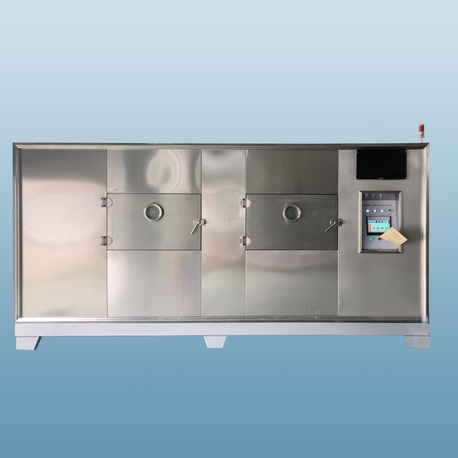
Modern chillers are far more advanced than their predecessors. A major trend is the shift toward variable speed drives (VSD) on compressors and fans. Instead of simply cycling on and off, a VSD chiller precisely modulates its motor speed to match the exact cooling demand at any given moment. This can result in energy savings of 30% or more compared to fixed-speed units, especially in applications with fluctuating loads.
Integration with Building Management Systems (BMS) and the Industrial Internet of Things (IIoT) is another key development. Today’s chillers can provide real-time data on performance, efficiency, and health, allowing for predictive maintenance and optimized system control from a remote dashboard. These smart features contribute to sustainable operations and smarter facility management. Leading manufacturers integrate these technologies to deliver next-generation performance.
In conclusion, selecting and maintaining an industrial water chiller is a significant technical and financial decision that directly impacts your bottom line. By understanding your process requirements, evaluating total cost of ownership, and committing to regular maintenance, you can ensure this critical asset delivers reliable, efficient cooling for years. For operations demanding robust performance and innovative cooling technology, exploring the engineered solutions from Nasan provides a pathway to enhanced process stability and energy efficiency.
Q1: What is the main difference between an air-cooled and a water-cooled water chiller?
A1: The key difference lies in how they reject the system’s heat. An air-cooled water chiller uses a fan and finned condenser coils to reject heat directly to the ambient air. A water-cooled water chiller uses a shell-and-tube condenser where water from a cooling tower absorbs the heat and rejects it through evaporation in the tower. Water-cooled models are generally more efficient and quieter but have higher installation complexity and require water treatment for the tower.
Q2: How do I calculate the cooling capacity (in tons) needed for my application?
A2: Accurate calculation requires knowing the flow rate of the process fluid, the temperature difference (°F or °C) you need to achieve, and the specific heat of the fluid (water is 1.0). The basic formula is: Tons = (GPM x ΔT) / 24 for water. However, you must also account for heat load from pumps, ambient conditions, and future expansion. It is strongly recommended to have a professional engineer or chiller supplier perform this load calculation.
Q3: Can a water chiller provide both cooling and heating?
A3: Yes, certain models known as heat recovery or reversible chillers can do this. They are equipped with a special design that allows the captured process heat, which would normally be rejected to the atmosphere, to be diverted to provide hot water or space heating for the facility. This can dramatically improve overall energy efficiency and provide a quick return on investment.
Q4: How often should routine maintenance be performed on an industrial chiller?
A4: Maintenance frequency depends on the chiller type, operating hours, and environment. As a general guideline, air-cooled chillers should have their coils cleaned and systems checked at least quarterly, especially in dusty areas. Water-cooled systems require monthly checks of water treatment and condenser tube cleaning annually. A comprehensive professional inspection should be conducted at least once a year. Always follow the manufacturer’s specific maintenance schedule.
Q5: Why is my water chiller consuming more electricity than it used to?
A5: Increased energy consumption is often a symptom of underlying issues. The most common causes are dirty condenser coils or fouled condenser tubes (which reduce heat transfer efficiency), low refrigerant charge, scaled or fouled evaporator tubes, or a mechanical problem with the compressor or fans. Regular maintenance is designed to prevent these issues. A professional service technician can diagnose the specific cause and restore efficient operation.


