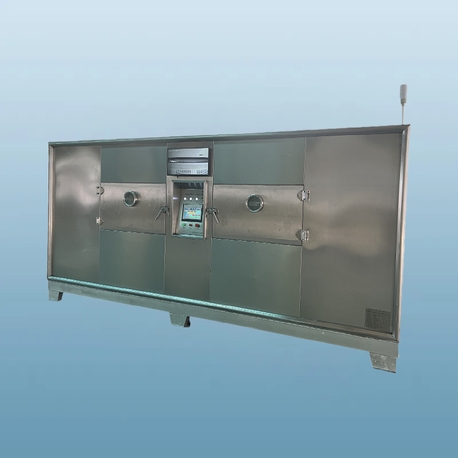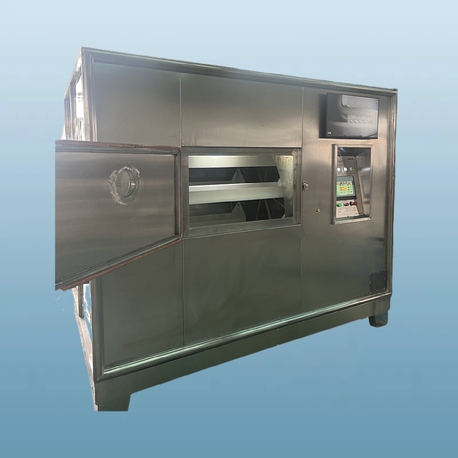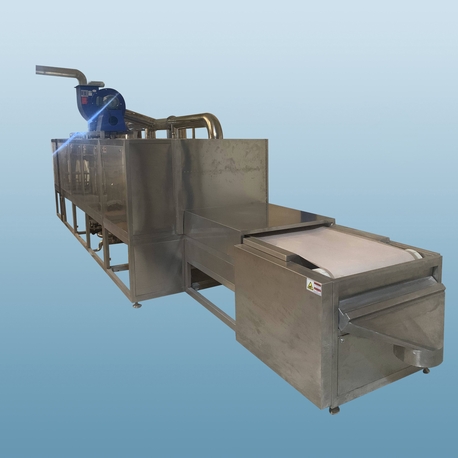

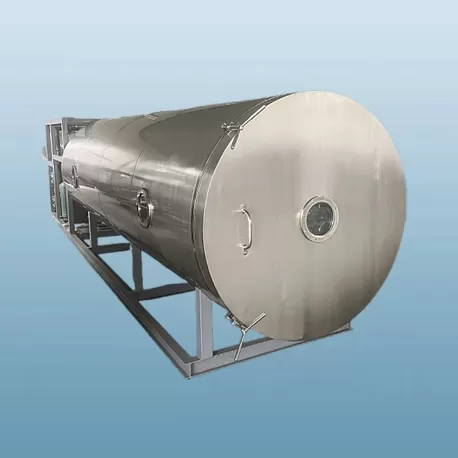
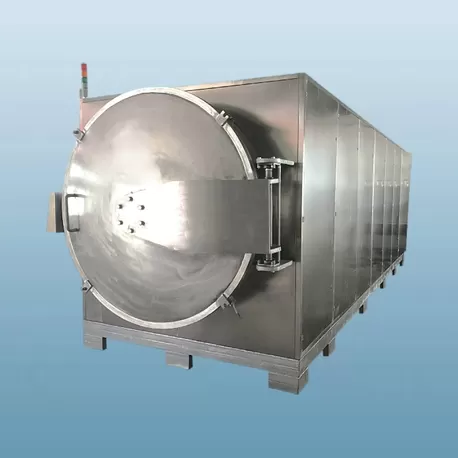
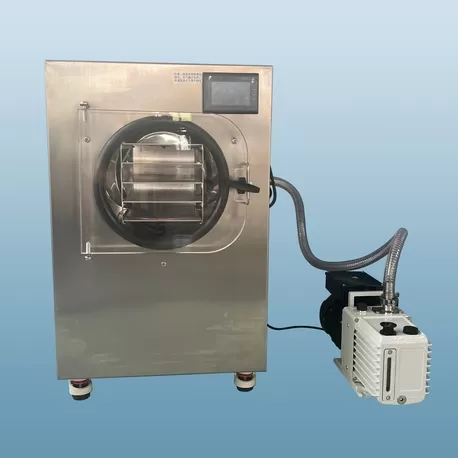
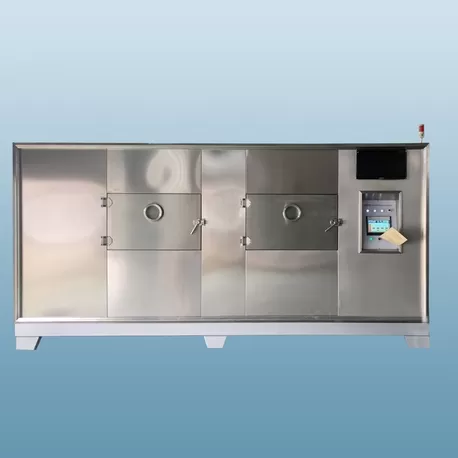
When production lines run around the clock, moisture removal must be both fast and consistent. A robust industrial dehydrator does exactly that – it strips water from food, chemicals, or botanicals without compromising the material’s core qualities. Nasan has engineered its latest line of industrial dehydrator units to handle the toughest loads while keeping energy bills in check. Unlike makeshift drying methods, a dedicated industrial dehydrator offers precision control over temperature, airflow, and humidity, which directly translates into uniform product quality and higher throughput.
Whether you are drying sliced apples, herbs, or plastic granules, the right industrial dehydrator becomes the workhorse of your facility. Nasan’s approach combines decades of thermal engineering with feedback from real‑world operators, ensuring that every industrial dehydrator leaving the factory is ready for 24/7 operation. Below we break down how these machines work, why they outperform older technologies, and where they deliver the greatest return on investment.

An industrial dehydrator is not simply a heated box with a fan. Modern units rely on a closed‑loop system that recovers heat, monitors moisture content in real time, and adjusts parameters automatically. Nasan’s R&D team has refined three key technological pillars that set their industrial dehydrator apart from commodity equipment.
Instead of venting warm, humid air to the outside, a heat‑pump industrial dehydrator recycles thermal energy. The system extracts latent heat from the exhaust, compresses it, and returns it to the drying chamber. This cuts electricity consumption by up to 50 % compared to conventional electric heaters. For operators, this means a shorter payback period and the ability to scale production without worrying about spiraling utility costs.
Static drying racks often create hot spots and under‑dried pockets. Nasan’s industrial dehydrator uses individually controlled fans and baffles to direct air precisely where it is needed. Sensors placed at multiple points feed data to a central PLC, which modulates fan speed and louvre angles. The result is a uniform drying curve across every tray – even when the chamber is fully loaded with dense materials like meat strips or root vegetables.
Drying is not a linear process; the rate of moisture evaporation changes as the product dries. An intelligent industrial dehydrator continuously measures relative humidity inside the cabinet and adjusts the balance between fresh air intake and recirculation. Early in the cycle, the system may exhaust more moisture‑laden air; later, it retains warmth to finish the drying gently. This level of control prevents case hardening (a dry shell with a wet interior) – a common flaw in less advanced dryers.
Switching from sun drying, oven drying, or outdated cabinet dryers to a Nasan industrial dehydrator brings immediate operational benefits. Here are the most cited advantages from our clients in the food processing and chemical sectors:
Energy savings of 30–50 % – Thanks to heat recovery and variable‑speed drives, a industrial dehydrator from Nasan consumes far less power per kilogram of water removed. The closed‑loop design keeps heat inside the chamber, reducing the load on HVAC systems in your facility.
Consistent product quality – Automated PLC controls ensure that every batch meets the same final moisture content. This repeatability is critical when you supply large retailers or ingredient manufacturers that enforce strict specifications.
Hygienic stainless‑steel construction – All surfaces that contact the product are made of food‑grade 304 stainless steel. Welds are ground smooth, and there are no crevices where bacteria can hide. Cleaning cycles can be automated with CIP (clean‑in‑place) nozzles.
Scalability from pilot to full production – Nasan offers industrial dehydrator modules that can be ganged together. Start with a single unit and add more as demand grows, without re‑engineering your process flow.
Low maintenance requirements – Heavy‑duty bearings, easy‑access filters, and corrosion‑resistant components mean less downtime. Many users report only routine belt checks and annual lubrication as their main tasks.
By investing in a quality industrial dehydrator, you also reduce waste: fewer rejects, less rework, and the ability to process off‑grade produce into shelf‑stable ingredients. The table below (not shown here, but available on request) compares Nasan’s model with three popular competing brands.
Because of its flexible control system, the Nasan industrial dehydrator handles a remarkable variety of materials. Below are the most common industries where these machines have become indispensable.
From apple rings and banana chips to jerky and pet treats, food processors rely on the industrial dehydrator to extend shelf life naturally. The gentle drying profile preserves colour, flavour, and nutrients – a major selling point for organic and clean‑label products. Vegetable powders (like tomato or pumpkin) also start with a precisely dried flake that is then milled.
Medicinal herbs, roots, and fungi must be dried at low temperatures to retain active compounds. Nasan’s industrial dehydrator can operate as low as 20 °C with dehumidification only, mimicking air drying but in a fraction of the time. GMP‑compliant options are available with HEPA filtration and data logging.
Certain hygroscopic polymers require bone‑dry conditions before injection moulding. A dedicated industrial dehydrator removes surface moisture and even some bound water, preventing defects like splay marks in finished parts. The same machines are used to dry catalyst intermediates and fine chemicals before packaging.
Municipal and industrial treatment plants use large‑scale industrial dehydrator units to reduce sludge volume before incineration or composting. By cutting moisture from 80 % down to 10 %, transport costs drop and the dried material can be used as a fuel supplement.
Many facilities still rely on direct‑fired ovens or sun drying, believing that a dedicated industrial dehydrator is too expensive. In reality, the total cost of ownership often favours the modern dehydrator. Here is how Nasan stacks up against common alternatives:
Nasan industrial dehydrator vs. direct‑gas oven: Ovens blast high heat, wasting energy and often scorching surfaces. Nasan’s unit uses lower temperatures and recovers exhaust heat, reducing gas consumption by 40 % while eliminating scorch marks.
Nasan vs. freeze dryer: Freeze drying preserves structure but costs three to five times more per kilogram. A industrial dehydrator offers an excellent compromise for materials that do not require the full cellular structure of freeze drying – e.g., most fruits and vegetables.
Nasan vs. competitor A (basic tray dryer): Competitor A lacks airflow modulation, leading to uneven batches. Nasan’s PLC‑controlled industrial dehydrator guarantees every tray dries at the same rate, reducing sorting labour.
Nasan vs. sun drying: Sun drying is cheap but unsanitary, weather‑dependent, and slow. A Nasan industrial dehydrator cuts drying time from days to hours and meets international hygiene standards – essential for export.
In side‑by‑side trials, Nasan’s industrial dehydrator consistently achieved higher throughput per square metre of floor space than any of the tested alternatives. The built‑in data logging also simplifies compliance with food safety certifications such as BRC and IFS.
Operators who have switched to Nasan often mention the reduction in manual oversight: the controller automatically compensates for changes in ambient temperature or product load. This frees up staff to focus on packaging and quality checks rather than constantly adjusting timers.
Selecting the right industrial dehydrator is a long‑term investment in product quality and operational efficiency. With Nasan, you gain a partner that supports you from process design to after‑sales service. Whether you need a compact unit for a craft operation or a multi‑room industrial dehydrator for continuous production, the engineering team at Nasan can tailor a solution that fits your floor plan and budget. Visit our product page or contact our sales engineers to discuss your specific drying goals.

A1: Nasan offers industrial dehydrator models from 50 kg per batch up to continuous systems handling 5 metric tons per hour. The modular design allows you to combine multiple units for virtually any throughput. Most clients start with a mid‑range unit and expand as their business grows.
A2: Yes. Nasan’s industrial dehydrator features smooth stainless‑steel interiors and dedicated airflow paths that minimise cross‑contamination. For quick changeovers, the trays and ducting can be easily cleaned. If you process strongly aromatic materials (like spices or fish), we recommend separate dedicated units or a thorough cleaning protocol.
A3: Most of our industrial dehydrator models run on 380‑480 V three‑phase power. The exact amperage depends on the heating method (electric, heat pump, or steam). Nasan provides a detailed site preparation guide before delivery, and our technicians can help you verify that your electrical panel meets the requirements.
A4: Routine maintenance is simple. The industrial dehydrator has easy‑access panels; we recommend wiping the humidity sensor with a soft cloth monthly to remove any residue. Air filters should be checked weekly and washed or replaced depending on the dust load. A full maintenance checklist is included in the manual, and Nasan offers annual service contracts.
A5: Absolutely. Nasan’s industrial dehydrator can be equipped with inlet and outlet conveyors, as well as communication ports that connect to your central SCADA system. Our engineers will work with your team to ensure seamless integration, whether you place the unit inline with a washer or after a blancher.
A6: Every new industrial dehydrator from Nasan carries a two‑year parts and labour warranty. The stainless‑steel cabinet and heat‑exchanger coils are warranted for five years against corrosion. Extended warranties are available at the time of purchase.
Still have questions about sizing, installation, or ROI? Our team regularly publishes case studies showing how a Nasan industrial dehydrator has helped companies like yours reduce waste and increase profits. Reach out today for a custom proposal.