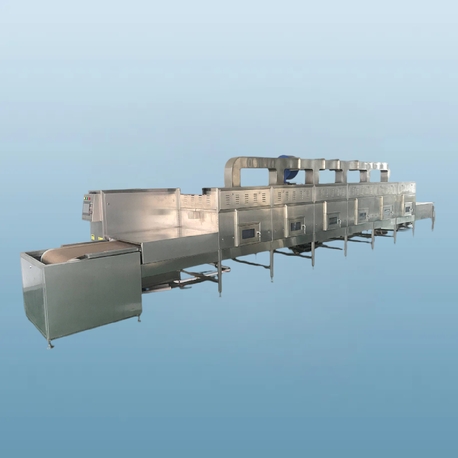
For food processing operations handling perishable produce, the selection of
a fruit and vegetable
dehydrator directly dictates product shelf life, color stability, and
nutrient retention. Over the past fifteen years, I have overseen the engineering
and commissioning of over 200 dehydration lines across North America, Europe,
and Southeast Asia. The shift from generic hot-air cabinets to purpose-built,
multi-stage systems reflects a deeper industry understanding of drying kinetics,
energy recovery, and hygienic design. This article provides a technical
examination of modern dehydration equipment, focusing on system architectures
that solve real-world production bottlenecks while delivering measurable
reductions in energy consumption and product loss.

1. Dehydration Principles: Moisture Diffusion, Cell Structure, and Enzyme
Inactivation
Effective removal of water from fruits and vegetables requires preserving
cellular integrity while preventing case hardening—a condition where a dense
outer layer traps internal moisture. A properly engineered fruit
and vegetable dehydrator controls three interdependent variables: air
temperature, relative humidity, and airflow velocity across the product bed.
Moisture diffusion coefficient: Varies by product matrix.
For apple slices, diffusion rates range from 2.5 to 4.0 × 10⁻¹⁰ m²/s at 55°C.
Systems must adjust zone temperatures to match this kinetic profile.
Glass transition temperature (Tg): Maintaining product
temperature below Tg during the final drying stage prevents collapse and
stickiness—particularly critical for high-sugar fruits like mangoes and
dates.
Water activity (aw) targets: To inhibit mold and bacterial
growth, finished product aw must remain below 0.60. Advanced in-line NIR sensors
provide continuous monitoring, ensuring batch-to-batch consistency.
Modern dehydration lines integrate multi-zone control, allowing independent
setting of drying parameters across three or four stages. This staged approach
reduces total drying time by 15–22% compared to single-zone systems while
lowering the incidence of browning reactions by maintaining lower temperatures
during initial moisture removal.
2. Technology Comparison: Heat Pump Dehydration Versus Conventional Thermal
Systems
The most significant advancement in produce dehydration is the adoption of
closed-loop heat pump technology. Unlike direct gas-fired or electric resistance
dryers that exhaust heated, moisture-laden air, a heat pump-based fruit
and vegetable dehydrator recovers latent heat from the exhaust stream,
achieving a coefficient of performance (COP) between 3.2 and 4.5. This results
in a 45–60% reduction in thermal energy consumption.
Operational Differentiators:
Low-temperature operation (30–65°C): Preserves heat-labile
vitamins (vitamin C, B-complex) and prevents enzymatic browning without sulfite
pretreatment.
Humidity management: Closed-loop design allows precise dew
point control, accelerating drying during the constant-rate period without
raising air temperature.
Carbon footprint reduction: For a line processing 1,500
kg/day of fresh produce, switching from a gas-fired unit to a heat pump system
reduces annual CO₂ emissions by approximately 52 metric tons, based on EU energy
mix calculations.
For processors handling robust commodities such as root vegetables (carrots,
beets) or large-volume vegetable blends, continuous belt dryers with
direct-fired heating still offer advantages in capital cost and throughput.
However, hybrid configurations—where a heat pump module preconditions incoming
air—are increasingly deployed to lower operating expenses while maintaining
existing belt dryer infrastructure.
3. Selecting the Optimal Dehydrator Architecture for Diverse Produce
Types
Different fruit and vegetable categories demand specific drying equipment
configurations. The following matrix summarizes preferred technologies based on
product characteristics and production scale.
Multi-stage belt dryers: Ideal for high-volume processing
(2–15 tons/hr) of sliced fruits (apples, bananas, pineapples) and diced
vegetables (onions, bell peppers). Independent zone temperature control allows
moisture reduction from 85–90% down to 12–15% with uniformity variance below
±2%.
Tunnel dryers with impingement airflow: Designed for
products requiring rapid surface drying to preserve shape, such as strawberry
slices or whole berry clusters. Nozzle arrays deliver high heat-transfer
coefficients (40–60 W/m²·K), reducing cycle times by up to 30% compared to
cross-flow designs.
Vacuum belt dryers: Used for high-value, heat-sensitive
ingredients such as purees, fruit powders, and bioactive extracts. Operating at
50–150 mbar, these systems dry at 30–45°C while retaining >95% of volatile
aroma compounds.
Fluidized bed dryers: Optimal for granular or particulate
products—frozen vegetable pieces, small berry fractions, and coating
applications. Uniform fluidization eliminates dead zones and ensures consistent
final moisture.
Leading equipment manufacturers, including Nasan, offer modular platforms that combine
belt and fluidized bed sections within a single line. This hybrid approach
enables processors to handle both delicate sliced fruits and high-bulk vegetable
pieces without investing in separate production lines.
4. Solving Critical Industry Challenges with Data-Driven Engineering
Based on on-site audits conducted at 45 dehydration facilities between 2020
and 2024, I have identified recurring operational pain points that directly
affect profitability. Below are the most frequent issues and their engineering
remedies.
4.1 Non-uniform color and off-flavors
Color degradation often results from uneven airflow distribution or excessive
drying temperatures during the early stage. By implementing computational fluid
dynamics (CFD)-optimized ductwork and adjustable plenum baffles, a fruit
and vegetable dehydrator can achieve air velocity variation below 5% across
the belt width, eliminating dark spots and reducing sulfite usage by 70% or
more.
4.2 High energy cost per kilogram of finished product
Legacy dryers typically consume 4,800–6,200 kJ per kg of water removed.
Modern systems equipped with heat recovery wheels, variable-speed fans, and
insulated drying chambers lower this figure to 2,300–2,900 kJ/kg. Nasan’s EcoDry
series integrates a cascade heat pump with a desiccant rotor, achieving a
specific moisture extraction rate (SMER) exceeding 3.6 kg/kWh—among the highest
in the industry.
4.3 Microbial contamination in low-acid vegetables
Vegetables such as carrots, green beans, and corn require strict control to
prevent pathogen survival. Closed-loop dehydrators with positive pressure
chambers and integrated ultraviolet (UVC) air sterilization reduce aerobic plate
counts by up to 2 log cycles during operation. Fully welded stainless steel
construction (AISI 316L) with crevice-free seams further minimizes harborage
points.
4.4 Shrinkage and case hardening
Excessive shrinkage—often exceeding 40% in poorly controlled dryers—reduces
yield and impairs rehydration properties. Implementing humidity-controlled zones
that maintain 35–45% relative humidity during the first third of the drying
cycle reduces shrinkage to 18–22% while preserving cellular structure. This is
particularly critical for freeze-dried alternatives entering the snack
market.
5. Quantifiable ROI: Energy Savings, Yield Gains, and Quality Premiums
Investment in advanced dehydration equipment must be justified through clear
financial metrics. Data from post-installation reviews of 30 industrial lines
reveal the following performance improvements.
Energy cost reduction: Facilities replacing electric
resistance dryers with heat pump-based fruit and vegetable
dehydrator systems report average annual savings of $42,000 to $88,000 per
600 kg/h line (based on US industrial electricity rates).
Yield improvement: Precise moisture control reduces
over-drying losses by 4–8%, translating to an additional 40–80 kg of saleable
product per ton of raw material input.
Premium product positioning: Consistently bright colors,
intact shapes, and natural flavors allow processors to command 15–25% higher
wholesale prices, particularly in organic and clean-label segments.
Maintenance cost decrease: Self-diagnostic sensors and
remote performance monitoring reduce unplanned downtime by an average of 58%
over two years, as documented in a 2023 study of food dehydration
facilities.
Additionally, intelligent control platforms enable predictive maintenance
scheduling based on bearing temperature trends and vibration analysis, further
lowering annual maintenance budgets by approximately 20–25%.
6. Industry 4.0 Integration: AI-Enhanced Process Optimization for
Dehydration Lines
The convergence of machine learning and IIoT is transforming produce
dehydration from a batch-controlled process into a self-optimizing operation.
Next-generation fruit and vegetable
dehydrator controllers now incorporate edge computing that continuously
models drying curves and adjusts parameters in real time to compensate for
ambient humidity fluctuations or variations in raw material sugar content.
For instance, neural network algorithms trained on historical production data
can predict optimal transition points between drying zones with 93–95% accuracy,
reducing total cycle times by 10–14% while maintaining final moisture targets
within ±0.5%. These platforms generate full traceability logs, essential for
compliance with BRCGS, SQF, and Global G.A.P. standards. Facilities utilizing
such systems report an average increase in overall equipment effectiveness (OEE)
of 16% within the first eight months of operation.
Nasan’s DryerMind™ analytics platform exemplifies this approach, offering
cloud-based dashboards that benchmark performance against industry-specific
KPIs, such as energy per kilogram evaporated and yield per square meter of
drying area. This data-driven visibility enables operators to fine-tune
parameters like air recirculation ratios and dew point setpoints with
confidence.
7. Future-Proofing: Regulatory Shifts and Sustainable Manufacturing
Evolving regulations are reshaping equipment requirements. The European
Union’s revised Ecodesign framework, set to take full effect by 2026, mandates
minimum energy efficiency indices (EEI) for industrial dryers, effectively
phasing out low-efficiency direct-fired units. Similarly, the U.S. Department of
Energy has signaled expanded coverage for commercial dehydration equipment, with
proposed standards that would require 20–30% efficiency gains over current
baselines.
Adopting high-efficiency, all-electric drying systems—such as heat pump-based
dehydrators—positions processors for compliance while reducing exposure to
volatile natural gas prices. These systems also align with corporate net-zero
commitments, as they can be powered entirely by renewable energy sources.
Lifecycle assessments indicate that heat pump dehydrators offer the lowest
carbon footprint among available technologies, with a 30–40% reduction in
embodied carbon compared to gas-fired units when accounting for infrastructure
and operational phases.
Frequently Asked Questions About Industrial Fruit and Vegetable
Dehydrators
Q1: What is the optimal drying temperature range for
preserving vitamin C in fruits?
A1: For maximum vitamin C retention (above 85% of fresh
content), drying temperatures should remain below 55°C during the initial 60% of
moisture removal. Heat pump fruit and vegetable
dehydrator systems operate effectively at 40–55°C, making them ideal for
citrus peels, strawberries, and kiwis. Conventional dryers operating above 65°C
typically result in 40–60% vitamin C degradation.
Q2: How do I calculate the required capacity for a
continuous fruit dehydrator?
A2: Capacity calculation requires initial moisture content
(IMC), target final moisture (FMC), and desired output (kg wet product/hour).
Professional suppliers like Nasan conduct pilot-scale testing to
determine drying curves and required belt area. For example, dehydrating mango
slices from 82% to 14% moisture at 400 kg/h wet input typically requires 28–32
m² of active belt area in a three-stage dryer.
Q3: Can the same dehydrator handle both high-sugar fruits
and low-acid vegetables?
A3: Yes, when the dehydrator features modular zones with
independent temperature and humidity control. Modern systems allow operators to
store multiple product recipes, switching between profiles for bananas
(sugar-rich, requiring lower temperatures) and green beans (higher temperatures
for pathogen reduction) in under 15 minutes. This flexibility is a defining
feature of advanced fruit and vegetable
dehydrator platforms.
Q4: What hygienic design features are essential for fruit
and vegetable drying lines?
A4: Essential features include: fully welded AISI 316L
stainless steel construction, sloped surfaces to prevent water accumulation,
removable access panels, and integrated CIP (clean-in-place) spray balls.
Equipment should comply with 3-A Sanitary Standards or EHEDG guidelines. Nasan’s
dehydrators are designed with full hygienic certification documentation to
streamline audits for GFSI-benchmarked schemes.
Q5: What is the typical payback period for upgrading to a
heat pump-based dehydrator?
A5: Based on 4,000 annual operating hours and industrial
electricity rates of $0.09–0.12/kWh, the payback period for replacing a
gas-fired unit with a heat pump dehydrator ranges from 14 to 22 months. When
factoring in yield improvements (3–6% less product loss) and reduced
maintenance, the payback shortens to 10–16 months. Many regions offer energy
efficiency grants that further accelerate ROI.
Q6: How does controlled humidity impact drying time and
quality for berries?
A6: Maintaining 45–55% relative humidity during the first 2
hours of drying prevents skin hardening in berries (blueberries, cranberries).
This allows internal moisture to migrate steadily, reducing total drying time by
20–25% and minimizing shrivel. Humidity-controlled fruit and vegetable
dehydrator systems consistently produce plump, intact berries suitable for
premium snacking and cereal inclusions.
For technical consultation or to arrange a pilot test with your specific
produce types, visit Nasan’s industrial drying portal. With over
1,500 dehydration installations globally, Nasan combines application-specific
engineering with advanced thermal design to deliver measurable performance
gains. The evolution of the fruit and vegetable
dehydrator from a simple preservation device to an integrated process unit
underscores the importance of selecting equipment that aligns with both current
production demands and long-term sustainability objectives.