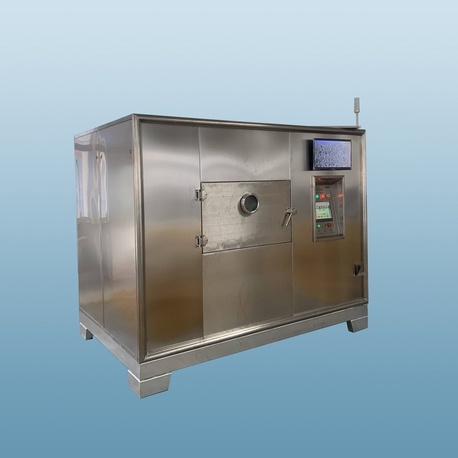
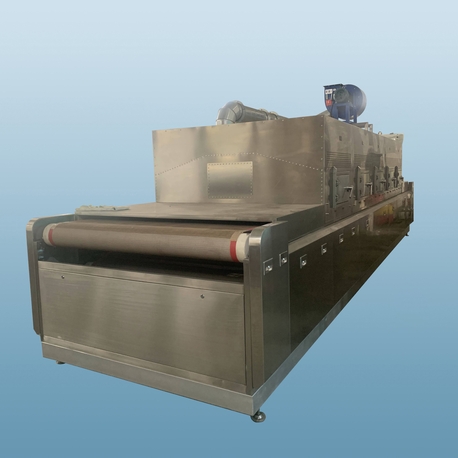
Time is the most expensive resource in manufacturing. If you are still relying on hot air circulation or sun drying for your products, you are likely facing bottlenecks. This is where the industrial microwave changes the game.
It is not just about heating things up. It is about speed, consistency, and energy efficiency. For facility managers and engineers, moving to microwave technology is often the step that scales a business from local to global.
Companies like Nasan have been at the forefront of this shift, helping factories transition from slow, uneven drying methods to rapid, precise microwave systems.
If you are considering an upgrade, here is what you need to know about the technology and why it is becoming the standard in commercial drying.
Most people know how a kitchen microwave works. An industrial microwave operates on the same principle but on a massive scale.
Traditional dryers heat the surface of a product. The heat then slowly travels to the center. This is slow and often results in a "crust" on the outside while the inside remains wet.
Microwave technology is different. It uses dielectric heating. The electromagnetic waves penetrate the material and interact directly with water molecules.
This causes the water molecules to vibrate and generate friction heat from the inside out. The result? The entire product dries evenly and instantly.
Understanding the workflow helps in planning your floor space.
1. LoadingRaw materials are placed on a conveyor belt. In continuous systems, this feed is automated.
2. The Heating ZoneThe conveyor moves the items through the industrial microwave cavity. Here, magnetrons generate the microwave energy.
3. Moisture ExtractionAs the internal water turns to steam, it is pushed out of the material. An exhaust system immediately removes this moisture-laden air from the machine.
4. Cooling and UnloadingThe product exits the heating tunnel. Depending on the setup, it might pass through a cooling section before being collected for packaging.
Key Applications for Industrial Microwave Technology
This equipment isn't limited to one sector. It solves problems across various industries.
Food Processing and Sterilization
This is the biggest market. Manufacturers use it for drying spices, tea leaves, and snacks. Beyond drying, it serves as a sterilizer. The rapid heat kills bacteria and mold without cooking the food, preserving color and nutritional value.
Insect Farming
The demand for dried black soldier fly larvae and mealworms is skyrocketing. Microwaves dry these insects quickly, keeping them puffy and golden rather than shriveled and dark.
Chemical and Pharmaceutical
Powders and pills often require precise moisture content. An industrial microwave offers control that gas ovens cannot match, preventing chemical degradation.
Ceramics and Wood
Drying bulky items like honeycomb ceramics or thick timber is difficult with hot air. Microwaves drive moisture out of the center, preventing cracking and warping.
Why Energy Efficiency Matters in Commercial Drying
Energy bills are a massive overhead.
Conventional dryers need to heat the air, the walls of the oven, and the conveyor belt before they even heat your product. That is a lot of wasted energy.
An industrial microwave couples energy directly to the product. The air inside the tunnel remains relatively cool. You are not paying to heat the metal box; you are paying only to heat the water in your product.
Brands like Nasan focus heavily on this energy-saving aspect in their designs, ensuring that the magnetrons are efficient and the power consumption translates directly to production output.

Speed vs. Quality: You Don’t Have to Choose
Usually, if you want something fast, quality drops. If you want quality, you wait.
Microwave drying breaks this rule.
Because the drying time is reduced from hours (or days) to mere minutes, the material is exposed to heat for a much shorter period.
For food, this means better retention of vitamins and flavor. For chemicals, it means less risk of reaction.
You get the throughput of a high-speed line with the quality of a slow, gentle process.
Solving the "Uneven Drying" Problem
One of the biggest complaints with hot air dryers is inconsistency.
You might find that the items on the edge of the belt are burnt, while the items in the middle are damp.
In an industrial microwave, the energy distribution is managed to ensure uniformity.
Modern systems use stirrers or waveguides to scatter the microwaves evenly. This ensures that every gram of product receives the same treatment, reducing rejection rates significantly.
Equipment Customization and Nasan Solutions
One size does not fit all. A machine designed for drying tea leaves will not work perfectly for drying timber.
When looking for a solution, customization is key. You need to consider:
Belt widthTunnel heightMicrowave power (kW)Belt speed
Nasan specializes in tailoring these parameters. Whether you need a compact machine for a small workshop or a 100kW giant for a large factory, the hardware must match your specific moisture reduction goals.
Operational Safety and Standards
A common misconception is that microwaves are dangerous radiation.
This is false. Microwaves are non-ionizing radiation. They do not make products radioactive.
However, the equipment must be built to strict standards to prevent leakage.
Leakage Suppression
Quality machines use chokes and suppressors at the entry and exit points. These prevent waves from escaping the tunnel.
Interlocks
Doors and access panels are fitted with safety interlocks. If a door is opened during operation, the power cuts instantly.
Sensors
Advanced systems monitor magnetron temperature and belt tracking to prevent mechanical failures or overheating.
Comparing Costs: Gas vs. Microwave
Let’s talk money.
Initial Investment:An industrial microwave often has a higher upfront cost than a simple gas oven. The technology is more complex.
Running Costs:This is where the ROI happens. Because the process is 50% to 70% faster, your cost per unit drops. You also save on floor space, as microwave tunnels are usually shorter than equivalent hot air tunnels.
Maintenance:Gas ovens have burners that clog and require ventilation maintenance. Microwave systems require magnetron replacement over time, but generally have fewer moving parts that wear out.
Integration into Existing Lines
You do not always need to rip out your old line.
Many factories use a hybrid approach. They use steam or hot air to remove the bulk of the surface water (which is cheap to do).
Then, they use the industrial microwave for the "falling rate" period—the final stage of drying where removing internal moisture is difficult.
This hybrid method boosts the capacity of existing lines by 30-40% without a complete facility redesign.

Maintenance Tips for Longevity
To keep your investment running for years, follow a strict maintenance schedule.
Keep the Belt CleanDebris on the belt absorbs microwaves. This can cause the belt to burn. Wash the belt regularly.
Check Cooling SystemsMagnetrons generate heat and need cooling (air, water, or oil). If the cooling system fails, the magnetrons die.
Inspect WaveguidesEnsure the path from the magnetron to the cavity is clear of dust or carbon buildup.
Manufacturers like Nasan provide detailed maintenance manuals to ensure your team can handle routine checks without needing a technician every week.
Is Your Product Suitable?
Not everything can be microwaved.
The material must have a "dielectric loss factor." Simply put, it must be able to absorb microwave energy. Water absorbs it well. Some plastics do not.
Metals are generally a no-go in standard systems as they reflect waves and cause arcing.
Before buying, always ask the manufacturer to run a test on your specific material. Most reputable suppliers will ask you to send samples to their lab to determine the exact drying curve.
The Environmental Impact
Sustainability is a requirement now, not a luxury.
Gas dryers emit CO2 and other combustion byproducts. They require massive exhaust stacks.
Microwave systems run on electricity. If your facility uses solar or wind power, your drying process can be 100% carbon neutral.
Furthermore, because the process is faster, the carbon footprint per kilogram of product is significantly lower.
The transition to industrial microwave technology represents a shift toward smarter manufacturing. It offers speed, precision, and efficiency that older thermal methods cannot touch.
Whether you are drying herbs, sterilizing powders, or processing industrial ceramics, the benefits of volumetric heating are clear. You save space, you save energy, and you produce a better product.
As you evaluate your options, consider partners who understand the engineering behind the heat. Nasan continues to support industries worldwide with reliable, high-performance microwave solutions tailored to specific needs.
Don't let outdated drying methods slow down your growth. Evaluate your production line today and see where microwave efficiency can fit in.
Frequently Asked Questions
Q1: Does an industrial microwave ruin the texture of food products?
A1: Generally, no. In fact, it often preserves texture better than hot air drying. Because the drying happens quickly and from the inside out, it prevents the "case hardening" effect (where the outside becomes hard while the inside is wet). This keeps products like dried fruit or larvae puffy and crisp rather than shriveled and tough.
Q2: How much electricity does an industrial microwave consume?
A2: Consumption depends on the kilowatt (kW) rating of the machine. However, microwaves are roughly 60% to 70% energy efficient in converting electricity to heat within the product. Compared to conventional electric heating, which wastes heat on the air and surrounding metal, microwaves are significantly more efficient for the amount of water removed.
Q3: Is it safe for operators to work near the machine?
A3: Yes, it is safe. Reputable manufacturers build machines with suppression systems (chokes) at the inlet and outlet to prevent microwave leakage. They also adhere to strict international safety standards (such as CE or FDA guidelines) where leakage is capped at safe levels (usually 5mW/cm² or less), ensuring no harm to workers.
Q4: Can I dry metal parts using this technology?
A4: No, you cannot dry bulk metal parts in a standard microwave. Metal reflects microwaves, which can cause arcing (sparks) and damage the magnetrons. However, microwaves are used to dry certain metal powders or ceramics containing metal oxides, but this requires specialized equipment and setup.
Q5: How often do the magnetrons need to be replaced?
A5: Magnetrons are consumable parts, similar to light bulbs. Their lifespan varies based on usage and quality, but industrial magnetrons typically last between 5,000 to 8,000 working hours. Proper cooling and preventing reflected power (running the machine empty) are critical to extending their life.