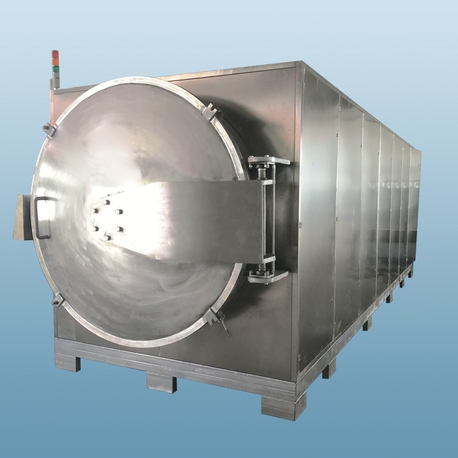
Industrial lyophilization has evolved beyond simple dehydration. For
pharmaceutical, biotech, and high-end food processing, the China freeze dryer market now delivers performance
metrics that rival European and North American equipment—often at 35-40% lower
capital investment. However, procurement decisions require deep scrutiny of
thermal uniformity, ice condenser capacity, and compliance documentation. This
guide provides a component-level comparison, identifies hidden failure points,
and establishes objective selection criteria for B2B buyers.

1. Technical Anatomy of Modern Freeze Dryers: Beyond Basic Cycles
A production-scale lyophilizer is a synergy of four critical subsystems. Any
deficiency directly impacts product quality and batch rejection rates. Below is
the engineering baseline for 2026-compliant systems.
1.1 Shelf Temperature Uniformity & Ramp Rate
Uneven shelf heating causes differential sublimation, leading to collapse in
amorphous formulations. Premium China freeze dryer systems now incorporate:
Three-point independent fluid circulation per shelf plate (vs. single-loop
designs)
Uniformity tolerance ≤ ±1.0°C across -50°C to +60°C range (validated by
21-point mapping)
Ramp rates >1.5°C/min for freezing and >1.0°C/min for secondary
drying
Dynamic shelf gap compensation for load deflection
1.2 Ice Condenser Performance & Defrost Logic
Condenser coil design determines water vapor capture efficiency. Standard
15-20% oversizing is inadequate for high-sublimation loads (e.g., mannitol-based
formulations). Key specifications:
Coil surface area per kg ice: minimum 2.2 m²/kg for ≤10 mTorr control
Condenser temperature: -75°C for organic solvent mixtures
(acetonitrile/water azeotropes)
Hot gas defrost with programmable logic to prevent coil stress cracking
Ice capacity validation using steam injection test (SIT) protocols
For integrated CIP/SIP configurations, explore industrial freeze drying equipment with automated
condenser flushing.
1.3 Vacuum System & Leak Integrity
Leak rates above 0.01 mTorr/min compromise sublimation rate and cause
oxidation. Modern dry screw pumps with variable frequency drives reduce oil
back-migration risks. The vacuum control loop must maintain ±1% setpoint
accuracy during primary drying.
2. Industry-Specific Pain Points & Engineered Solutions
Generic freeze dryers fail in niche applications. Below are four common B2B
complaints and technical countermeasures available from advanced China freeze dryer suppliers like Nasan.
2.1 Pharmaceutical: Batch Inconsistency in Vial Stoppering
Pain point: Partial stopper insertion due to hydraulic
pressure variations during shelf lowering. Solution:
Servo-electric shelf actuation with force feedback (50N resolution) and optical
alignment sensors. Result: 99.97% stopper placement
repeatability.
2.2 Biologics: Protein Aggregation During Annealing
Pain point: Temperature overshoot during annealing steps
denatures monoclonal antibodies. Solution: Cascade PID control
with product temperature feedback via wireless probes. Result:
Deviation <0.3°C across 24-hour holds.
2.3 Food Processing: Oxidative Degradation of Lipids
Pain point: Residual oxygen >2% causes rancidity in
freeze-dried pet food or coffee extracts. Solution: Nitrogen
backfill with automated headspace analysis before final sealing.
Result: Oxygen levels ≤0.5% without manual intervention.
2.4 Industrial Enzymes: Activity Loss from Extended Drying Cycles
Pain point: Conventional 48-hour cycles denature heat-labile
catalase. Solution: Controlled nucleation (ice fog seeding)
reduces primary drying time by 30-40%. Achieve endpoint detection using Pirani
vs. capacitance manometer differential.
For customized skid-mounted systems, review lyophilizer manufacturing specifications tailored to
high-viscosity loads.
3. Compliance & Validation Documentation for Global Markets
Regulatory bodies (FDA, EMA, NMPA) require traceable evidence. A credible
China freeze dryer package includes:
IQ/OQ/PQ protocols with FAT/SAT witness support
Material certificates for 316L stainless steel (contact surfaces Ra
<0.4μm)
Calibration certificates for all thermocouples and pressure transducers
(NIST-traceable)
21 CFR Part 11 compliant data logging with audit trail and electronic
signatures
Thermal mapping reports at minimum, maximum, and typical loads
Leading manufacturers provide remote validation assistance. Nasan offers as-built validation dossiers within 4
weeks of factory acceptance.
4. Total Cost of Ownership Analysis: China vs. Western Freeze Dryers
Initial price is deceptive. Evaluate five-year operational expenses using the
following metrics.
| Parameter | China
Freeze Dryer (Premium Tier) | European
Equivalent |
|---|
| Capital
cost (20m² shelf area) | $185,000
– $240,000 | $410,000
– $590,000 |
| Annual
energy consumption (kWh) | 22,000
– 28,000 | 25,000
– 32,000 |
| Planned
maintenance (hours/year) | 80
– 110 | 90
– 120 |
| Spare
parts lead time | 5
– 12 days | 14
– 28 days |
The data shows that top-tier China freeze dryer platforms offer competitive
efficiency and faster service response due to localized component supply chains.
However, due diligence on the supplier's quality management system (ISO
9001:2015, ASME U-stamp) is non-negotiable.
5. Why Nasan Leads in High-Consequence Lyophilization Projects
With over 340 industrial installations across 22 countries, Nasan has developed proprietary solutions that
address the three most frequent failure modes in freeze drying:
Ice slab bridging: Redesigned condenser baffles with
anti-bridging geometry (patent pending)
Hydraulic fluid degradation: Closed-loop thermal fluid
analysis with predictive filter change alerts
Validation package fragmentation: Unified digital FAT/SAT
protocol builder accessible via customer portal
Every China freeze dryer from Nasan undergoes a 500-hour
accelerated life test before shipment. The company provides on-site
commissioning and remote troubleshooting via encrypted IoT gateway. For detailed
engineering drawings and cycle development support, Nasan offers a collaborative lab service where
clients test their actual product on a pilot freeze dryer before scaling to
production.
Explore the complete range of GMP-validated freeze dryers and process equipment including automatic loading/unloading systems and vapor compression
retrofits.
Frequently Asked Questions (Technical & Procurement)
Q1: What is the typical lead time for a custom-configured China freeze dryer
with CIP/SIP?
A1: For a 10m² to 40m² shelf area unit including full CIP
nozzles and SIP skid, lead time ranges 16-22 weeks from approved drawings.
Expedited options (12 weeks) are possible with existing modular sub-assemblies
at Nasan.
Q2: How do I validate shelf temperature uniformity before factory
acceptance?
A2: Request a 3D thermal mapping report using 15-21
calibrated T-type thermocouples placed on each shelf, including edge and center
positions. Acceptable criteria: max deviation ±1.0°C at -40°C and +40°C
setpoints. Reputable manufacturers provide this as part of FAT.
Q3: Can a China freeze dryer handle organic solvents like DMSO or ethanol
mixtures?
A3: Yes, but require explosion-proof electrical
classification (ATEX Zone 2 or Class I Div 2), inert gas purge for the cabinet,
and a solvent-compatible vacuum pump (e.g., dry screw with PTFE coating).
Condenser must reach -75°C to trap low-vapor-pressure solvents. Always specify
solvent load during RFQ.
Q4: What documentation is required for FDA drug master file
referencing?
A4: Provide a Type V Drug Master File (DMF) including:
equipment construction materials, surface finish certifications, cleanability
validation (Rinse and swab test results), and software validation summary (21
CFR Part 11 compliance matrix). Nasan offers DMF drafting
support as a value-added service.
Q5: How does predictive maintenance work for ice condenser coils?
A5: Advanced systems monitor pressure drop across the coil
during defrost cycles. A 15% increase over baseline indicates micro-channel
fouling. Vibration analysis on the refrigeration compressor (FFT spectrum)
forecasts bearing wear 800 operating hours in advance. Remote SCADA integration
can send alerts to your CMMS.
Q6: What is the energy cost difference between single-stage and cascade
refrigeration?
A6: For a -50°C condenser, single-stage (R404A/R507)
consumes 18-22% more power than cascade (R23 + R404A) at ambient >30°C.
However, cascade systems have higher upfront complexity. For tropical climates,
cascade is preferred. Your local utility rate determines payback period –
typically 14-20 months.
Request a Process Engineering Review
Selecting the wrong freeze dryer specifications leads to batch failures and
unplanned capital expenses. Share your product formulation (active ingredient,
fill volume, thermal properties) and desired batch throughput with our technical
team. We provide a non-binding process audit, including recommended shelf
loading patterns and cycle recipe optimization.
Submit your inquiry below or contact Nasan directly for a confidential consultation and equipment
quotation tailored to your lyophilization needs.
For immediate technical specifications, access the complete product catalog or request a live factory tour via
remote camera inspection.