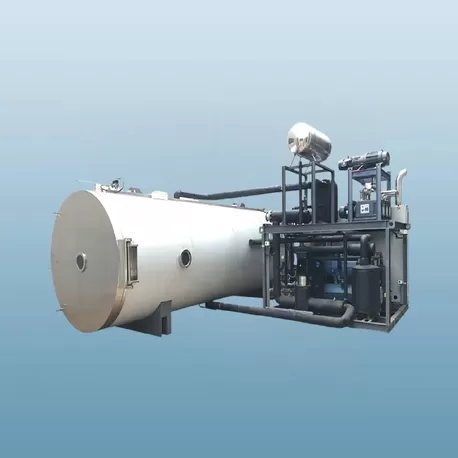
Lyophilization is a pivotal unit operation in pharmaceutical, biotechnology,
and food industries, directly impacting product stability, shelf life, and
regulatory acceptance. The equipment that performs this process—the industrial
freeze drying system—represents a major capital expenditure. Choosing the right
freeze dryer manufacturer requires a thorough understanding of process
engineering, material science, and validation requirements. This article
examines the technical parameters, manufacturing standards, and performance
validation protocols that distinguish reliable freeze drying equipment for
regulated production environments.
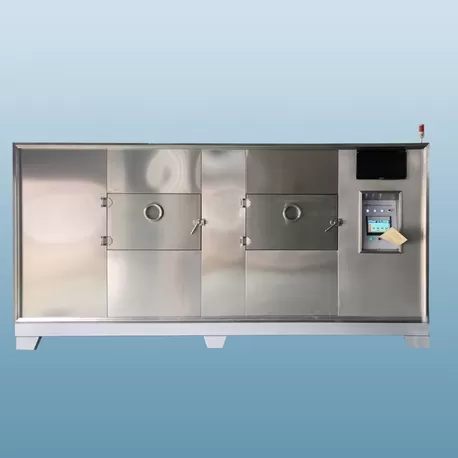
Lyophilization Process Fundamentals and Equipment Design
Freeze drying removes water from a frozen product via sublimation,
transitioning ice directly to vapor under vacuum. The process depends on precise
control of shelf temperature, chamber pressure, and condenser temperature. A
well-engineered system from a reputable freeze dryer manufacturer maintains
these parameters within narrow tolerances throughout the entire cycle. The
thermal properties of the product—such as eutectic temperature (for crystalline
formulations) and glass transition temperature (for amorphous ones)—dictate the
allowable temperature limits during primary drying. Exceeding these thresholds
causes product collapse, leading to unacceptable porosity and poor
reconstitution.
Heat Transfer and Temperature Uniformity
Uniform heat transfer across the shelf array is essential for batch
consistency. Shelf flatness, surface finish, and thermal fluid circulation
directly affect temperature distribution. A freeze dryer manufacturer with
advanced machining capabilities produces shelves with flatness within ±0.5 mm
and temperature uniformity of ±1°C across the usable shelf area. These
specifications become critical when processing large batches where gradients
could compromise product quality.
Eutectic temperature – The lowest temperature at which the
frozen product remains completely solid; exceeding this during primary drying
causes melting.
Glass transition temperature (Tg') – The temperature above
which the amorphous phase becomes rubbery; drying above Tg' leads to
collapse.
Shelf temperature ramp rates – Controlled heating and
cooling rates prevent thermal shock and ensure uniform ice nucleation.
Condenser surface area – Must match the sublimation load;
typical designs provide 1.5–2.0 m² per kg of ice capacity per hour.
Manufacturing Standards and Quality Assurance
The production of industrial freeze dryers demands rigorous adherence to
material science and fabrication codes. The chamber and shelves must withstand
repeated thermal cycling between -60°C and +80°C while maintaining structural
integrity under full vacuum. Leading freeze dryer manufacturer operations employ
316L stainless steel for all product-contact surfaces, offering corrosion
resistance and compatibility with aggressive cleaning agents used in aseptic
environments.
Material Selection and Surface Finishing
Automated orbital welding produces consistent, contamination-free joints that
meet ASME Boiler and Pressure Vessel Code requirements. After welding, surface
treatment involves mechanical polishing followed by electropolishing to achieve
a surface roughness (Ra) below 0.4 µm. This finish minimizes particle entrapment
and facilitates effective cleaning-in-place (CIP). Nasan incorporates these
standards across its production lines, ensuring every system meets the surface
quality demanded by GMP-regulated facilities.
316L stainless steel for chamber, shelves, and all product-contact
parts.
Orbital welding with full penetration and inert gas backing.
Electropolishing to Ra ≤ 0.4 µm for enhanced cleanability.
Passivation treatments to restore chromium oxide layer.
Leak Integrity and Testing Protocols
Leak integrity is non-negotiable for maintaining vacuum levels and preventing
contamination. Helium leak detection methods identify leaks down to 1×10⁻⁶
mbar·L/s, guaranteeing the chamber can sustain the required vacuum throughout
the drying cycle. The condenser—responsible for capturing sublimated water
vapor—must demonstrate adequate cooling capacity and surface area to handle
expected ice loads without exceeding design pressure limits. These performance
characteristics are verified through factory acceptance testing (FAT) prior to
shipment.
Control Systems and Process Validation
Modern freeze drying systems integrate programmable logic controllers (PLC)
with supervisory control and data acquisition (SCADA) interfaces. These
platforms manage the sequence of freezing, primary drying, secondary drying, and
stoppering. A competent freeze dryer manufacturer provides control systems that
support recipe management, audit trails, and data integrity features compliant
with 21 CFR Part 11 for electronic records.
PLC and SCADA Integration
Control architectures vary in complexity, from standalone controllers to
fully networked systems that interface with plant-wide manufacturing execution
systems (MES). Key features include:
Recipe editing and storage – Allows operators to define and
recall cycle parameters for different products.
Alarm management – Provides real-time alerts for deviations
in temperature, pressure, or vacuum.
Data logging – Records critical process variables with
timestamped entries for batch documentation.
Remote access – Enables diagnostics and support from the
freeze dryer manufacturer’s service team.
Validation Lifecycle Support
Validation support distinguishes equipment suppliers. The lifecycle
encompasses design qualification (DQ), installation qualification (IQ),
operational qualification (OQ), and performance qualification (PQ). During OQ,
temperature mapping studies across the shelf array demonstrate uniformity under
worst-case loading. Pressure rise tests verify chamber integrity. A freeze dryer
manufacturer with validation expertise provides documentation packages that
streamline regulatory submissions. Nasan offers pre-written validation protocols
and on-site support to accelerate the qualification process.
Design Qualification (DQ) – Verifies equipment design meets user
requirements.
Installation Qualification (IQ) – Confirms correct installation and utility
connections.
Operational Qualification (OQ) – Tests all functions and alarms against
specifications.
Performance Qualification (PQ) – Demonstrates consistent product quality
under actual production conditions.
Industry-Specific Requirements and Application Considerations
Different sectors impose distinct demands on freeze drying equipment.
Pharmaceutical applications require aseptic features, while food processing
prioritizes throughput and energy efficiency. A single freeze dryer manufacturer
may serve multiple industries, but the engineering approach must adapt to
each.
Pharmaceutical and Biotech Requirements
Sterile processing mandates that the freeze dryer manufacturer design systems
with vaporized hydrogen peroxide (VHP) compatibility, sterile boundary seals,
and smooth internal geometries that eliminate crevices. The equipment must
withstand repeated sterilization cycles without seal degradation. Biotechnology
products like monoclonal antibodies and gene therapies often require automated
vial handling and stoppering within the chamber. A freeze dryer manufacturer
serving this segment provides customized loading systems that accommodate
various vial sizes and stopper types while maintaining positional accuracy.
VHP-resistant materials and seals.
Automated loading/unloading for aseptic filling lines.
Stoppering mechanisms that operate under vacuum or inert gas.
Documented sterilization cycles with biological indicators.
Food and Ingredient Processing
Food applications focus on larger batch volumes and faster cycle times.
Energy efficiency and ease of cleaning become paramount. A freeze dryer
manufacturer addressing this sector emphasizes robust construction, accessible
components, and simplified maintenance. Shelf spacing may be increased to
accommodate bulk product trays, and condenser designs are optimized for high ice
loads. CIP systems with automated spray balls reduce changeover time between
batches.
Bulk tray or rack loading for fruits, vegetables, and coffee extracts.
Higher shelf temperature ranges (up to +80°C) for secondary drying.
Energy recovery systems to reduce operational costs.
Simplified user interfaces for non-pharmaceutical operators.
Evaluating Freeze Dryer Manufacturer Capabilities
Selecting a freeze dryer manufacturer involves a systematic assessment of
technical, operational, and support capabilities. Beyond the equipment itself,
the supplier’s engineering depth, quality culture, and after-sales network
determine long-term reliability.
Engineering Customization
Standard catalog offerings may not fit unique production constraints.
Manufacturers with in-house design teams can modify chamber dimensions, shelf
spacing, condenser configurations, and utility interfaces. This flexibility
accommodates specific product loads, facility layouts, or integration with
existing material handling systems.
Quality Management and Compliance
ISO 9001 certification provides baseline assurance, while ASME certification
indicates compliance with pressure vessel codes. For pharmaceutical clients, the
freeze dryer manufacturer should demonstrate familiarity with GMP guidelines and
offer documentation packages that support regulatory submissions. Reviewing the
supplier’s quality records—including non-conformance reports and corrective
action histories—offers insight into manufacturing discipline.
After-Sales Support and Project Management
Spare parts availability, service response times, and field engineering
expertise determine how quickly production interruptions are resolved. A freeze
dryer manufacturer with regional service centers and remote diagnostic
capabilities reduces downtime. Structured project management with defined
milestones, communication protocols, and change control procedures ensures
on-time delivery and smooth commissioning. Nasan maintains a global service
network, providing preventive maintenance contracts and emergency support.
Dedicated project manager for each order.
Factory acceptance testing (FAT) and site acceptance testing (SAT).
Training programs for operator and maintenance staff.
Long-term spare parts availability and obsolescence management.
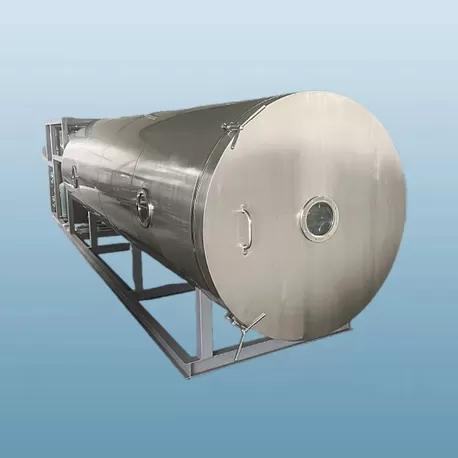
Frequently Asked Questions About Freeze Dryer Manufacturing and
Selection
What are the main differences between laboratory-scale and production-scale
freeze dryers?
Laboratory-scale units typically process batches of 1 to 50 liters with shelf
areas under 1 m². They feature simplified control interfaces and are used for
cycle development. Production-scale equipment handles batches from 50 to over
1000 liters with shelf areas exceeding 10 m². Production systems incorporate
automated loading, CIP/SIP, and comprehensive data management. The engineering
complexity scales significantly, and a freeze dryer manufacturer must
demonstrate experience across the entire capacity range.
How does shelf temperature uniformity affect freeze drying outcomes?
Temperature uniformity determines whether all vials experience the same
sublimation rate. Variations of ±2°C or more lead to uneven drying, with some
vials completing primary drying earlier than others. This results in
inconsistent residual moisture and potential collapse in warmer regions. A
freeze dryer manufacturer achieves uniformity through careful thermal fluid
circuit design, shelf construction, and control tuning that compensates for edge
effects and loading patterns.
What documentation should a freeze dryer manufacturer provide for regulatory
compliance?
Complete packages include design qualification protocols and reports,
material certifications, weld logs, factory acceptance test results, and
installation qualification procedures. For GMP environments, the freeze dryer
manufacturer should supply calibration certificates for all instruments, along
with preventive maintenance schedules and spare parts lists. User requirement
specifications (URS) traceability matrices demonstrate that equipment
capabilities align with process needs.
How do condenser design parameters affect freeze dryer performance?
The condenser captures water vapor sublimated from the product. Its cooling
capacity, surface area, and ice holding capability determine the maximum
sublimation rate. Coil design affects heat transfer efficiency and ice
distribution. A freeze dryer manufacturer with advanced heat exchanger
engineering produces condensers that maintain low temperatures (-75°C to -85°C)
while handling ice loads that match batch water content. Efficient condenser
operation reduces drying times and energy consumption.
What factors influence the cost of a production-scale freeze drying
system?
System costs reflect shelf area, condenser capacity, control complexity, and
customization level. Stainless steel fabrication, surface finishing, and
cleanroom compatibility add to manufacturing expenses. Options like automated
loading, nitrogen backfill, and PAT integration increase the price. A freeze
dryer manufacturer provides detailed cost breakdowns and lifecycle cost analyses
covering energy, maintenance, and spare parts. The purchase price is only part
of the total investment; installation, validation, and ongoing support represent
substantial additional expenditures.
How frequently should a production freeze dryer undergo preventive
maintenance?
Intervals depend on utilization and operating conditions. Most freeze dryer
manufacturer recommendations include annual inspections with component
replacements at specified hour intervals. Vacuum pumps require oil changes every
2,000–3,000 operating hours. Seals and gaskets should be inspected biannually
and replaced when worn. Refrigeration servicing includes compressor oil analysis
and filter changes annually. Detailed service records help identify emerging
issues before they cause interruptions.
What is the typical lead time for a custom-engineered production freeze
dryer?
Lead times vary with system complexity and factory workload. Standard
configurations with limited customization typically require 20–30 weeks from
order to delivery. Custom-engineered systems with specialized loading
mechanisms, unique chamber dimensions, or integrated PAT may extend to 40 weeks
or more. The freeze dryer manufacturer provides detailed project schedules
covering design, procurement, fabrication, assembly, testing, and shipping. Site
preparation and utility hookups should be coordinated with the delivery
timeline.
For project-specific inquiries, system configuration assistance, or detailed
engineering consultations, contact the freeze dryer manufacturer’s process
engineering team directly. Nasan offers comprehensive technical documentation,
validation support, and application expertise for freeze drying systems across
pharmaceutical, biotech, and food processing industries.