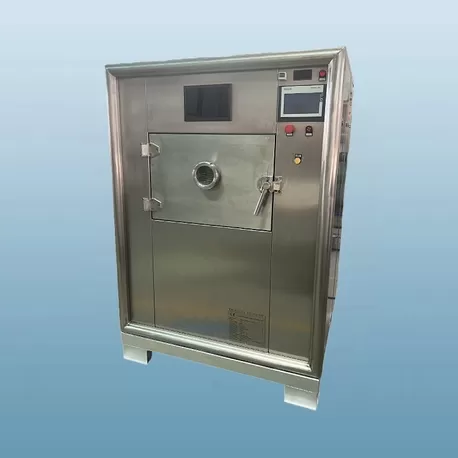
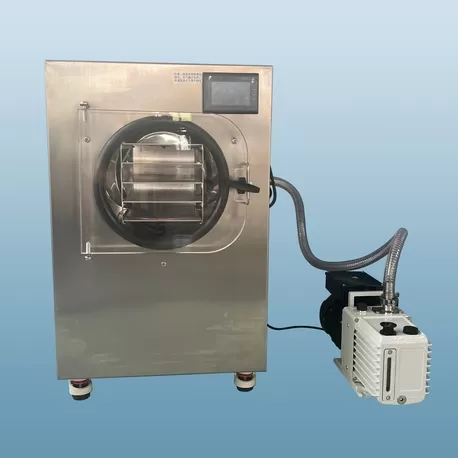
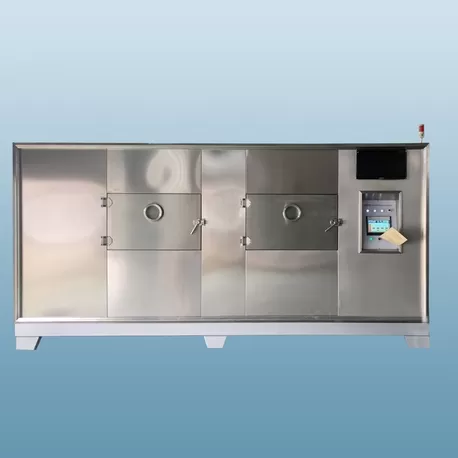
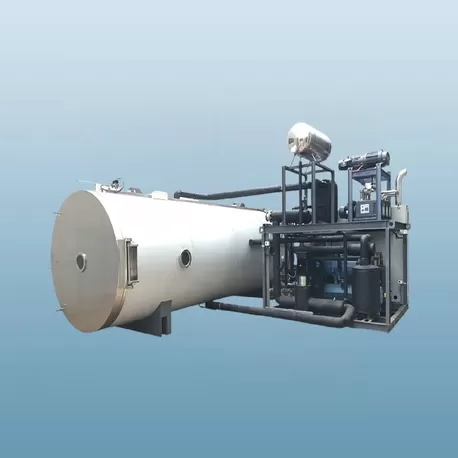
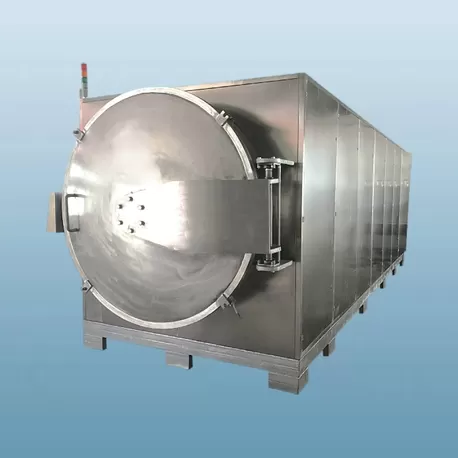
Selecting the right industrial lyophilizer is a significant decision. This isn't just a purchase; it's a long-term investment in your product's stability, quality, and scalability. The freeze-drying process, while elegant in theory, demands precise engineering in practice.
A commercial lyophilizer preserves sensitive materials by removing water via sublimation. This requires moving from a frozen state directly to vapor, bypassing the liquid phase. The result is a product with minimal structural damage and exceptional shelf life.
The wrong equipment choice can lead to inefficient cycles, compromised product integrity, and soaring operational costs. This article breaks down the five key technical and operational parameters you must evaluate. For businesses seeking robust performance, manufacturers like Nasan provide industrial-grade solutions built for demanding cycles.

Understanding the Core Function of a Freeze-Drying System
At its heart, a lyophilizer is about preservation through controlled dehydration. The primary goal is to extend shelf life while maintaining the original properties of the product as closely as possible.
This is crucial for substances that degrade with heat or oxidation. By removing water, you effectively halt microbial growth and chemical reactions that cause spoilage. The porous structure left behind allows for rapid, complete rehydration later.
In the pharmaceutical industry, this means preserving the efficacy of vaccines, antibiotics, and biological samples. In food manufacturing, it locks in flavor, nutrition, and color where other drying methods fail. The industrial lyophilizer achieves what standard hot-air dryers cannot.
The Freeze-Drying Process: A Three-Step Workflow
Operating a production-scale lyophilizer follows a defined, critical sequence. Each stage must be meticulously controlled for success.
Step 1: Freezing
The product is loaded onto shelves within the lyophilizer chamber and frozen solid. This isn't just simple freezing; the temperature must be well below the product's eutectic or collapse point. This ensures a proper ice crystal structure for the next phase.
Step 2: Primary Drying (Sublimation)
This is the longest phase. The industrial freeze dryer lowers the chamber pressure and applies gentle heat to the shelves. Under this vacuum, the frozen water sublimates directly from ice to vapor. The vapor travels to an ultra-cold condenser, where it re-freezes as ice.
Step 3: Secondary Drying (Desorption)
After ice removal, bound water molecules remain. The temperature is raised further, and pressure is lowered again to desorb this residual moisture. This final step brings the product to its target, stable moisture level.
Key Industries Reliant on Industrial Lyophilization
The application of a commercial lyophilizer spans sectors where product value and stability are paramount.
Pharmaceutical & Biotechnology: This is the most critical application. Lyophilizers are used for injectable drugs, vaccines, diagnostics, and live viral vectors. Stability for transport and storage is a non-negotiable requirement.
Advanced Food & Beverage: Beyond instant coffee, high-value ingredients like premium spices, specialty fruits for confectionery, probiotic cultures, and ready-to-eat meals for expeditions use freeze-drying. It’s the gold standard for quality retention.
Tissue & Culture Preservation: Research institutions and biomedical companies use lyophilizers to preserve sensitive biological materials, bacteria strains, and tissue samples for long-term study.
Herbal Extracts & Nutraceuticals: To maintain the potency of delicate plant compounds, an industrial lyophilizer provides a low-temperature alternative to spray drying, often resulting in a higher-quality, more active powder.
5 Critical Parameters for Selecting Your Industrial Lyophilizer
Here are the five essential factors to analyze before committing to a freeze-drying system.
1. Shelf Area and Dryer Capacity
This defines your batch size. Shelf area (measured in square meters) is the total heating surface. Capacity must align with both your current needs and projected growth. Consider if you need a fixed-chamber unit or a larger, modular industrial lyophilizer. It’s not just about fitting a batch, but about optimizing cycle efficiency for your typical load.
2. Shelf Temperature Range and Control
Precise thermal control is everything. You need a wide operational range, typically from -50°C to +70°C or beyond, with uniform temperature across each shelf (±1°C is a good benchmark). Inconsistent heating leads to uneven drying and batch failure. Modern systems use silicone oil circulation for precise control.
3. Condenser Capacity and Temperature
The condenser is the engine of water vapor removal. Its capacity (in kg of ice) must exceed the total water load per batch. Its temperature (often -55°C to -80°C) must be low enough to create a strong vapor pressure differential, driving the sublimation speed. A powerful condenser, like those found in heavy-duty units from providers such as Nasan, directly reduces primary drying time.
4. Ultimate Vacuum and Chamber Integrity
A deep, stable vacuum is necessary for efficient sublimation. Look for an ultimate vacuum pressure specification of below 10 Pa (0.1 mbar). More important is the system's leak rate—its ability to hold that vacuum. A leaky chamber extends cycles, risks product meltback, and increases energy costs. Robust construction is key here.
5. Automation and Data Integrity
For commercial GMP or food safety production, manual control is insufficient. A professional lyophilizer should have a programmable, recipe-driven control system with data logging. This ensures batch-to-batch reproducibility, simplifies operator training, and provides a complete audit trail for quality assurance.

Addressing Common Commercial Freeze-Drying Challenges
Even with excellent equipment, challenges occur. Proactive planning mitigates risk.
Long cycle times are a major cost driver. Optimizing shelf temperature and vacuum setpoints during primary drying, based on product data, is the solution. Using an industrial lyophilizer with a high-capacity condenser and efficient heating system is the foundation.
Contamination and cleaning downtime are operational hurdles. Choose a system with clean-in-place (CIP) and sterilize-in-place (SIP) capabilities, especially for pharmaceuticals. Smoother chamber surfaces and accessible components are vital.
Product collapse or meltback results from exceeding the product's critical temperature during drying. This underscores the need for precise shelf temperature control and thorough product formulation studies prior to scale-up.
For operations where reliability cannot be a variable, partnering with an established industrial manufacturer is strategic. Companies like Nasan focus on engineering lyophilizers lyophilizers that address these very challenges through robust design and precise control systems, aiming to maximize uptime and product yield.
The Foundation of Stable Products
An industrial lyophilizer is a cornerstone of modern manufacturing in high-stakes industries. The choice directly impacts your product quality, operational efficiency, and regulatory compliance.
By rigorously evaluating parameters like shelf control, condenser power, and automation—rather than just price and size—you invest in long-term reliability. The right equipment supports innovation, allowing you to develop and scale sensitive products with confidence.
In a field defined by precision, the engineering behind the machine matters. Implementing a well-designed freeze-drying system from a trusted industrial partner provides the stability your process requires to deliver exceptional, shelf-stable products consistently.
Frequently Asked Questions (FAQ)
Q1: What is the main difference between a lyophilizer and a standard thermal dryer?
A1: A thermal dryer uses heat to evaporate liquid water, which can cause shrinkage, degrade heat-sensitive compounds, and damage cell structures. A lyophilizer uses sublimation under vacuum, removing ice directly as vapor at low temperatures. This preserves the physical structure and biochemical integrity of sensitive products like proteins or delicate food matrices.
Q2: How long does a typical industrial freeze-drying cycle take?
A2: Cycle times vary dramatically based on the product, formulation, fill depth, and equipment efficiency. Simple, thin-layer products may take 24 hours. Complex biologicals in large vials can require 4 days or more. The goal of a well-designed industrial lyophilizer is to optimize parameters to minimize primary drying time, which is the longest phase.
Q3: Is it possible to over-dry a product in a lyophilizer?
A3: Yes, over-drying is a risk, especially in secondary drying. Excessive heat or time can remove too much bound water, leading to denaturation of proteins, loss of activity in biologicals, or excessive powder fragility. Determining the optimal residual moisture content for each product is a critical part of process development.
Q4: What are the biggest maintenance concerns for a production lyophilizer?
A4: The main concerns are vacuum system maintenance (oil changes, pump seals), condenser defrosting and cleaning, ensuring the integrity of door seals and gaskets, and calibrating temperature and pressure sensors. A preventive maintenance schedule is essential to avoid unexpected downtime and ensure cycle reproducibility.
Q5: Can you lyophilize any liquid or wet product?
A5: Not effectively. The formulation is critical. Products need to freeze into a stable matrix with interconnected pores for vapor escape. Solutions with very low solid content or high concentrations of solvents (like ethanol) that don't freeze solid at the condenser temperature are poor candidates and require specialized formulation or process adjustments.