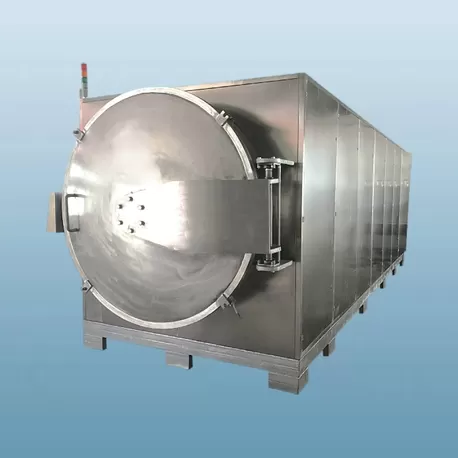
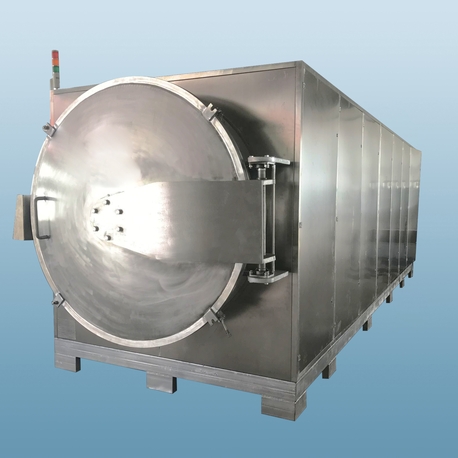
Thermal moisture removal represents one of the most energy-demanding phases
in bulk process manufacturing. Across sectors such as fine chemicals, minerals,
food processing, pharmaceuticals, and environmental waste management, removing
liquid fractions requires accurate thermal dynamics and mechanical design.
Selecting the appropriate industrial dryer manufacturer determines not only
initial capital expenditure, but also operational uptime, fuel consumption, and
end-product quality for decades of continuous operation.
Every bulk material displays distinct physical, chemical, and rheological
properties. Feedstocks vary dramatically—from free-flowing crystalline powders
to sticky sludges, shear-sensitive polymers, and heat-susceptible biological
solids. Consequently, off-the-shelf thermal systems frequently fail to achieve
design capacity, leading to premature component wear, excessive energy usage, or
material degradation. Custom engineering grounded in empirical testing and
mass-energy balance calculations remains the foundation of continuous processing
efficiency.
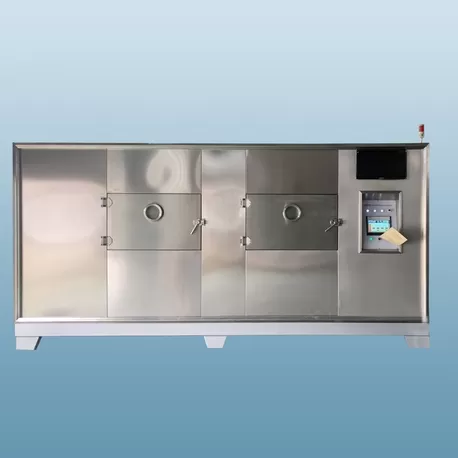
Evaluating Thermal Dewatering and Drying Technologies
Selecting the ideal drying technology requires a detailed understanding of
heat transfer mechanisms: convective, conductive, or radiant. Each operational
framework serves specific feed profiles, moisture levels, and particle size
distributions.
Direct Convective Drying Systems
In direct drying equipment, hot process air or combustion gases directly
contact the wet feed. Heat transfer occurs rapidly through forced convection,
carrying away evaporated moisture.
Rotary Dryers: Heavy-duty, direct-fired or steam-heated
rotary drums excel at processing continuous, high-tonnage streams of minerals,
ores, fertilizers, and agricultural products. Internal flights lift and shower
the material through the gas stream, maximizing heat exchange while maintaining
consistent residence times.
Fluid Bed Dryers: Ideal for uniform, granular solids that
tolerate fluidization. Heated air passes upward through a perforated distributor
plate, suspending wet particles in a fluid-like state. This setup creates high
heat transfer coefficients and precise temperature regulation, preventing local
overheating.
Flash and Pneumatic Dryers: Designed for rapid surface
moisture evaporation from fine particles, filter cakes, and slurries. Material
is suspended in a high-velocity hot air duct, where evaporation occurs in
seconds, making this option suitable for temperature-sensitive
compounds.
Indirect Conductive Drying Systems
Indirect dryers separate the heating medium (steam, thermal oil, or hot
water) from the material stream using a physical barrier such as a shell, shaft,
or hollow discs. Heat travels through conductive metal walls into the processing
mass.
This design is advantageous when processing solvent-laden cakes, toxic
compounds, or fine powders prone to dust explosions. Minimizing sweep gas volume
simplifies solvent recovery, cuts off-gas treatment requirements, and lowers
dust entrainment. Disc, paddle, and jacketed vacuum dryers fall under this
operational category, delivering controlled thermal processing with high thermal
efficiency.
Procuring industrial thermal equipment is a multi-decade operational
investment. A capable industrial dryer manufacturer must evaluate thermal
conductivity, heat capacity, vapor pressure dynamics, and drying kinetics across
varying moisture regimes (falling-rate and constant-rate periods).
Metallurgy Selection and Mechanical Durability
Contact surfaces must withstand continuous thermal stress, mechanical
friction, and chemical corrosion. System fabrications range from standard carbon
steel for non-abrasive aggregates to high-grade austenitic stainless steels
(304, 316L) and specialized nickel alloys (Hastelloy, Duplex) for aggressive
chloride environments or high-purity pharmaceutical synthesis.
Surface finishes, weld treatments, and interior geometry dictate cleanability
and product discharge efficiency. High-polish internal finishes (RA values below
0.4 µm) with crevice-free continuous welds are mandatory in sanitary
environments to prevent microbial buildup and batch-to-batch contamination.
Customization and Scale-Up Mechanics
Translating benchtop laboratory data to commercial-scale production involves
non-linear thermal dynamics. Residence time distribution, boundary layer
resistance, and particle attrition change significantly as processing volumes
grow.
The engineering teams at Nasan apply pilot-scale testing data to establish
reliable scale-up ratios. By modeling mass flow patterns, drive power limits,
and gas velocity profiles, equipment designs maintain consistent moisture
targets without bottlenecking downstream packaging or chemical reaction
steps.
Addressing Processing Bottlenecks and Environmental Compliance
Dewatering and drying operations frequently face operational challenges that
degrade product consistency or breach environmental emissions limits. Addressing
these issues early in the engineering phase protects long-term plant
productivity.
Managing Heat Degradation and Feed Rheology
Materials with low melting points or high sugar, grease, or moisture contents
tend to stick, agglomerate, or scorch along internal heated walls. To overcome
these sticky phases, customized solutions incorporate internal choppers,
scrapers, variable-speed drives, or recycled dry product back-mixing systems.
Pre-conditioning wet feeds with dry return material creates a free-flowing
feedstock, preventing build-up on heat transfer surfaces.
Air Quality Control and Emission Systems
Convective drying produces high-volume off-gas streams carrying fine
particulate matter, volatile organic compounds (VOCs), or water vapor. Working
closely with an experienced industrial dryer manufacturer ensures that dust
collection systems—such as high-efficiency cyclones, reverse-pulse jet
baghouses, and wet scrubbers—are correctly sized for the specific operating gas
volume and temperature.
When processing solvent-based feeds, closed-loop inert gas (nitrogen)
recirculating circuits are implemented. These systems condense and recover
valuable organic solvents while keeping oxygen levels safely below combustible
thresholds.
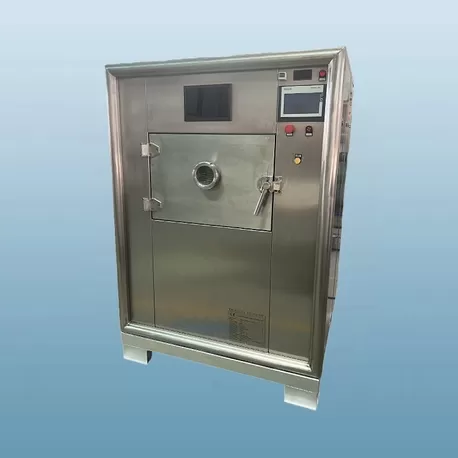
Lifecycle Cost Analysis and Thermal Recovery Integration
Evaluating thermal equipment requires looking beyond initial capital
expenditure. Fuel and electricity costs over the equipment lifecycle often
exceed the initial purchase price within a few years of continuous operation.
Thermal efficiency must be integrated directly into the system architecture.
Integrating heat exchangers, waste-heat steam generators, and economizers
allows plants to capture latent and sensible heat from exhaust gases, routing it
back to preheat incoming combustion air or process liquid streams. Integrating
variable frequency drives (VFDs) across heavy drive trains, main exhaust fans,
and feed pumps further reduces electrical draw during variable load
conditions.
A qualified industrial dryer manufacturer like Nasan provides continuous
support through system audits, thermal imaging analysis, and mechanical
adjustments, maintaining optimal fuel-to-evaporation ratios throughout the plant
lifecycle.
Frequently Asked Questions
What is the primary difference between direct and indirect drying
processes?
Direct dryers bring hot gas into direct contact with the processed material,
relying on convective heat transfer. Indirect dryers transfer heat through a
metallic barrier via conduction, preventing direct contact between combustion
gases or heating fluids and the product mass. Indirect drying uses less sweep
gas, making it ideal for solvent recovery, fine powders, and toxic
materials.
How is product residence time controlled inside a continuous drum
system?
Residence time is managed by adjusting drum inclination angles, rotational
speeds via variable frequency drives, internal flight configurations, and
discharge weir heights. Controlling these mechanical variables ensures
consistent thermal exposure and precise final moisture content across varying
feed rates.
What thermal testing is required before final equipment sizing?
Material testing typically includes measuring initial moisture content,
particle size distribution, bulk density, thermal sensitivity, and drying rate
curves. Thermogravimetric analysis (TGA) and pilot-scale batch runs identify
critical moisture regimes, sticky phases, and allowable temperature limits
before full-scale manufacturing.
How do closed-loop nitrogen systems prevent solvent ignition?
When evaporating flammable solvents, system air is replaced with an inert
gas, typically nitrogen. By maintaining continuous positive pressure and keeping
oxygen concentrations well below the lower explosion limit (LEL), ignition risks
are removed. Evaporated solvents are condensed downstream and recovered, and the
inert gas is reheated and recirculated.
What maintenance steps are vital for maintaining high thermal
efficiency?
Routine maintenance includes inspecting and clearing air distributor plates,
monitoring baghouse differential pressure, validating burner air-to-fuel ratios,
inspecting rotary seals for air infiltration, and cleaning conductive heat
transfer surfaces to prevent scale buildup.
Request a Thermal Processing Engineering Evaluation
Upgrading an existing drying line or designing a new process plant requires
precise engineering tailored to your product specifications. Consult with a
trusted industrial dryer manufacturer to review your material testing
requirements, evaluate scale-up designs, and calculate energy balance
parameters.
Contact Nasan via email to discuss your process goals with a senior thermal
engineer and request a formal system proposal.