


Dehydrating bulk vegetables like onions, garlic, carrots, and spinach demands strict quality control. Success depends on three metrics: utility costs, drying cycle time, and the finished product's rehydration ratio.
Many food processors invest in a vegetable drying machine expecting immediate productivity gains. Instead, they run into high defect rates, scorched batches, and skyrocketing power bills. Equipment rarely fails because of bad manufacturing alone; poor operational methods and system mismatches usually cause the problem.
At Nasan, our technical teams regularly audit processing plants where premium drying systems underperform because of small, overlooked mistakes. If you are struggling with batch inconsistencies or planning a new processing facility, contact our technical team today to request a drying curve audit and custom plant assessment.
Review the five most frequent pitfalls operators encounter during the vegetable dehydration process, along with step-by-step engineering solutions to protect your bottom line.
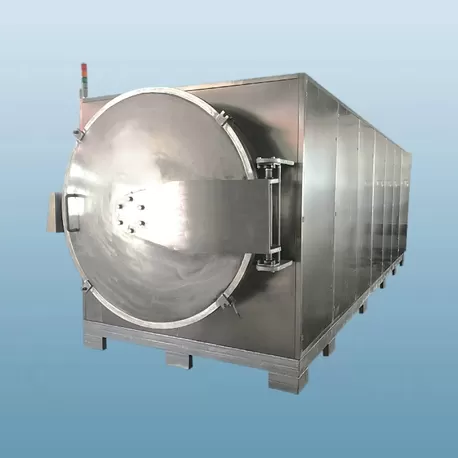
Pitfall 1: Inconsistent Slicing and Tray Overloading
Operators often try to squeeze extra throughput out of a single cycle by stacking raw produce heavily onto every tray. Combined with uneven manual slicing, this creates immediate airflow bottlenecks inside the chamber.
When vegetables sit in thick, clumped layers, heated air follows the path of least resistance. Air bypasses dense wet zones and rushes through open gaps. As a result, the edges of your batch burn while the core remains moist, breeding mold during packaging.
The Consequences on Product Quality
Overloading forces your air circulation fans to fight static pressure drops across the tray racks. Drying times stretch by 30% to 50%, which drives up kilowatt-hour consumption per kilogram of output.
Uneven slice thickness produces random residual moisture levels throughout the batch. If one carrot disc measures 3 mm and the next measures 8 mm, the thin piece over-dries and loses aroma before the thick piece reaches microbial safety thresholds.
Preventative Best Practices
- Standardize cut dimensions: Use high-speed mechanical slicers or dicers to maintain a strict slice thickness between 3 mm and 6 mm, depending on the vegetable variety.
- Enforce tray density limits: Keep raw tray loading density between 4 and 6 kg per square meter. Spread pieces in a single layer with minimal overlap.
- Maintain perforated airflow paths: Never block mesh openings on drying trays. Hot air must pass vertically or horizontally across every surface without dead zones.
Pitfall 2: High Initial Temperature Causing "Case Hardening"
A common operator assumption is that running a dryer at maximum heat from the very start speeds up moisture removal. In reality, aggressive heat applied too early ruins the batch through case hardening.
When exposed to sudden high heat, moisture on the vegetable surface evaporates faster than internal moisture can migrate outward. The cellular structure on the exterior shrinks, hardens, and forms an impermeable, leathery crust.
The Structural Impact of Trapped Moisture
Case hardening in vegetable drying traps moisture inside the product's core. The dry exterior tricks inspection crews into thinking the cycle is complete, but internal water activity remains high.
Weeks after packing, trapped internal moisture migrates outward, softening the product, ruining crispness, and causing micro-bacterial spoilage inside sealed containers. Furthermore, hardened cells permanently lose their elasticity, leaving you with poor rehydration rates during culinary preparation.
Implementing Multi-Stage Temperature Profiles
Modern dehydrators must use multi-stage vegetable drying machine temperature control to gently extract water through capillary action:
- Stage 1 (Initial warming & high humidity purging): Run the chamber at 45°C to 50°C with continuous moist air exhaust to raise core produce temperature without crusting the surface.
- Stage 2 (Constant rate drying): Gradually increase temperature to 60°C to 65°C as surface moisture evaporates and internal water flows toward the skin.
- Stage 3 (Finishing & color retention): Drop temperatures back down to 50°C to 55°C for the final drying phase to protect heat-sensitive vitamins and retain natural pigments.
- Invest in automated PLC systems: Choose a commercial vegetable drying machine equipped with programmable PLC recipes that automate these transitions without manual intervention.
Pitfall 3: Skipping Proper Blanching Pre-Treatment
Rushing raw vegetables directly from the washing station to the drying racks to cut labor hours is a costly mistake. Raw plant tissues contain active enzymes, notably polyphenol oxidase and peroxidase, that react aggressively when exposed to warm air.
Without enzyme deactivation, cut vegetables turn brown, gray, or black within the first ninety minutes inside the drying cabinet. Leafy greens lose their vibrant chlorophyll, and root vegetables develop off-flavors that ruin their commercial grade.
Why Hot Water or Steam Blanching is Mandatory
Blanching uses rapid heat transfer to denature spoilage enzymes, soften cellular walls for faster moisture migration, and kill baseline surface pathogens. Properly blanched produce dries roughly 15% to 20% faster than raw, untreated produce.
Blanching also fixes natural pigments, ensuring dried bell peppers stay deep red and leeks remain bright green throughout their targeted shelf life.
Standard Pre-Treatment Protocol
- Steam or water blanch: Expose raw cuts to hot water (85°C to 95°C) or steam for 60 to 180 seconds, adjusting based on vegetable density.
- Anti-browning baths: Submerge light-colored items, such as potatoes or garlic, in a 0.5% to 1.0% citric acid or ascorbic acid solution to stop oxidation before loading.
- Thorough surface dewatering: Spin or blow off excess free surface water with an air knife prior to loading. Never make your vegetable drying machine waste energy boiling off wash water.
Pitfall 4: Misjudging Machine Capacity and Heating Source
Many processing plants purchase drying machinery based solely on upfront machine cost rather than thermal operational expenditure. This leads to selecting heating sources that drive up ongoing utility expenses.
Drying green vegetables requires extracting substantial water weight. Fresh cabbage and celery, for instance, frequently contain 90% to 94% moisture by weight. Removing that volume requires massive latent heat energy.
Evaluating Energy Sources and Operating Costs
Using conventional direct electrical resistance heating elements to drive large-scale dehydration creates unsustainable operational costs. In regions with moderate-to-high electricity rates, electric bills quickly outstrip raw material profits.
If you lack access to cheap municipal steam or natural gas infrastructure, standard hot-air cabinets will drain processing margins fast.
How to Size and Select Heating Systems
Modern processing lines favor an energy-efficient vegetable dryer utilizing heat pump technology. A heat pump absorbs heat from the humid exhaust air, recovers latent energy, and pumps dry, hot air back into the chamber.
Industrial dehydrator equipment engineered by Nasan incorporates closed-loop heat pump systems that slash electrical power consumption by 50% to 70% compared to traditional electric heating elements. To properly size your machine, work backward: calculate your wet input weight, desired batch hours, and targeted final moisture percentage (typically under 8%) to determine the required water extraction rate in liters per hour.
Pitfall 5: Neglecting Air Duct Cleaning and Sensor Calibration
Vegetable dehydration runs create fine airborne dust, loose dried leaves, and volatile organic acid vapors. Over months of round-the-clock runs, fine particles settle inside internal ductwork, fan blades, and heating coils.
Debris buildups choke smooth air circulation, reduce heat transfer efficiency, and create serious fire hazards near heating elements. Contaminated ducts also pose sanitation risks that violate industrial food hygiene audits.
The Danger of Sensor Drift
Modern drying cycles rely completely on accurate readings from temperature probes and relative humidity (RH) sensors. Capacitive humidity sensors exposed to continuous moist, warm airflow drift over time.
If an RH sensor drifts upward by just 8%, the control system exhausts hot air prematurely, blowing valuable thermal energy into the atmosphere. If it drifts downward, the machine recirculates saturated air, stalling the drying process entirely.
Preventative Maintenance Schedule
- Daily cleaning: Wash, sanitize, and dry all stainless steel loading trays and inner chamber floor drains after every operational shift.
- Weekly inspection: Remove lint, leaf fragments, and dust from intake filters, return air grilles, and exhaust fan shrouds.
- Quarterly sensor verification: Recalibrate temperature and humidity sensors using reference hygrometers to maintain automated recipe precision.
- Gasket and seal inspections: Check door seals regularly for
thermal leakage; worn gaskets allow moist room air to enter and waste cabinet
heat.
Bonus Tips: Maximizing ROI on Your Vegetable Drying Machine
Once you eliminate basic operational mistakes, focus on optimizing your system for maximum return on investment. Advanced process tweaks yield immediate cost benefits:
- Prevent over-drying: Commercial specifications usually allow 6% to 8% final residual moisture for shelf-stable vegetables. Drying down to 2% wastes energy and burns sellable weight. Use a rapid halogen moisture analyzer to stop cycles at your exact moisture target.
- Capture exhaust heat: If your plant runs continuous belt dryers or tunnel systems, install air-to-air heat exchangers on exhaust vents to preheat incoming fresh air for the next production batch.
- Schedule off-peak runs: Program batch runs during off-peak overnight hours when commercial electricity tariffs are lowest, saving money on automated PLC-driven systems.
Build Predictable Drying Operations
A reliable vegetable drying machine is essential for profitable food preservation, but equipment alone cannot compensate for flawed slicing practices, missing blanching procedures, or neglected maintenance. By matching your machinery to your local energy assets and controlling your drying curves, you can keep operational overhead low and finished product quality consistent.
Standardize your pre-treatments, monitor internal airflow, and let calibrated industrial controls manage your thermal output. Consistent operating parameters produce clean batches, vibrant vegetable colors, and satisfied retail buyers.
Need to upgrade your commercial dehydration capacity? Kontakt the engineering team at Nasan today to discuss our energy-efficient vegetable dryer models, custom factory layouts, or to book a free material drying test run.
Frequently Asked Questions
Q1: What is the optimal drying temperature for leafy green
vegetables?
A1: Leafy greens like spinach, kale, and cabbage dry
best at moderate temperatures between 50°C and 60°C. Temperatures above 65°C
degrade natural chlorophyll, leaving you with dull brown leaves, and destroy
heat-sensitive vitamins like Vitamin C. Using a multi-stage profile helps
preserve both color and aroma.
Q2: How can I tell if case hardening has occurred in my dried
vegetables?
A2: Case hardening reveals itself when vegetable pieces
feel firm, brittle, or completely dry on the outside, but release noticeable
moisture when snapped or cut in half. Another clear sign is poor rehydration: if
pieces take hours to absorb water or remain tough in the center after soaking,
the surface pores collapsed from excessive initial heat.
Q3: Why is a heat pump vegetable drying machine more efficient than
traditional electric heating?
A3: Traditional electric dryers
generate heat through simple resistive elements, achieving a maximum Coefficient
of Performance (COP) of 1.0. Heat pump dryers recycle latent energy by
condensing moisture out of the exhaust air and redirecting that heat back into
the cabinet, regularly reaching COPs of 3.0 to 4.0. This cuts energy usage by
over half.
Q4: Can I dry different types of vegetables together in the same
machine cycle?
A4: You should avoid mixing different vegetables in a
single drying batch. Different vegetables carry varying initial water content,
tissue densities, and distinct volatile flavor compounds. Mixing onions with
carrots, for example, will cross-contaminate flavors, and the thin cuts will
over-dry long before dense cuts finish their cycle.
Q5: What is the recommended tray loading density for root vegetables
like carrots and beets?
A5: For diced or sliced root vegetables,
maintain a tray density between 4 and 5 kg per square meter. Do not exceed 6 kg
per square meter. Spreading produce in an even, single layer ensures air passes
cleanly across all surfaces, preventing wet pockets and keeping drying times
uniform across the rack.