



Global demand for industrial freeze drying continues to surge heading into 2026. High-potency pharmaceuticals, active nutraceuticals, advanced polymers, and specialty foods rely heavily on sublimation technology to preserve volatile compounds without thermal degradation.
Investing in an industrial lyophilizer represents a multi-million-dollar capital commitment. Choosing the wrong equipment builder risks batch loss, high utility bills, and failed cleanroom validations. Production managers must balance technical precision, hygienic standards, delivery schedules, and operational budgets.
This 2026 buying guide reviews the top 10 industrial lyophilizer manufacturers worldwide. We evaluate these builders based on engineering rigor, condenser performance, customized engineering capabilities, and lifecycle return on investment. Emerging innovators like Nasan join established legacy brands to help procurement teams make informed purchasing choices.
Key Buying Criteria for Industrial Lyophilizers in 2026
Procurement teams cannot afford to rely on generic equipment datasheets. Industrial applications require precise hardware sizing and process consistency. Focus on four core technical metrics during your vendor evaluation process.
1. Condenser Capacity and Sublimation Rates
The vapor condenser is the operational heart of any vacuum freeze dryer. It must condense sublimated vapor quickly without choking the vapor port or causing vacuum instability.
Evaluate the builder's condenser coil design, maximum ice trapping capacity over 24 hours, and defrosting speeds. Fast hot-gas or steam defrost cycles shorten the downtime between production shifts.
2. Vacuum System Performance and Shelf Temperature Uniformity
Reliable freeze drying requires uniform heat transfer across every square foot of shelf area. A quality lyophilizer maintains a shelf surface temperature tolerance of +/- 1.0 degree Celsius or tighter across the full operational range.
Examine the vacuum pump configuration. Screw pumps, dry roots blowers, and liquid ring pumps offer different levels of solvent handling, oil contamination risks, and noise emissions.
3. Sanitary Design and Compliance Standards
Pharmaceutical operations demand strict compliance with cGMP, FDA 21 CFR Part 11, and ASME pressure vessel codes. Automated clean-in-place (CIP) and steam-in-place (SIP) systems are non-negotiable for aseptic vial handling.
Non-sterile food, chemical, or ceramic applications do not always require complete SIP functionality. Choose an equipment class that matches your process cleanly without adding unnecessary validation overhead.
4. Energy Efficiency and Refrigerant Transitions
Environmental rules regarding F-gas refrigerants will be strictly enforced across major markets by 2026. Leading manufacturers now build industrial freeze drying units using natural refrigerants such as liquid nitrogen (LN2), carbon dioxide (CO2), ammonia (NH3), or low-GWP synthetic blends.
Top 10 Industrial Lyophilizer Manufacturers in 2026
The global freeze drying supply market balances European high-end pharma integrators, long-standing American builders, and agile Asian engineering firms. Here are the ten best industrial lyophilizer suppliers for 2026 projects.
1. IMA Life (Italy)
IMA Life stands as a dominant force in the aseptic pharmaceutical market. The Italian engineering giant designs and integrates automated freeze dryers paired with high-speed vial washing, depyrogenation tunnels, and barrier isolation systems.
Their large-scale production lyophilizers feature sophisticated magnetic drive loading systems and advanced CIP/SIP validation. IMA Life remains the preferred choice for multinational biotech facilities that need fully integrated aseptic processing suites.
2. GEA Group (Germany)
GEA delivers comprehensive process technology across both pharmaceutical and high-throughput food industries. Their industrial Ray and CONRAD freeze drying systems handle bulk food powders, freeze-dried coffee, enzymes, and active biological ingredients.
GEA excels at engineering massive continuous freeze drying plants. These plants run around the clock with automated tray loading and high ice condenser redundancy, cutting unit processing costs at scale.
3. SP Scientific / ATS (United States)
SP Scientific, operating under ATS Life Sciences, produces reliable freeze drying systems under lines such as Hull and VirTis. They support clients moving from benchtop formulation development to massive commercial production.
Their industrial lyophilizer equipment integrates proprietary process analytical technologies (PAT), like SMART freeze-drying tools. These systems streamline cycle development and ensure predictable industrial tech transfers.
4. Nasan (China / Global Delivery)
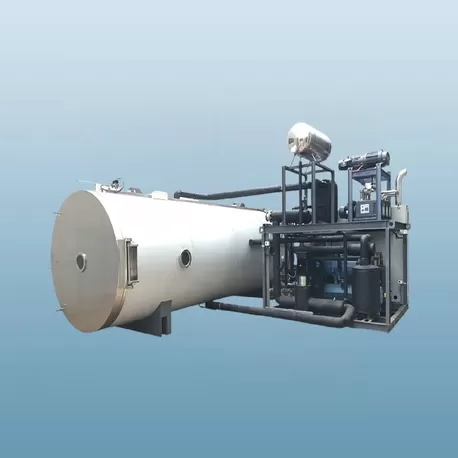
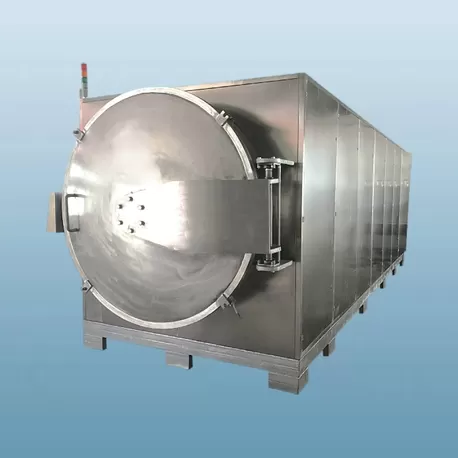
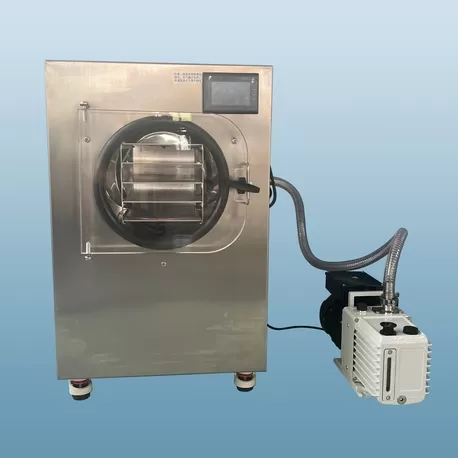
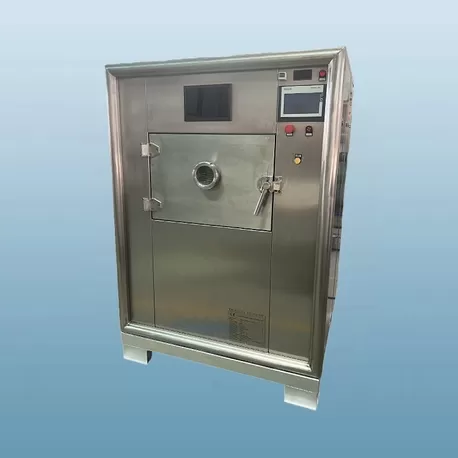
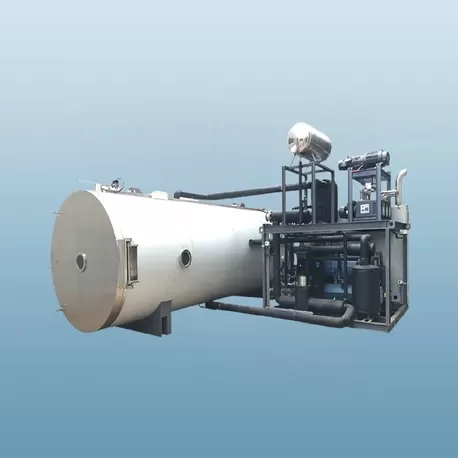
Nasan brings over 20 years of dedicated manufacturing experience to the commercial freeze drying industry. The company builds heavy-duty vacuum drying systems, continuous drying equipment, and large-scale industrial lyophilizer units designed for maximum cost-effectiveness.
Unlike rigid equipment vendors, Nasan focuses on custom-tailored process engineering. Their manufacturing team supports medium to large enterprises in food science, functional botanicals, chemical synthesis, and technical materials.
Nasan products serve processing plants in more than 40 countries across Europe, North America, Southeast Asia, and Latin America. Built with rugged components, premium stainless steel, and user-friendly PLC automation, Nasan machines lower capital entry costs while maintaining operational longevity.
5. Tofflon (China)
Tofflon has expanded rapidly into one of the largest pharmaceutical freeze drying equipment builders in the world. They deliver complete turnkey cleanroom machinery, ranging from small clinical units to massive multi-story production systems.
The company continues to win business by providing integrated isolators, auto-loading carts, and aggressive production lead times. Tofflon serves sterile injectables, monoclonal antibodies, and vaccine plants across the globe.
6. Telstar (Spain)
Telstar, a subsidiary of the Azbil Group, specializes in containment and freeze drying solutions for cleanroom environments. Their industrial lyophilizer units focus on energy conservation, compact physical footprints, and ergonomic layout designs.
Telstar is known for its green refrigeration lines, including cold-gas propulsion and eco-friendly cooling options. Their technical support network across Europe and Latin America helps clients manage maintenance and regulatory audits easily.
7. Optima Packaging Group (Germany)
Optima designs specialized freeze dryers alongside their premium filling, dosing, and packaging machinery. Optima focuses on modular integration, letting users install matching processing lines from a single project partner.
Optima machines are engineered for minimal product footprint losses and simple cleanroom wall integration. They target contract manufacturing organizations (CMOs) that switch between different product vials and ampoules often.
8. Hof Sonderanlagen (Germany)
Hof Sonderanlagen is an engineering specialist known for customized, highly complex industrial lyophilizer units. They do not sell standard off-the-shelf equipment; they design custom systems for specific client applications.
Hof builds pilot and production equipment using liquid nitrogen refrigeration, dual-chamber containment, and proprietary loading techniques. German pharmaceutical operations often choose Hof for demanding technical projects.
9. Labconco (United States)
While best known for benchtop research units, Labconco also builds larger pilot and floor-model freeze dryers for specialty processing. They supply diagnostic kit builders, university pilot plants, and specialty biochemical manufacturing centers.
Labconco focuses on corrosion-resistant fluid pathways, intuitive digital touchscreens, and rapid deployment schedules. Their systems serve operations bridging the gap between product R&D and commercial scale-up.
10. Millrock Technology (United States)
Millrock Technology engineers production and pilot freeze drying units packed with advanced automation. They lead the market in process optimization tools, real-time mass spectrometry interfaces, and automated endpoint detection systems.
Their industrial lyophilizer line features robust refrigeration loops and simplified mechanical layouts. Millrock attracts quality-control managers who rely heavily on continuous process data tracking during long production runs.
Pharma-Grade vs. Bulk Industrial Lyophilizers: Avoid Over-Engineering
A frequent error during equipment procurement is choosing a pharma-validated machine for non-sterile processing needs. A full cGMP freeze dryer with clean-in-place steam systems, automated robot loading, and specialized documentation can easily cost five times more than a standard commercial freeze dryer.
Analyze your actual processing needs before approving design budgets:
Sanitary Pharmaceutical Systems: Required for intravenous medications, active vaccines, and sterile biological formulations. These need 316L stainless steel, complete drainability, helium leak tests, cleanroom wall integration, and 21 CFR Part 11 software audit logs.
Food & Nutraceutical Systems: Aimed at fruit crisps, probiotics, marine collagen, and whole meal rations. These setups require large shelf space, automated hot-water defrosting, and simple manual or semi-automated trolley loading designs.
Technical Materials & Chemical Systems: Built for aerogels, graphene, catalyst substrates, and active battery components. These require solvent-resistant seals, explosion-proof (ATEX) electronics, and custom vacuum pumping speeds.
Manufacturers like Nasan help clients avoid over-engineering traps. Nasan designs machines tailored to the physical characteristics of your product. This prevents you from paying expensive validation premiums on systems that do not require cleanroom sign-offs.
Why Partner with Nasan for Industrial Freeze Drying?
Evaluating capital machinery involves more than checking equipment brochures. Production teams need dependable partners who understand continuous batch operations, process mechanics, and total cost management.
Nasan offers a balanced alternative to high-priced European and American conglomerates, providing distinct commercial and technical benefits:
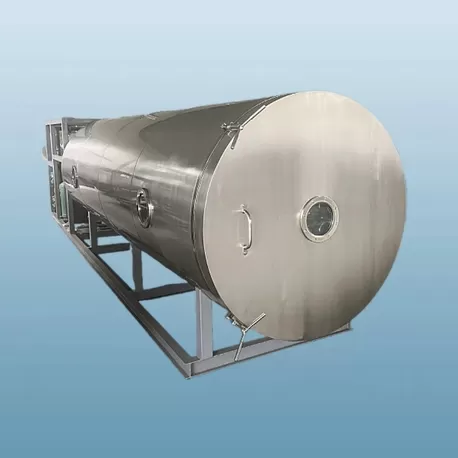
Two Decades of Engineering Experience: Nasan has manufactured industrial dryers, vacuum ovens, and custom freeze drying units for 20 years. Skilled mechanical technicians assemble each system to handle grueling, round-the-clock factory duty.
Customized Thermal and Chamber Layouts: Nasan builds each industrial lyophilizer around client batch volumes, floor plans, and material sublimation profiles. We offer customizable shelf spacing, internal condenser setups, and tailored chamber volumes.
Proven Delivery Across 40+ Countries: Nasan machines run in industrial production plants throughout the United States, Germany, South Korea, Australia, and across Southeast Asia. Every export model uses internationally certified components, including Siemens PLCs and premium refrigeration compressors.
Low Total Cost of Ownership: Nasan delivers high-performance machinery without the massive brand premiums charged by legacy pharmaceutical suppliers. Fast spare parts shipping and responsive engineering support protect your long-term operating margins.
Frequently Asked Questions (FAQ)
Q1: What is the average lifespan of an industrial
lyophilizer?
A1: A properly maintained industrial lyophilizer runs
continuously for 20 to 30 years. Achieving this lifespan requires regular
compressor maintenance, vacuum pump oil flushes, and scheduled door gasket
replacements.
Q2: How do I choose between internal and external condenser
designs?
A2: Internal condensers place the cooling coils directly
below or behind the product shelves within the main chamber. This design is
cost-effective, compact, and ideal for food products and bulk botanicals.
External condensers sit in an adjacent vessel isolated by a large vacuum valve.
This setup is mandatory for pharmaceutical operations that require isolation,
automated CIP/SIP, or cleanroom safety validation.
Q3: How much shelf area does a commercial freeze drying project
require?
A3: Shelf area depends on product loading density, dry mass
percentage, and cycle times. Liquid products in trays typically load at 5 to 10
kilograms per square meter. A commercial facility processing 1,000 kilograms of
raw product per 24-hour cycle typically requires an industrial lyophilizer with
100 to 150 square meters of usable shelf area.
Q4: Can an industrial freeze dryer handle organic solvent
mixtures?
A4: Yes, but this requires specialized engineering.
Solvents like ethanol, tert-butanol, or DMSO have lower freezing points and
higher vapor pressures than pure water. Processing them requires ultra-low
condenser temperatures (below -80 degrees Celsius), inert gas purging,
solvent-resistant FFKM gaskets, and explosion-proof electrical systems.
Q5: What are the main factors that cause extended freeze-drying cycle
times?
A5: Cycle delays usually result from poor thermal transfer
between the shelf and the product tray, excessive product thickness, or poor
vacuum regulation. Sizing the vapor path correctly and selecting a responsive
condenser will prevent vapor choke and shorten cycle runs.
Start Your 2026 Freeze Drying Project
Sourcing the right industrial lyophilizer manufacturer sets the foundation for your plant's operational safety, throughput, and profit margins for the next two decades. Base your purchasing decision on total operating costs, engineering flexibility, and ongoing service support.
Whether you need to expand an existing production line or build a brand-new processing facility, Nasan provides cost-effective, rugged vacuum drying equipment customized to your target materials.
Contacto the engineering team at Nasan today. Enviar your product details, batch size, and site specifications to receive a free drying feasibility study and a formal machinery quote.